According to a recent post on Gardenista, this would be a pelargonium. How about we call it just plain pretty?
It had been a while since I included geranium in my pots but when I saw this stunner at a plant sale at work I could not resist. I mean who can’t adore a stripe on a flower? I bought this hanging basket of geraniums/pelargoniums after first glance and have not regretted this impulse purchase. The flower petals are edged in a deep hot reddish pink with lighter pink petals. I know this isn’t technically a stripe but it pretty darn well poses for one at a distance and that just spells fun in any garden.
Roses bloom in the Heritage Rose Garden in Whetstone Park, Clintonville, OH
I do believe in the world of flora and fauna timing is everything. Last Sunday I had the pleasure to leisurely stroll through the rose gardens in Whetstone Park in Clintonville, OH, with dear Dave. Our timing was not the best as most of the blooms on the roses were a tad past their prime. Not that I am complaining; indeed, I am not. Strolling in a garden on a beautiful day and observing the other taking in the beauty of a lovely landscape is one of the great pleasures of leisure time. I spend most of my time planning, planting and observing my own garden. Relaxing in the bounty of another garden is just what the doctor ordered.
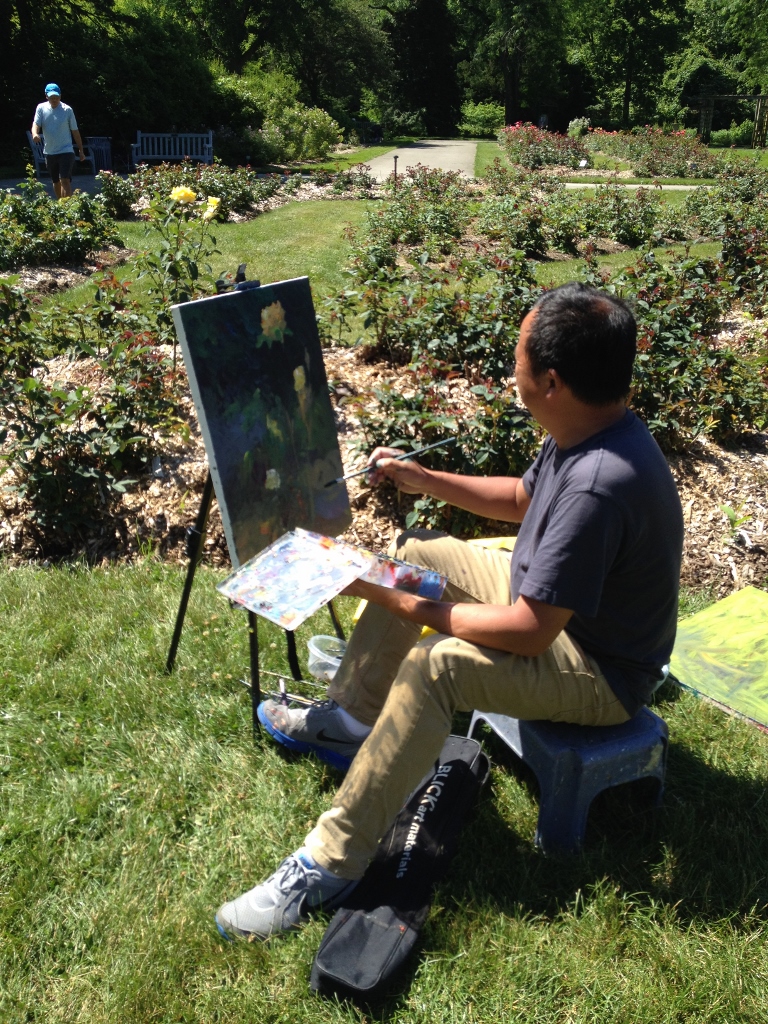
The rose park, which is made up of three rose gardens within 13 acres, is a manageable size to maneuver if you are pressed for time (I had a flight to catch). But that’s not to say there wasn’t lots to watch. On Sunday–which was beautiful in Ohio–Dave and I lingered in the garden beds, watched families enjoying the day and spied on plein air painters as they captured a prize rose on canvas. No one seemed to mind that the park was not in full bloom.
A plean air artist captures a yellow rose on canvas.
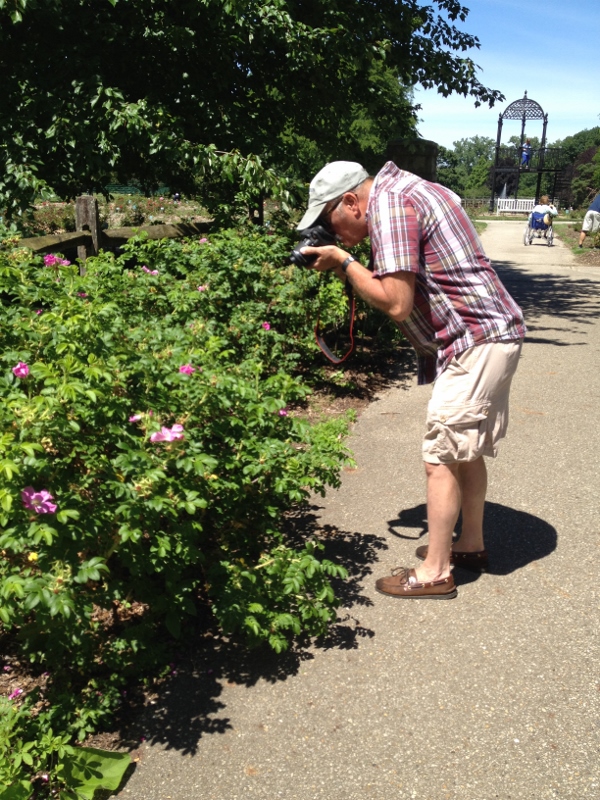
The Rose Park speaks to strollers, photographers, painters and garden lovers.
An Earth-Kind Garden is one of the three rose gardens in the park. This demonstration garden features commercially available roses that a hassle free–they require no pesticides, zero fertilizers, zippo deadheading and no pruning. That’s a plant that speaks to me! Seriously, Earth-Kind gardening is about sustainability and using less water, less inputs and keeping mankind’s footprint a little lighter in the landscape.
The program was developed at Texas A&M University and the park is the first one outside of the South to feature this informal rose style. Though most of the roses had already bloomed but there were several varieties in the garden. Unfortunately, I did not capture any photos worth posting.
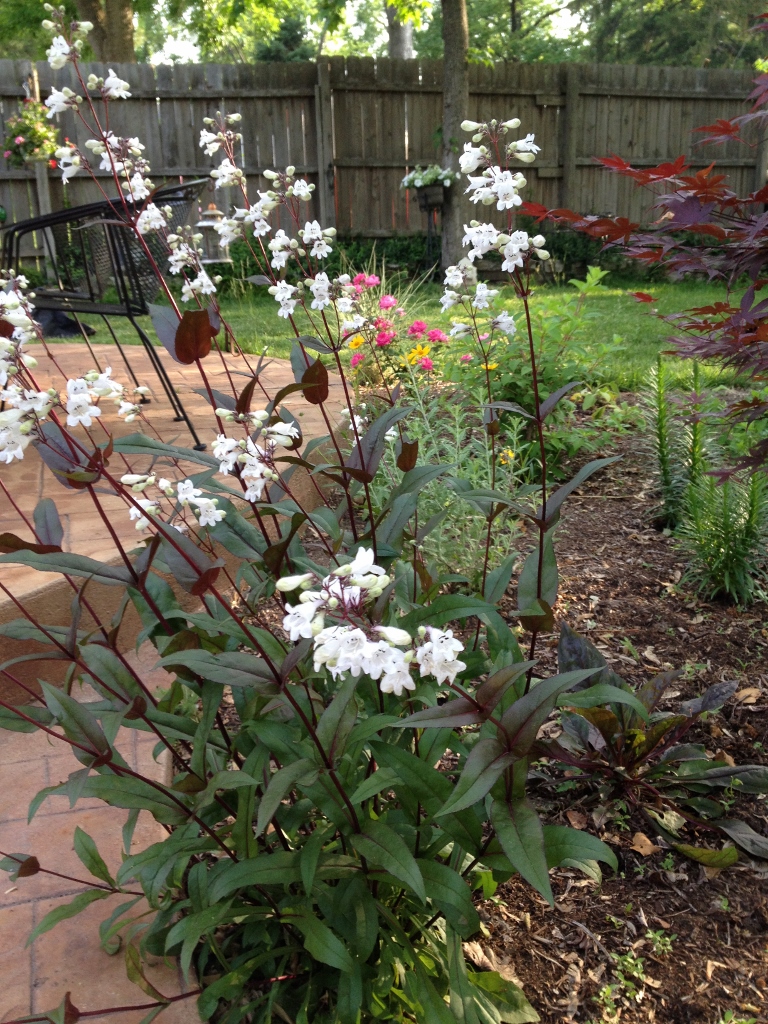
We’ve had quite a bit of rain in the St. Louis area and combined with warm to hot temperatures, the garden is responding. As I clean up spent blooms and (finally!) put down mulch, the beds are taking on a new look as summer comes on in earnest in June. I have trimmed all the spent blooms on the roses, cut back the May Night salvia and also removed the spent blooms on the wild geranium. Gives the bed a whole new look. The penstamon was spectacular with its woody red stems and dainty flowers. Truly one of my favorites. The blooms last quite a while, both in the garden and in a cut flower arrangement. May was a wonderful month for flowers.
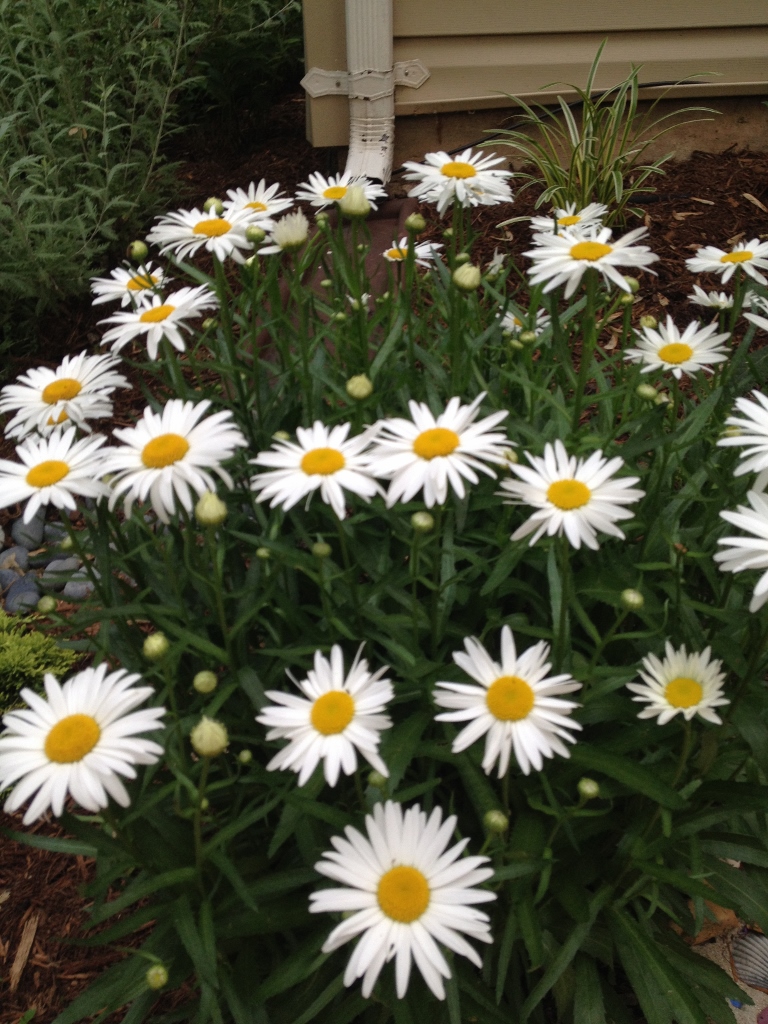
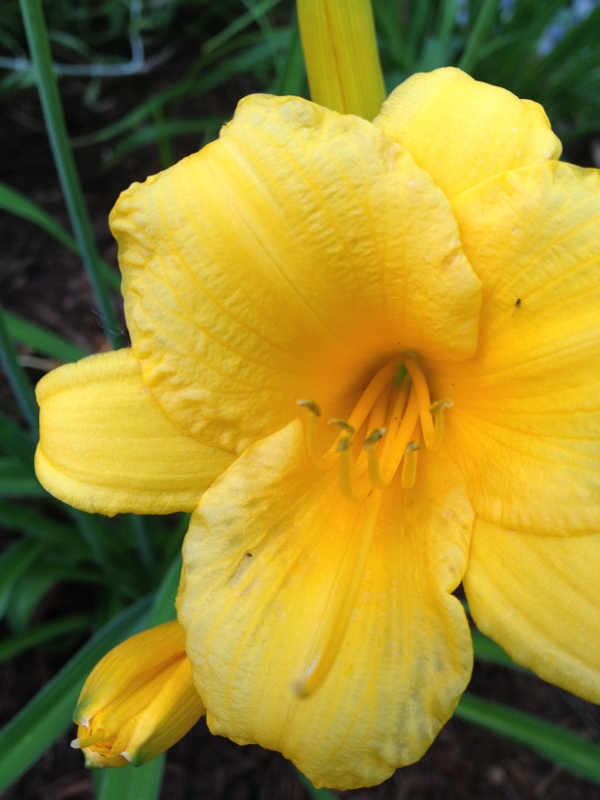
But there is so much to look forward to this month. The shasta daisy “Amelia” (Leucanthemum suprbum) I planted last summer is in full swing as are the coreopsis, the stella de oro lily and the oriental lily. The oakleaf hydrangea never fails to disappoint and this season is no different; it is full of panicled blooms. Buds have developed on the “Pardon My Pink” bee balm (monarda didyma), tall garden phlox and coneflower. The Russian sage (perovskia) has grown quite tall and is just about to bloom as are the “Kobold” gayfeather (liatris spicata). This year I have added a new, compact variety of Russian sage called “Crazy Blue” (perovskia atriplicifolia) and it appears near bloom. And of course the roses will rebloom and the Little Lamb and Little Lime hydrangea will come into their own, probably toward the end of the month.
How is your garden coming along? Have you seen any pests in your garden beds? I am curious about the natural remedies I see all the time on Pintrest. Do they really work? Please share your experiences. Happy gardening.
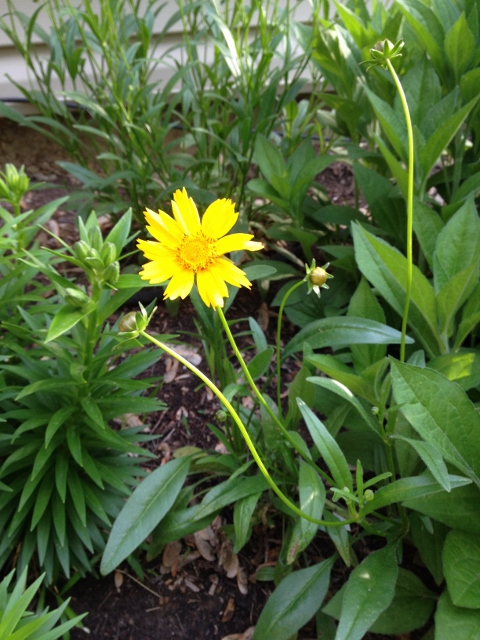
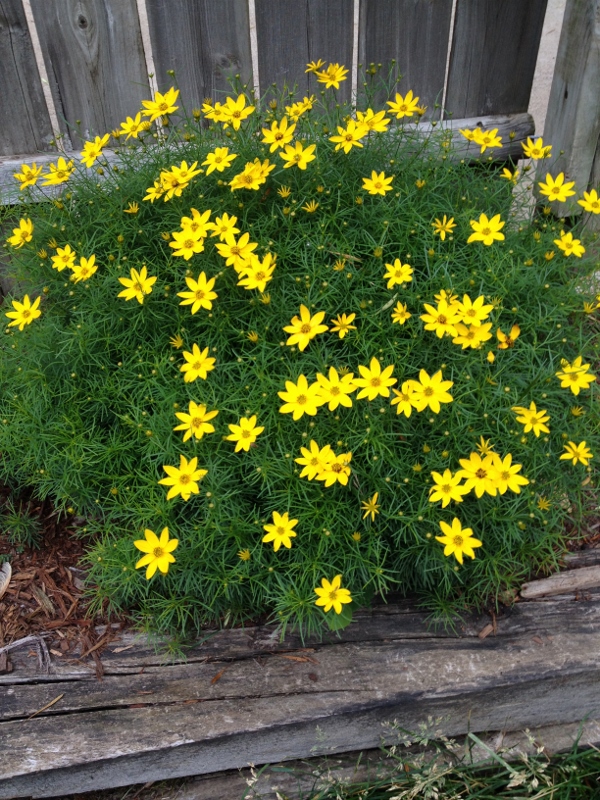
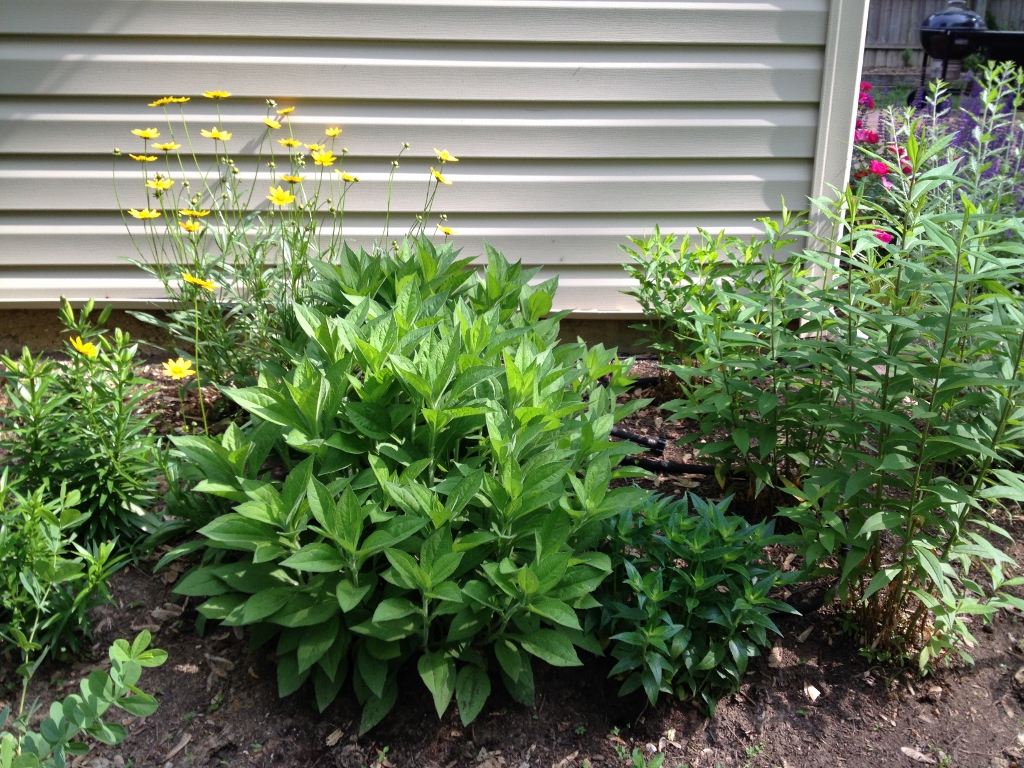
If you’re looking for a yellow boost to the garden, coreopsis is a great plant. I have two types of coreopsis in my yard, but quite honestly, I am a bit confused about this plant and its names. Researching this sunny plant, I thought tickseed was a type but I think that’s just a common name. So where words fail me, pictures will do the talking.
This type of coreopsis blooms all summer but requires frequent trimming of the spent blooms.
This carefree coreopsis blooms all summer and grows the size of a small shrub.
I have been referring to the mounding, shrub-like plant as moonbeam (c.verticallata) and the other as tickseed (c. auriculata). Can anybody out there in gardenland provide clarity?
What I do know for certain is that one is carefee, the other not as much. Starting in June, the moonbeam blooms begin to burst forth atop its fine foliage. This mounding plant and can be as large as a small shrub. In the fall, I take my hedge shears and cut it all the way back. Give it a sunny spot and it will bloom nearly all summer. Bonus: it’s drought tolerant.
On the other hand, I keep handy my pruners and am continuously cleaning up the other type that I have referred to as tickseed coreopsis. This guy has sunny yellow flowers at the end of tall, thin stems. The leaves are more spear shaped. The blooms, although relatively short lived, add a nice brightness to the bed. I planted this variety because I wanted something that I could cut and add to vases all summer long. And it has not disappointed.
Both are easily adapted to the garden and I have divided them without any problems. The moonbeam truly wants full sun, up to six hours a day. One of my divisions has been a bit slow to take off and I think it’s because it does not get enough sun.
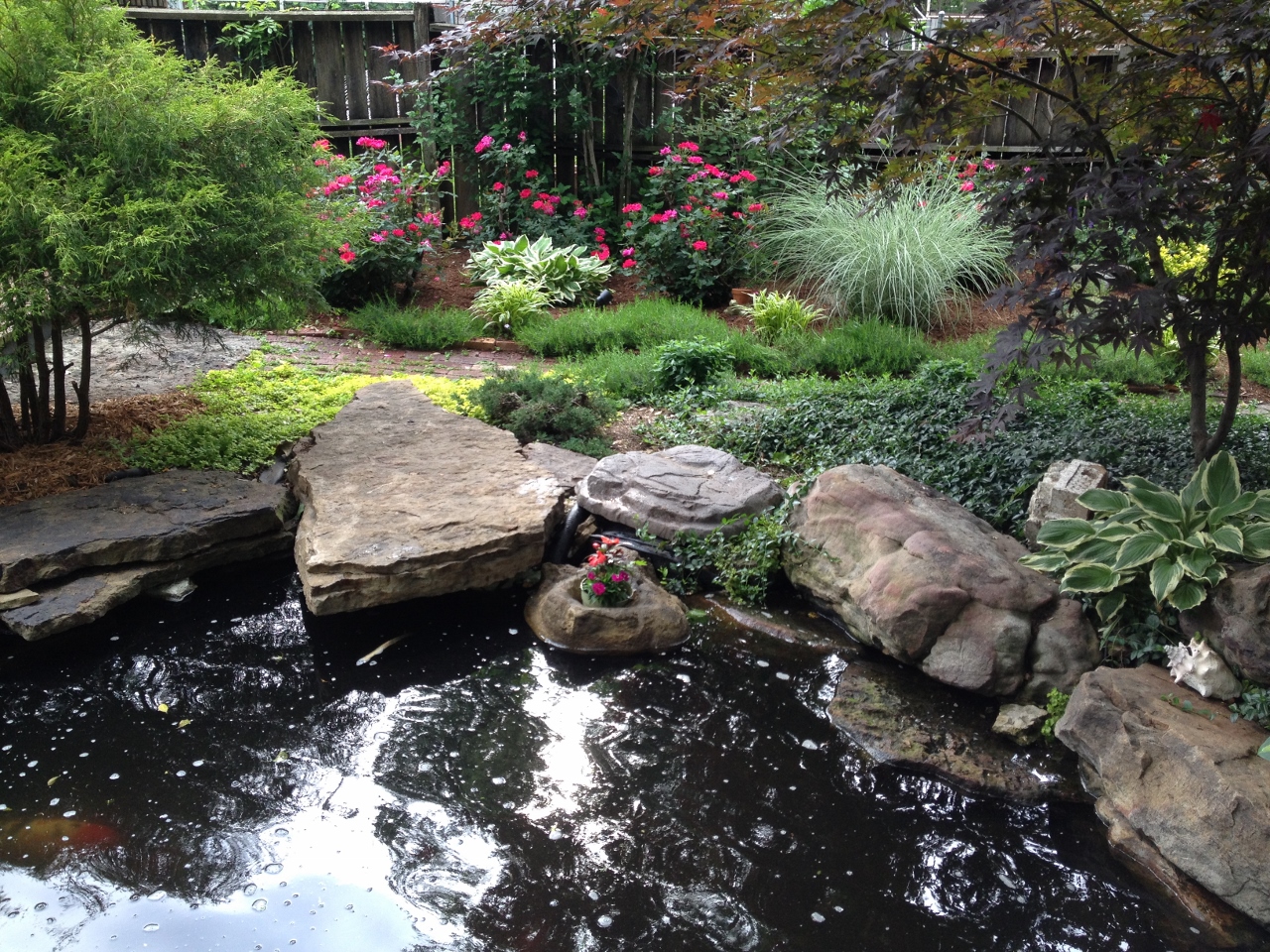
My sister Nancy lives in the midst of music, mayhem and madness in the shadows of the vibrant Loop in St. Louis city. Yet her yard is a true get away in the midst of city living. Yes, you can hear the drum circle at the Shell gas station a block away. Police and firetruck sirens blare down Delmar Avenue at a fairly regular pace. A rotating “moon” atop the Moonrise Hotel can be glimpsed from the deck. But all that is just a sideshow. The main event is the oasis she has created on a small city backyard lot. Center stage is a large pond full with fish and surrounded by lots of ground cover such as carpet phlox, creeping Jenny and vinca; trees and shrubs such as Japanese maple, lemon thread cypress, Mary Jane magnolia,and oakleaf hydrangea; perennials such as hosta, grasses, salvia and liriope; and annuals to fill in. Large rocks give structure to the pond shape and provide a platform to gaze at the fish and maneuver around the pond.
If you’ve ever wondered if pond water is good for the garden, wonder no more! Her oakleaf and roses appear to be on steroids!
Of course the pond has aquatic plant species such as water lily, water hyacinth, water lettuce and bog plants. What Nancy lacks in plant knowledge “I don”t know that plant is,” she makes up with an unerring eye for color combination and layout. There’s a balanced interplay between citrus hues (lemon thread cypress), cool tones (a blue dwarf weeping cypress) and shocks of color (the pink Knockout roses). Touches of whimsy, such as this painted frog, let you know the garden is for enjoyment. This frog is an example of her talent in painting.
A painted frog adorns the rocks on the edge of the pond.
I think ponds provide a sense of serenity and the shade cast on the pond from the trees lends a sense of calm in an urban setting. I am always struck by the fact that the yard is small–a typical St. Louis city lot–and there is lots of city noises around, yet the environment feels set apart from the hustle and bustle.
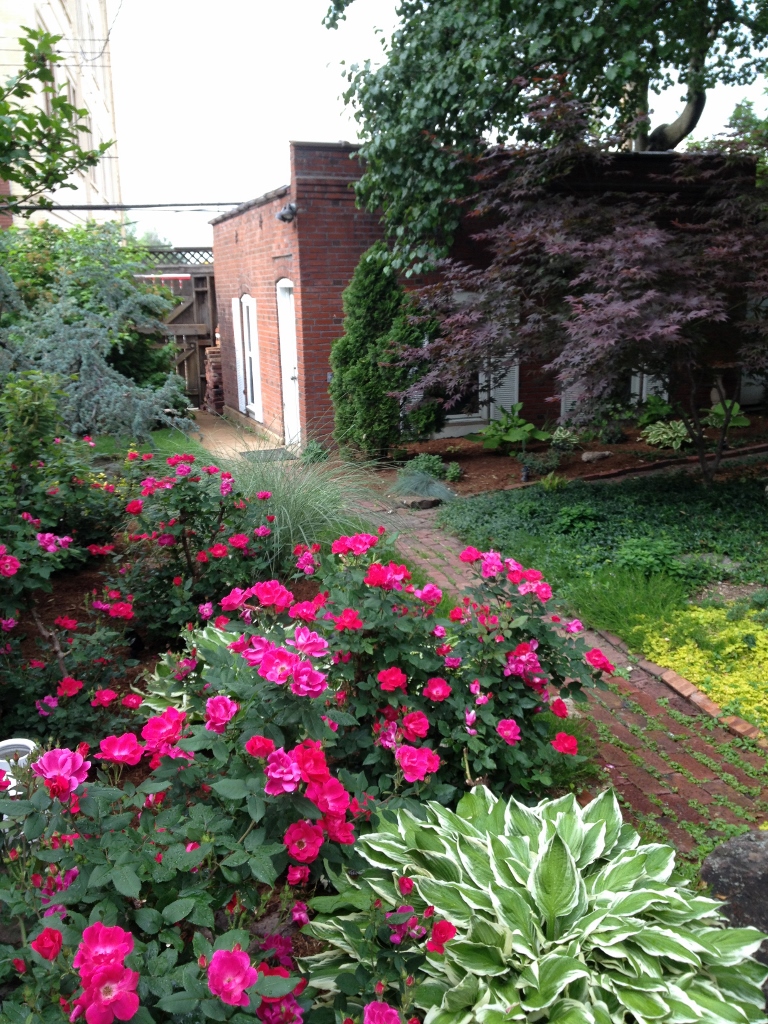
Original St. Louis accents also lend an authentic city touch to this escape and sets the yard apart from other gardens. The home is in Parkview, an historic St. Louis neighborhood dated back to the early 1900s. Above the bed in front of the garage is a light from one of the old streetlamps in the neighborhood. And the first picture in this post is of an old “St. Louis” brick.
Looking back toward the garage. Note the dwarf cypress in the back. Behind this is another planting area that hides the power line and the fence leading to the alley.
Between the garden beds, the deck and the pond, you kind of lose sight that this is really a narrow yard that is not all too deep. That is because the design draws your eye down along the space. A brick path along the side bed with the roses help to pull your eye lengthwise. Still developing is a shade garden in front the garage. As with all gardens, trial and error occurs with plant selection, soil and light. This area receives a good bit of shade and Nancy has struggled a bit to get the right plants to take off. Carefree, foliaged perennials are the name of the game, although color contrast is at the forefront. Hostas thrive in the St. Louis climate. Nancy is planting a variety of hostas, and the bed is beginning to take off. I know, however, that in a year or two she’ll introduce an artistic element to heighten the enjoyment of this bed.
What I have not shown you are the window boxes and containers that overlook the deck. And of course there are the lounges and the hand-painted table umbrella. I hope you have enjoyed this virtual garden tour. I look forward to sharing other small garden spaces in the near future.
I love the delicate pink and white blooms on the deeply hued stems of penstemon.
At the end of April, I posted photos showing how much progress had been made from the start of the month to the beginning of May. Of course, Mother Nature was just getting tuned up. To lean on the old, tired adage “April Showers Bring May Flowers,” I know why Mother’s day, weddings and graduations fill the weekends of May–because it’s so doggone beautiful.
I have not yet mulched. Shame on me but my gutter man has not shown up! And while I know the mulch will make the beds look that much better and be beneficial to the beds, all the rain and nice spring temperatures have really brought on the blooms. The only bed that really looks shabby is along the fence line where the Cannas are starting to emerge. It could use some mulch. And the bed in the corner of the backyard looks terrible, but more about that deliberately neglected space later.
This post isn’t to dive into the rough spots of the yard, but to celebrate how lovely May is.
Let’s take a look at how things are coming along, shall we?
I under-estimated just how many plants I will need and how long it will take to fill in this bed.
Not shy on ambition, I envisioned a plant-packed bed, spilling forth with flowers throughout spring, summer and fall when I started this project three years ago. And it is taking a lot longer than I thought. I am trying to be patient and let the shrubs fill in, the Japanese maple put some height on and the dwarf Colorado blue spruce fill out, but I am like a kid–I want it now. May was spent dividing hosta, coreopsis, shasta daisy, black eye Susan and other perennials in the beds. They payback is that I save money on plants and have some much-needed repetition, which provides some continuity to this project.
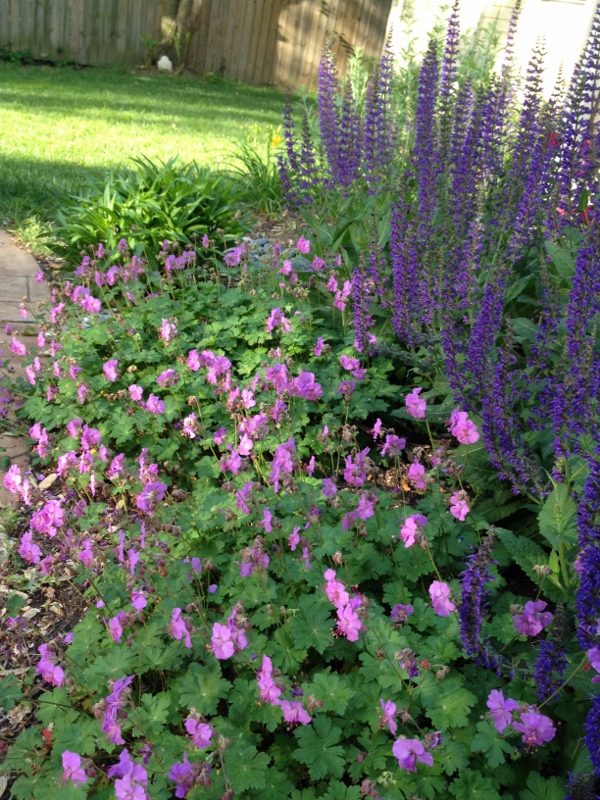
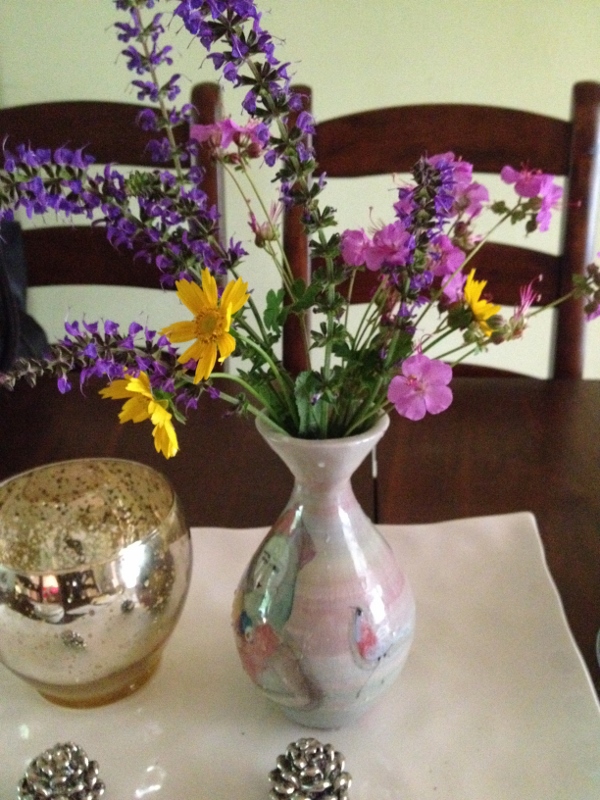
The “May Night” salvia are attracting lots of bees as are the cranesbill. I really like this combination. This must be the perfect spot for the cranesbill because it was the first thing I planted in my new garden in the summer of 2011. The salvia tends to get a bit leggy and last year–its first summer–I cut it back quite a bit. Clearly that didn’t both it!
What a lovely combination of color. Hot pink roses, not shown here, dial up the intensity.
Pink and purple plants took center stage in early May but now the yellows are starting to show. The coreopsis are balancing atop their delicate stems, and the stella de oro are blooming. Later this summer, the black eye Susans will be out in force.
This variety of coreopsis blooms all summer but requires a bit of maintenance trimming off the spent blooms.
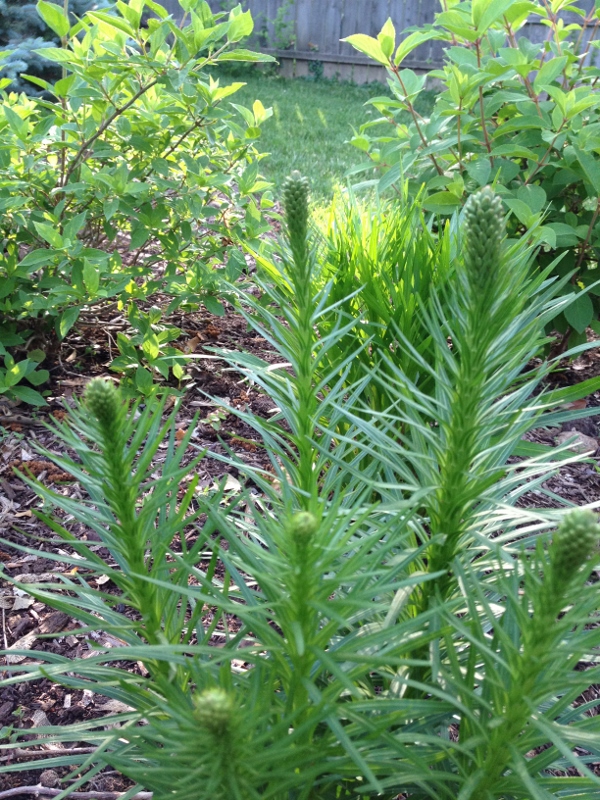
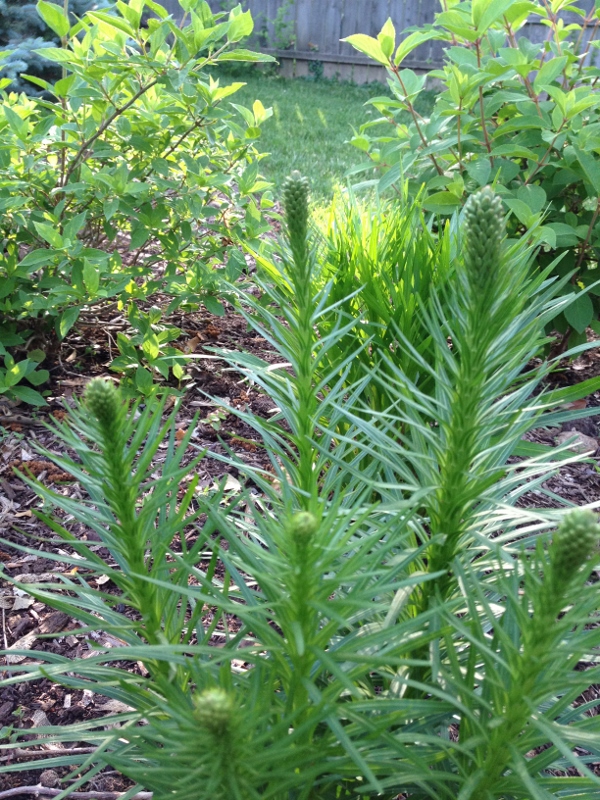
I have been looking forward to watching gayfeather (liatris spicata) come through this year. I planted three of them last year. One did not make it but these two look terrific. It looks like they will bloom soon.
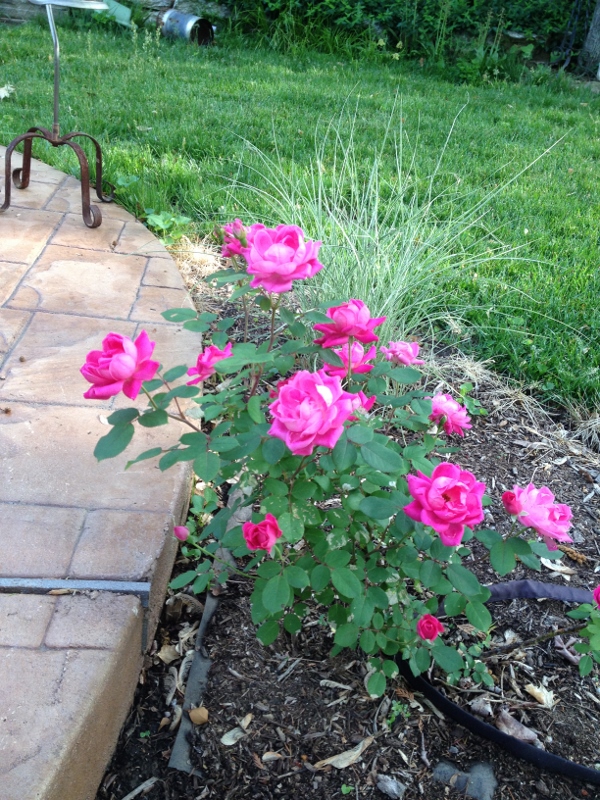
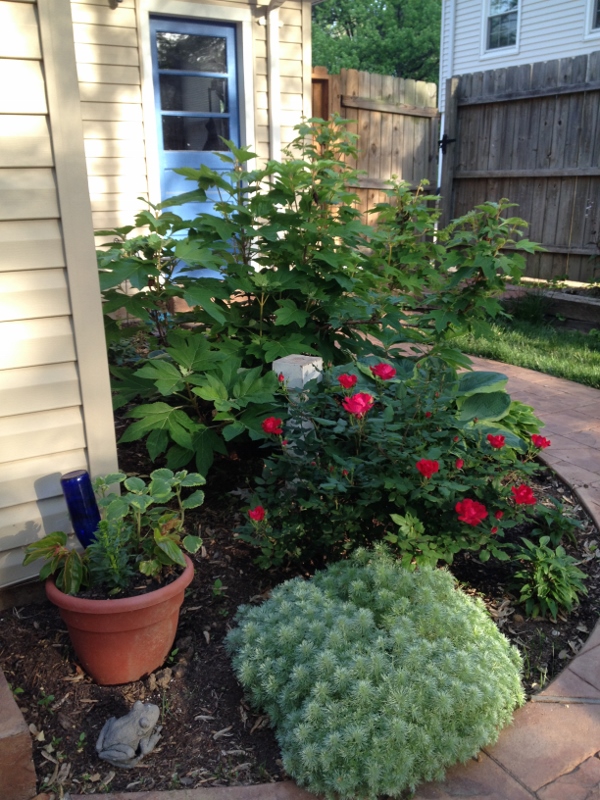
True to their promise, the Knockout roses are providing a profusion of blooms. I am really enjoying this pink shrub. It was mislabeled as a deep pink but it turns out it was a happy accident. It’s also encouraging to see how quickly these guys grow.
Ribbon grass grows behind this pink rose.
Right now the Kobold does not need staking. This is the second summer for it in the garden.
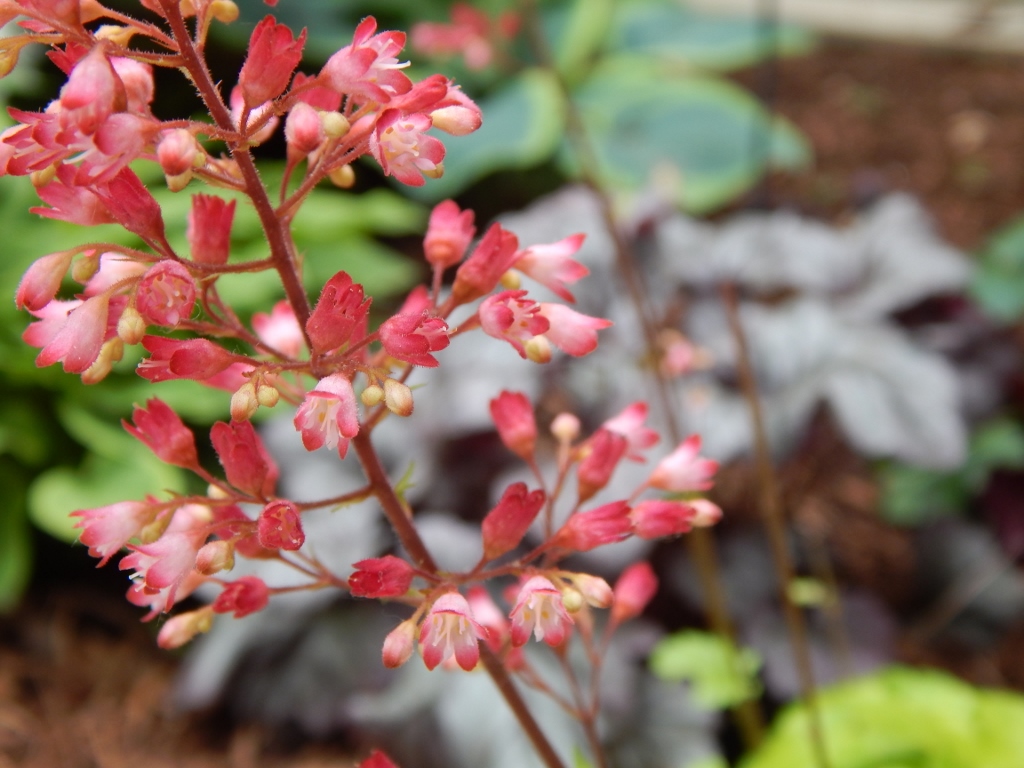
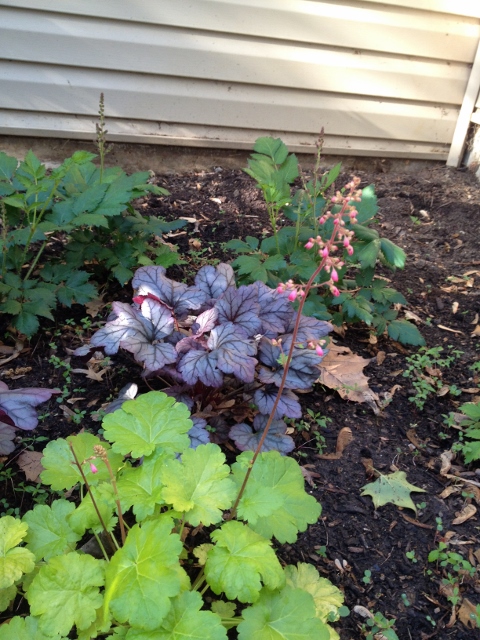
Nothing seems to have grown as quickly as the Oakleaf hydrangea! This bad boy either a) loves this spot on the north side of the house; b) is a vigorous grower; or c) all of the above. I think the answer is c) all of the above. This specimen is actually in the middle of this particular bed. When sitting on the patio, it towers above the rose. Behind it, where there is more shade from the eaves of the roofline, I have put in shade lovers such as coral bells, astilbe, hosta and fern. Originally, I had intended the oakleaf to screen the trash cans. This year I decided to move them to the other side of the house and expand this bed. That’s the gardening way, right?
Until May, I had not given much thought on which month I really enjoy in the yard. While early spring provides much-needed anticipation and relief from being inside all winter, the temperatures this May have been good (not too hot or humid). The humidity and temps are starting to climb but it has been a great month to enjoy the yard.
Spring and summer means cut flowers.
Having something blooming each month throughout the summer is one of the key benefits to gardening. You can bring the outdoors inside with vases of cut flowers, a joyful reminder of the garderner’s hard work paying off.
I like to I look forward to providing an end-of-June report and watching what’s growing in your yard, fellow bloggers.
Thanks for reading.
The Oakleaf hydrangea “Alice” begins to bloom.
The black eye Susan here in front of the yellow coreopsis, love this location. Other sun lovers include monarda, tall garden phlox, lily and Russian sage. On the left is a blue false indigo (baptisia australis), a new addition to the bed this year.
The soft velvety texture of artemesia, seen here creeping on the edge of the patio almost cries out to be touched. What really took off this month, though, is the Oakleaf hydrangea in the back of this photo.
I have concentrated on planting in the sunny spots in the yard but have found a few shady areas to fill in. Contrasting shapes and color provide visual interest.
I have written a little about the clay soil that is prevalent here in Arch City. If you are going to garden, you are going to encounter this very dense, hard to break-through soil that seems as hard as concrete during a hot, dry spell (translation: summer in St. Louis). How do you identify clay soil? Easy. If it sticks to your shoes, attaches itself in clods to your shovel and you have to throw a clump of it across the yard to break it up, you’ve got clay. Clearly, this has not deterred the hardy souls in the area who have the vision and fortitude to overcome this stuff. My strolls in my neighborhood and beyond are testimony to that.
And so is my soil. In my fourth year of amending, amending, amending, I am starting to see the difference. More accurately put, I am starting to feelthe difference. Arch City-ites know what I am talking about. When I place the shovel or spade into the ground, the resistance isn’t quite as fierce. In fact, when I was digging into the patio bed to put in “Crazy Blue,” a new, compact Russian sage (perovskia atriplicifolia) my favorite nursery is featuring, the soil actually gave way with minimal effort. I consider this a major break-through.
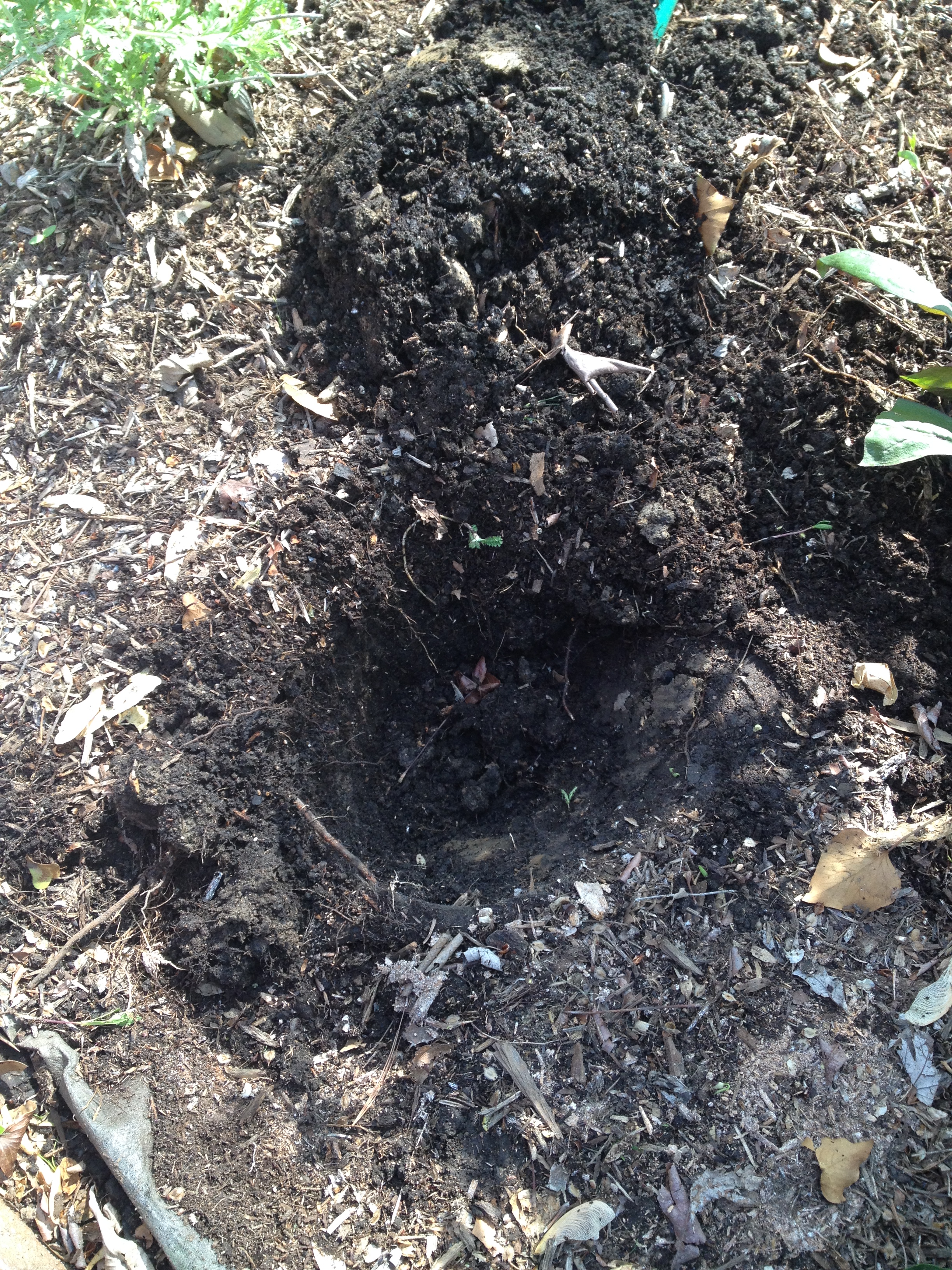
After three years of adding lots of compost to my clay soil, the structure is finally improving. Digging into the soil is no longer at backbreaking, shovel bending experience–at least in this part of the garden.
Can you spot the clay soil in this sample? Hint: It’s the stuff that looks like meatballs.
There are several shrubs and perennials that will bust through this tough, mineral dense soil and there are things clay habitues need to know, such as:
1. This soil is dense, and the roots of many annuals, perennials, and vegetables struggle to make their way through. Many spring bulbs tend to rot over the winter in clay soils discouraging gardeners who must deal with this soil type. However, all is not lost–as long as you improve the soil structure. By that the experts will tell you to add 6-8 inches of organic matter throughout the bed, not just where you are placing your new specimen (yes, I have taken that short cut).
Of course, I continue to add the good stuff to the soil when I layer on mulch on top of all this. And my plants have thanked me for it. I’ve been pleased with the new emergence each spring and have become committed to amending my soil EVERY year.
2. Clay soil is slow draining. In addition to improving the soil structure of the garden beds, I want to improve the lawn where after a heavy rain the water has a tendency to sort of just sit there. I’m not talking about the low areas of the lawn, I’m talking about the slope areas where you’d think the water would be flowing down. Not so much. I do have areas where the water ponds. Those spots will get shrubs that tolerate ponding such as winterberry (ilex verticilatta), ligularia or river birch.
3. It can heave in the winter. Thankfully I have not experienced this with my plants, but I do have a gate that won’t open when the temperatures drop. In fact, I had to move my trash and recycle bins this winter because I could not get them through the gate.
4. There are lots of perennial “clay buster” choices available that thrive in this soil type. Black-eyes Susans, goldenrod, Russian sage, daylily (hemerocallis), purple coneflower, yarrow and canna are among the hardy perennials that can thrive in clay soil.
As I stated more than once, I am about the sizzle. I wasn’t really excited about concepts such as soil structure and amendments. My goal was to plant beautiful flowering annual, perennials and shrubs. I am glad I slowed down and have taken the time to prepare the soil. This annual chore has become a right of passage into spring and it’s paying off.
The backyard is starting to do its thing–bloom! And I am surprised at how quickly things are coming on. I have spent a fair bit of time cleaning the pollen trash from the patio and beds (forget the lawn) and still need to mulch (after I get the gutters cleaned) and then I’ll be able to enjoy a bit more. Although last night was a night for dining al fresco with the kids and tonight found me lounging outside reading a book while dinner cooked on the Weber. Not a bad way to spend a Monday night, eh?
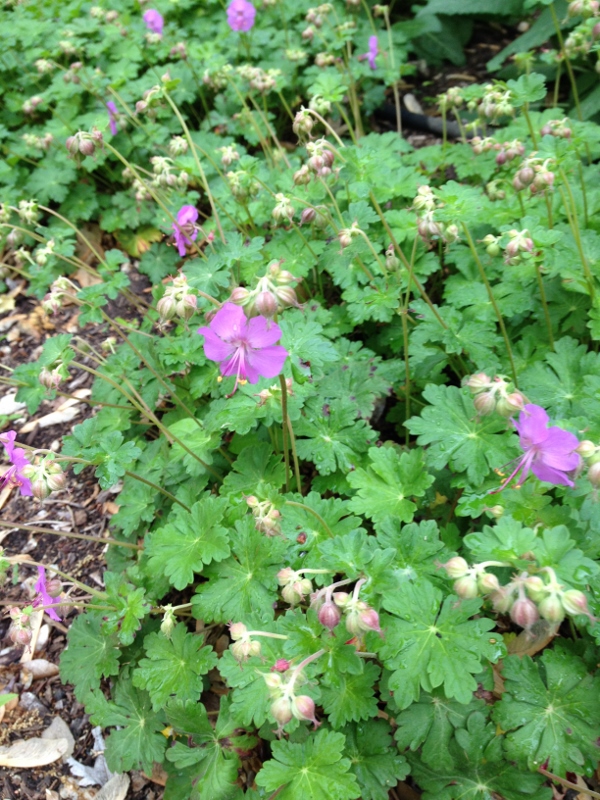
Fortunately, amidst the sweeping, I am enjoying the blooms in the garden beds. The salvia x sylvestris “May Nacht” bed under the family room window is a beautiful, deep purple and just in time, the deep scarlet pink roses are blooming in back and the Cranesbill “Biokova Karmina” geranium x cantabrigiense lightens up the intensity with its softer pinkish purplish blooms. The roses surprised me when I came home tonight and I did not take a photo. The others below will have to do.
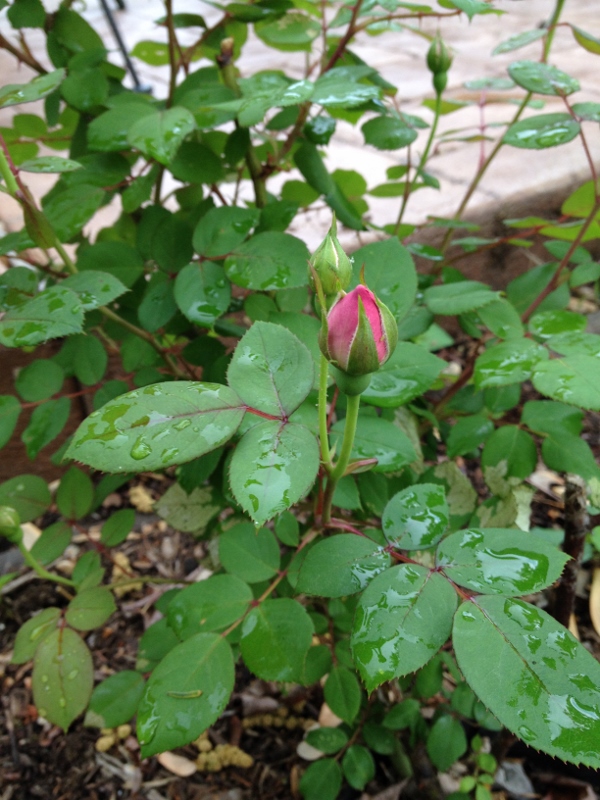
And here’s a pretty rose bud from the bed the flanks the east edge of the patio. This bed is taking a while to fill in but every year I manage to enrich the garden center and soothe my senses by adding more perennials.

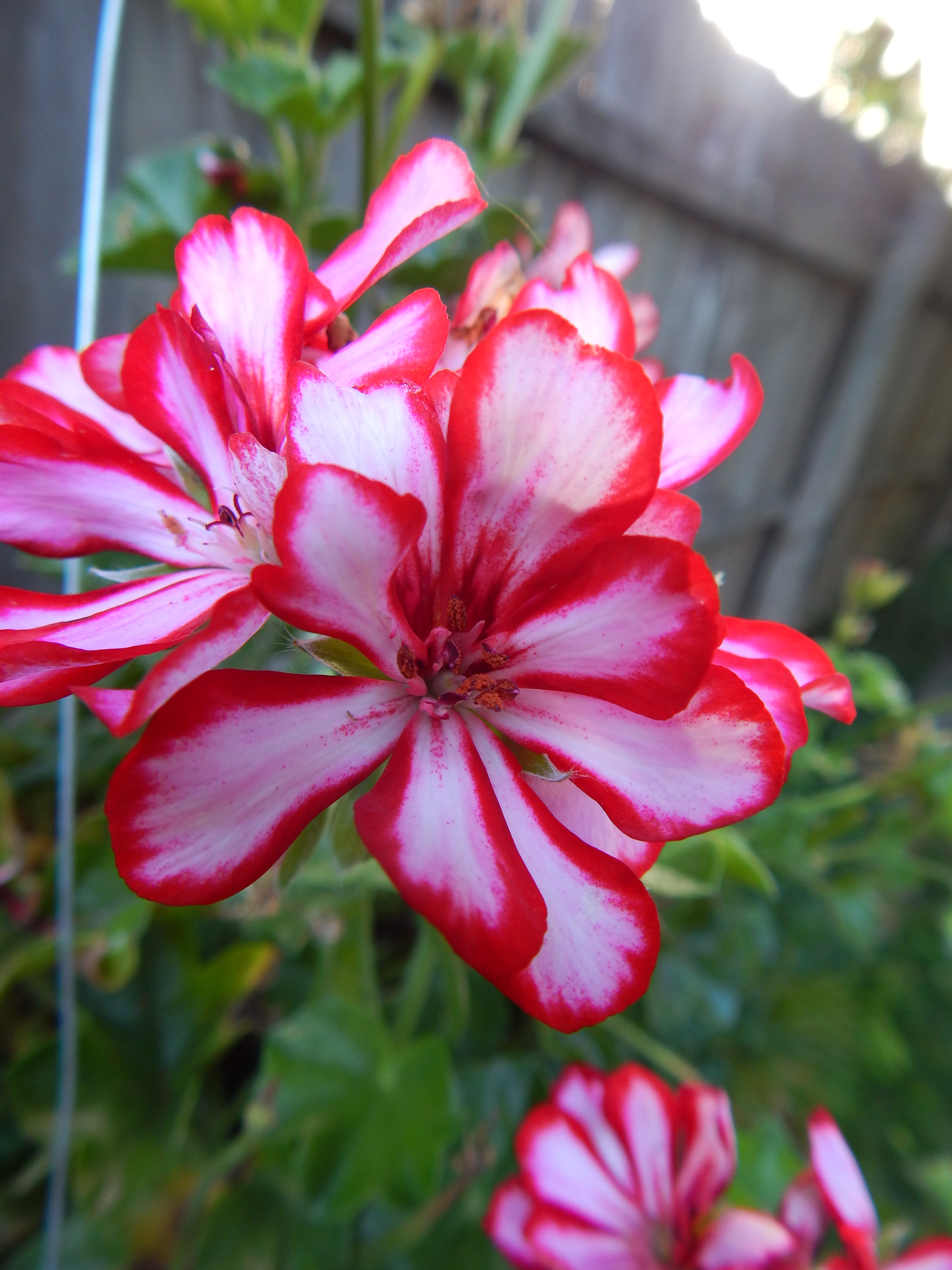 It had been a while since I included geranium in my pots but when I saw this stunner at a plant sale at work I could not resist. I mean who can’t adore a stripe on a flower? I bought this hanging basket of geraniums/pelargoniums after first glance and have not regretted this impulse purchase. The flower petals are edged in a deep hot reddish pink with lighter pink petals. I know this isn’t technically a stripe but it pretty darn well poses for one at a distance and that just spells fun in any garden.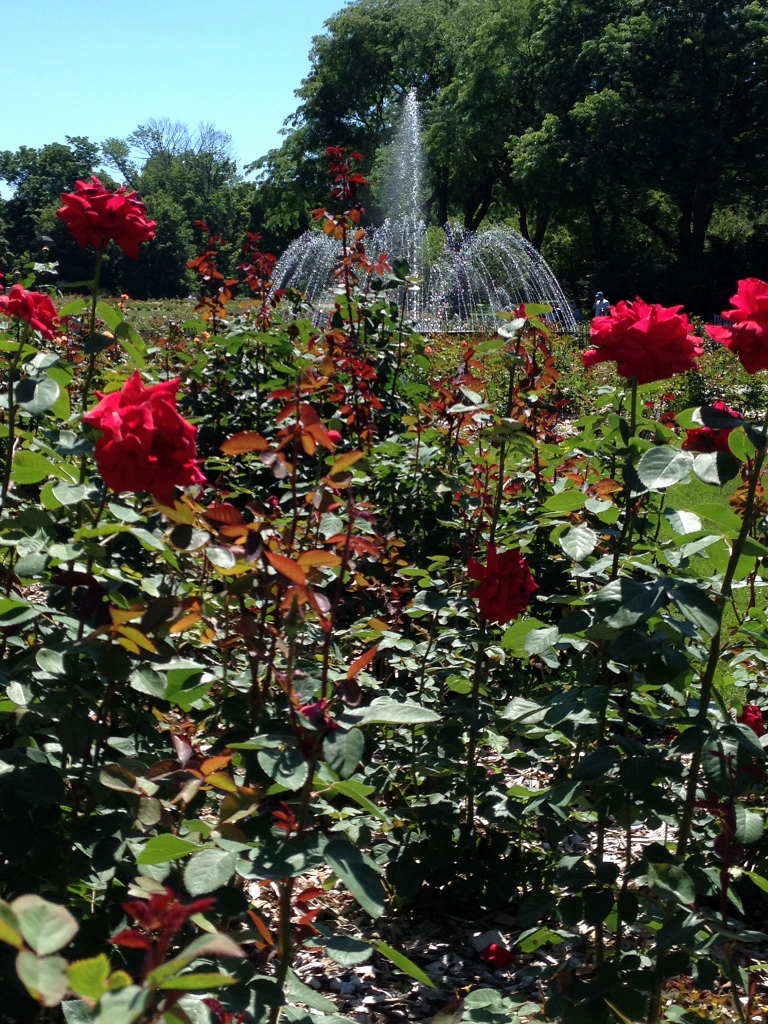












 The Arch City Gardener