
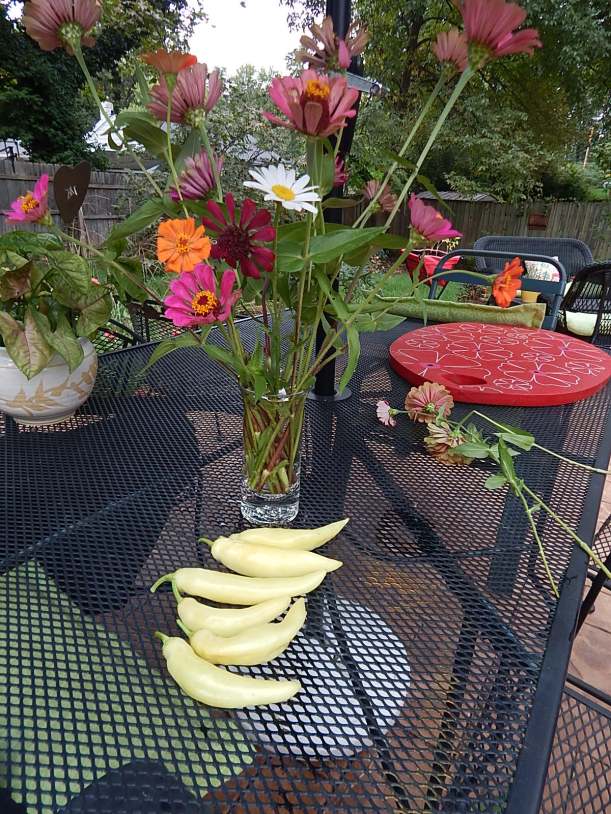
 It’s hurry up time in my St. Louis garden–the last-gasp of nice-weather season before winter’s chill firmly camps out at the door. At least that is what the October calendar here usually means; this year, I am not so certain. Our temperatures have been very, very warm. Today we are just below 80 F. My sweaters are mostly tucked away, coats still in the closet and my garden flowers still abloom. Not to mention the frenzy of peppers tirelessly produced from one “Sweet Sunset” plant.
I’ve been busy moving plants around such as my zebra grass (Miscanthus sinensis ‘Zebrinus’), ground covers and some perennials. This is the second time this year I moved the zebra grass. The first time I moved it from the back of the garden bed to the front in the spring because it was not getting enough sun. Problem solved, maybe too much as the plant seemed to triple in size and I no longer liked the visual balance in the bed. The grass became too overwhelming in its front-and-center spot.
As I planned undertaking the endeavor to move it a second time, I remembered Jason’s Garden in a City post and the resulting comments about the major chore dividing grasses and moving grasses can be. I must say, the comments gave me pause. So I made sure to water the grass thoroughly a few days before to get the soil good and moist.
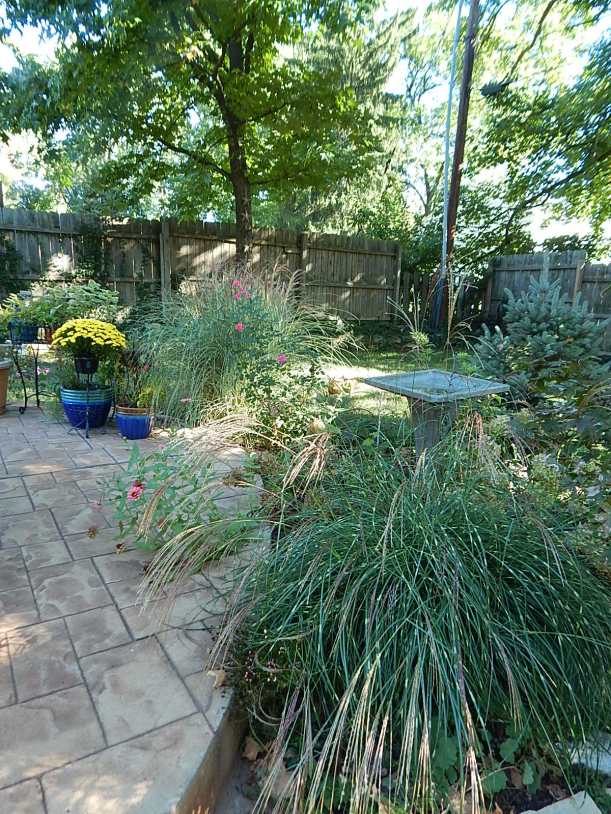
The grass in the front is actually in the center of this bed.
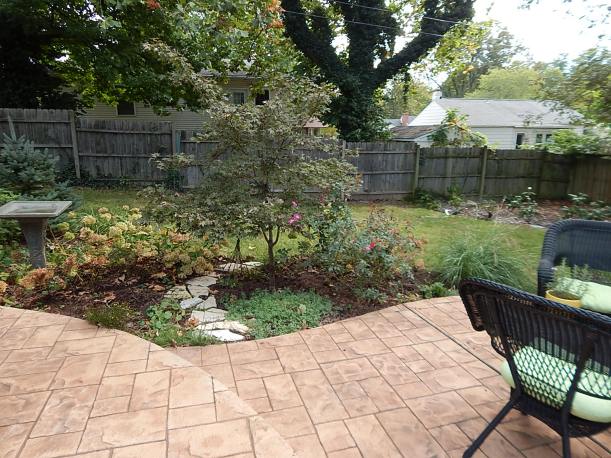
The zebra grass, now at the end of the bed, has better visual balance and still gets plenty of sun. The grass had been in the foreground to the left of the pavers that bisect this bed.
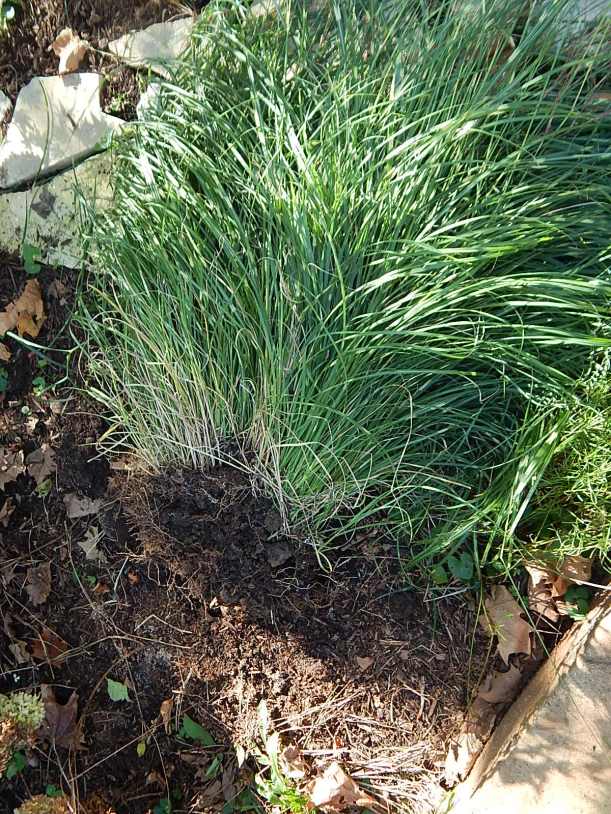
Removal was not nearly as bad as I had imagined, probably because the grass had only been in place one season. Ensuring the soil was moist also really helped. Fortunately the rain gods have been generous and provided a little more than 1 inch of rain last week to help quench the thirsty beds–my rain barrels were depleted–and keep moist the newly relocated plants.
I’ve also taken advantage of our mild weather to fill in bare spots in several areas with with creeping jenny (Lysimachia nummularia) and relocate a “Karl Foerster” feather reed grass (calamagrostis x acutiflora) from my raised bed in the back to a spot front by the garage. I’m hopeful the grass will artfully cover the downspout it sits in front of.
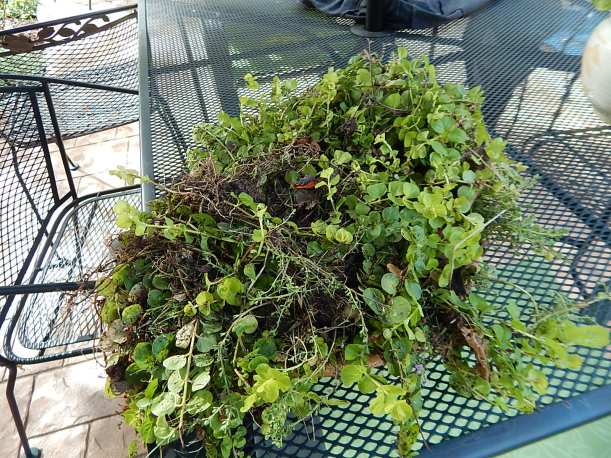
A mound of creeping jenny (with some thyme interspersed) is plenty to redistribute throughout my beds for ground cover.
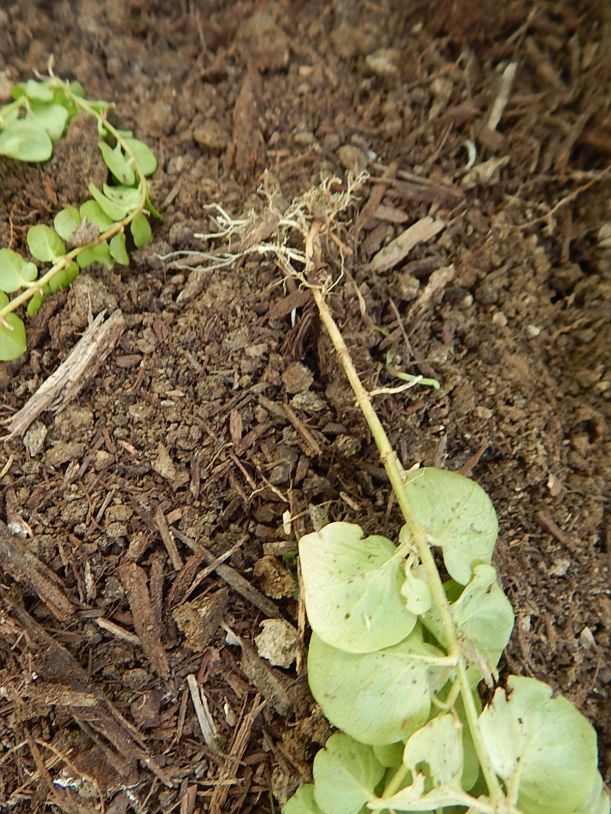
Individual stems and their roots are gently planted into the soil and kept moist.
I was really hoping the Karl Foerster grass would take off in the raised bed. It is was of two plants I put that bed along the fence, with the hopes of providing height to cover the fence. One took off and the other, well, not so much. Turns out the shade from a nearby tree was stunting its growth.
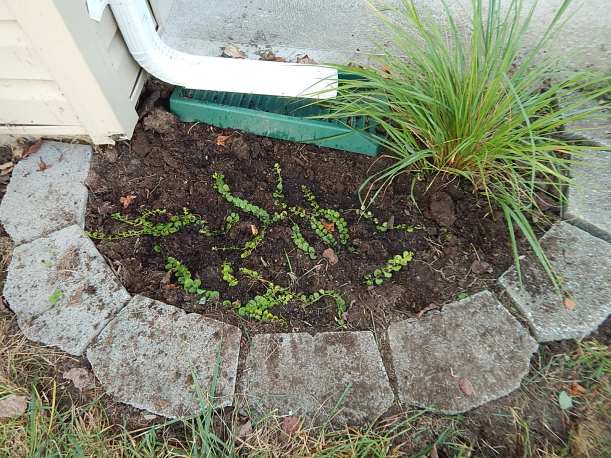
The full effect of the ground cover and reed grass.
I have pulled out the scraggly petunias, cut the blooms from the zinnias (a tireless bloomer), pulled out the peppers and done some general clean up. Before long the trees will change their colors, drop their leaves, and I’ll be longing for spring again. Until then, I will enjoy nature’s autumnal palette.
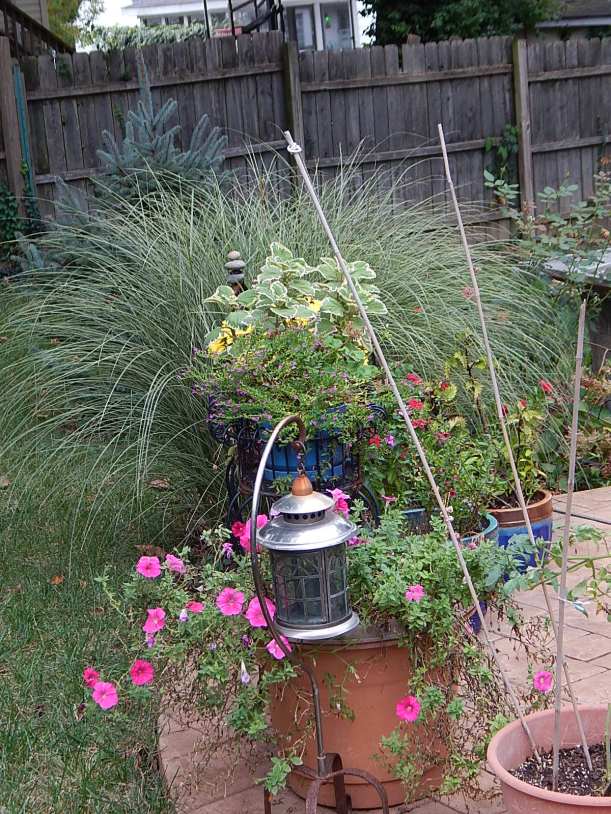
 The elements of texture and form, shape and garden occupy my thoughts more and more as I add plants and the garden matures. I really like the textures of plants in the shade bed, but the main bed along my patio is starting to look a bit messy. I’m not sure if it’s because the dwarf blue spruce is so slow to grow unlike the grasses, which are getting very big and therefore the balance is off, or because there are so many spillers in the garden and that’s creating some visual chaos. Either way, I’m exploring the themes of texture, balance and color as I consider moving things around next year.
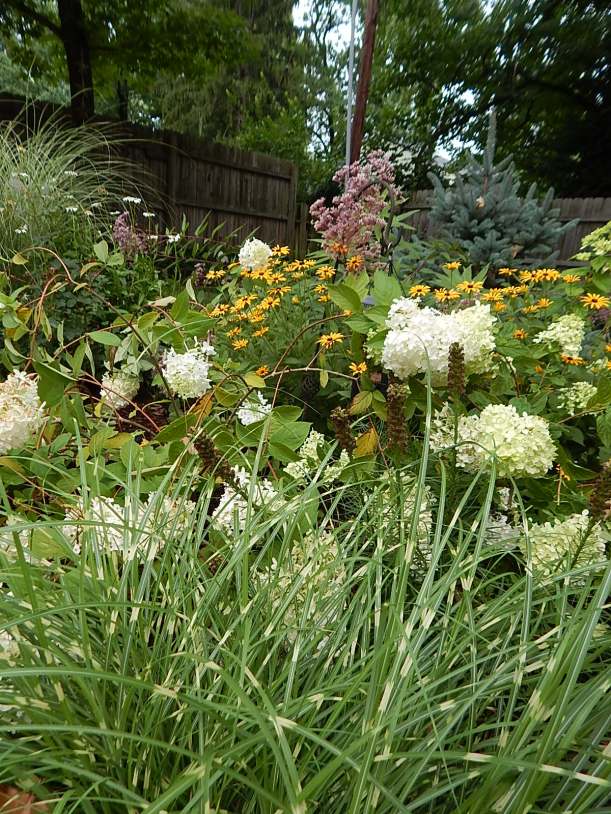 I never thought much about texture until I started gardening. Texture creates interest and interplay among plants. In the world of texture, contrast seems to be key, and there are a couple of ways to achieve texture in garden design.
 Most plants have medium texture. I typically use coarse and fine textured plants as a great way to achieve accents.Then I try and spice things up through complementary or contrasting colors of plants. The finely textured leaves from Russian sage (Perovskia atriplicifolia) complement the medium-textured leaves of rudbeckia. The bloom shapes from all three are small, medium and large. And the grayish-green Russian sage also provides a color contrast to the green of the other plants.
 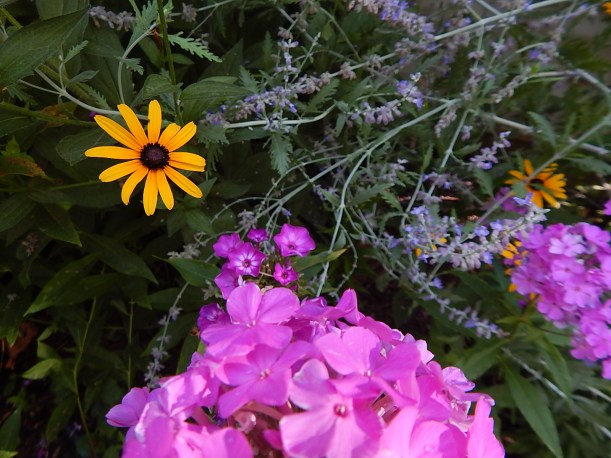 Proper texture pairings provide lots of interest and result in pleasing vignettes. This is not as simple as you might imagine. It’s probably one reason why gardeners move plants around year after year.

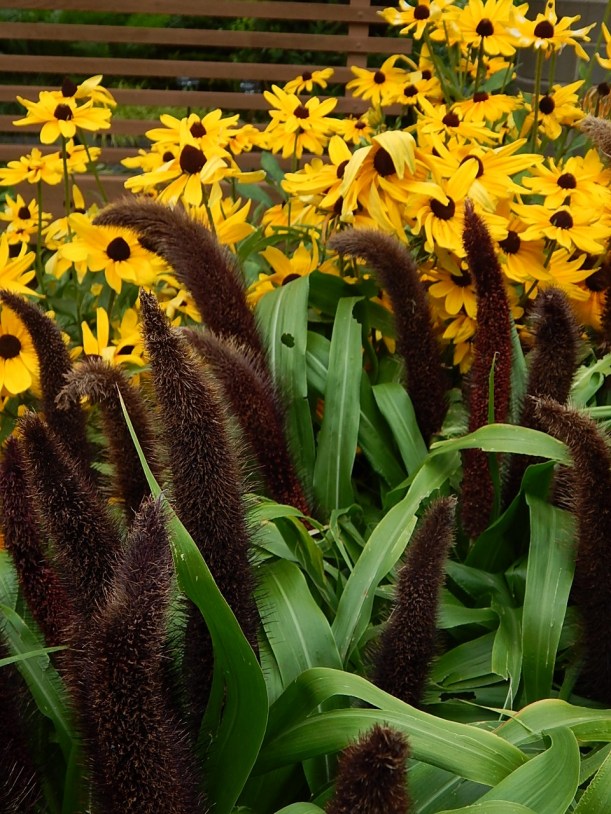 With so many varieties, succulents are a great way to add texture to a container. Soft rosette shapes combine with coarse texture, and the grayish hues of all the plants create color harmony in a succulent display at the
  How important is texture in your garden? And what plants are you incorporating for textural variety?
 The Arch City Gardener