
Friday turned out to be a perfect day to take off from the clattering at my keyboard and spend some time digging in the garden.
When I last wrote, we’d had some nice rain. That was followed by some heavy rain with about 2 inches over a couple of days. Which was followed by some dry, but cool, weather. Which brought us to Friday which was perfect for getting outside–sunny skies, temperatures in the 70s and the ground soft and easy to work.

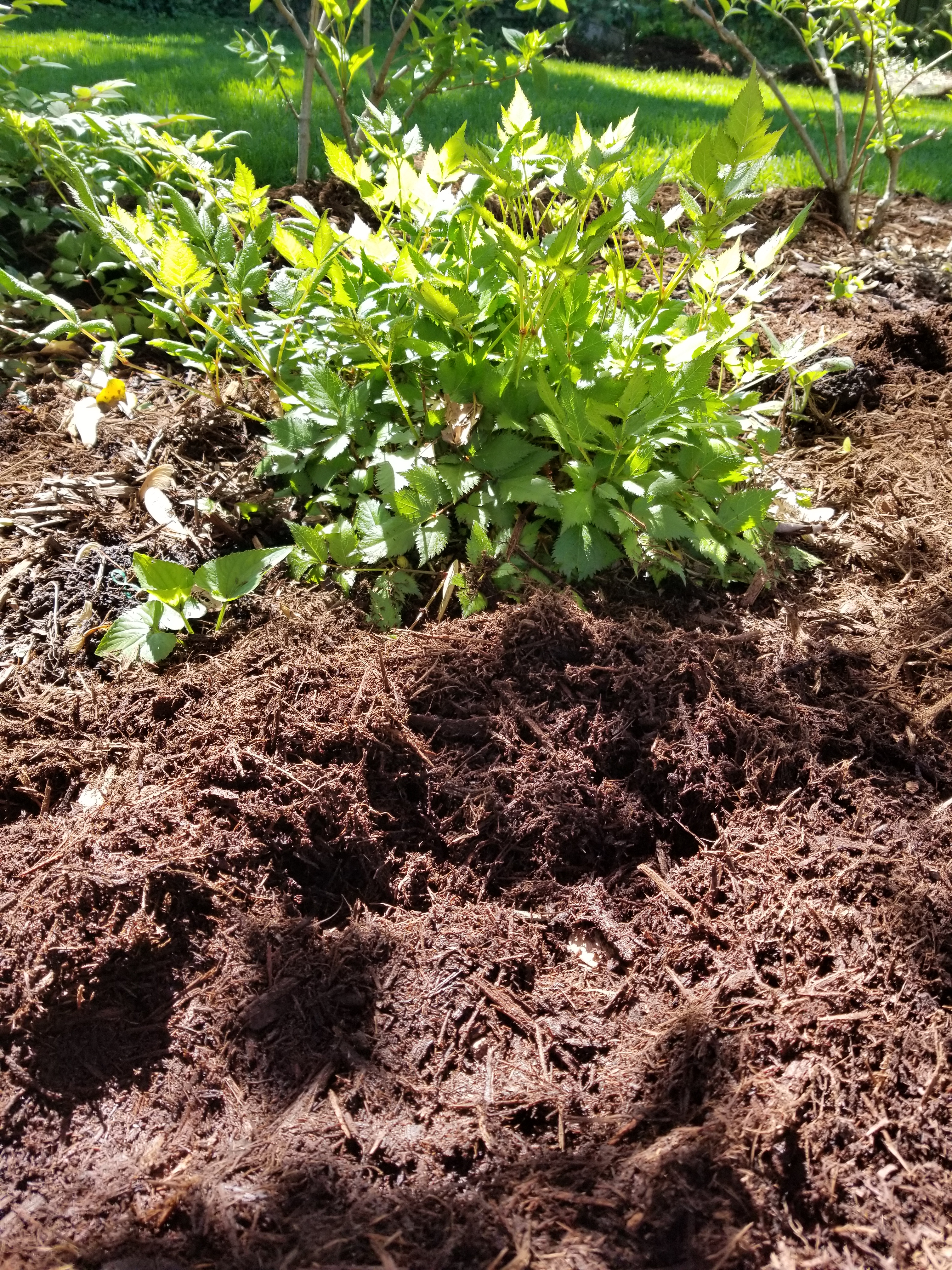
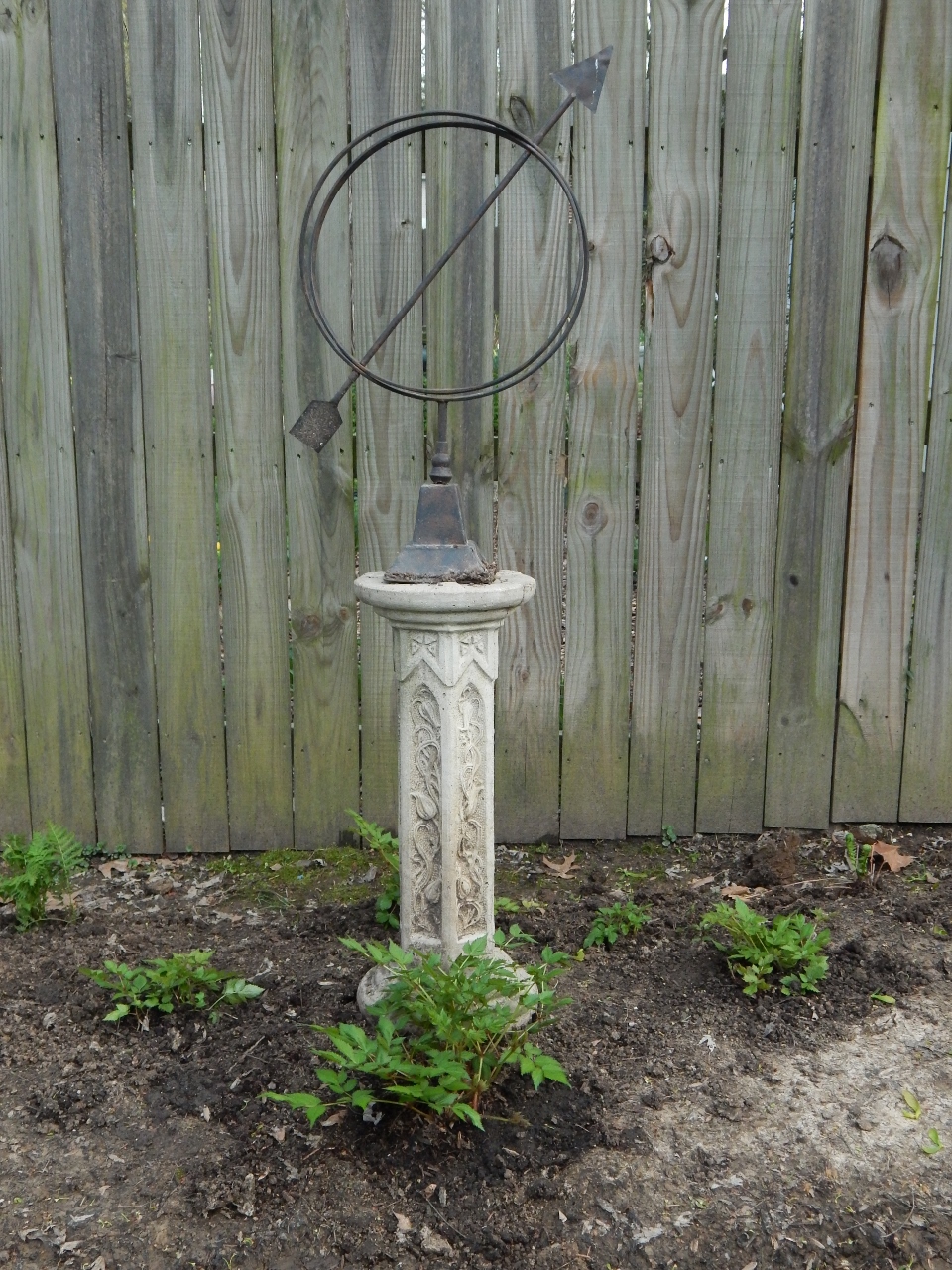
As I began dividing the astilbe, I was thinking of how much I enjoy working in the garden and quickly amended that thought to playing in the garden. For there are days like last Friday that are so enjoyable they feel like play.
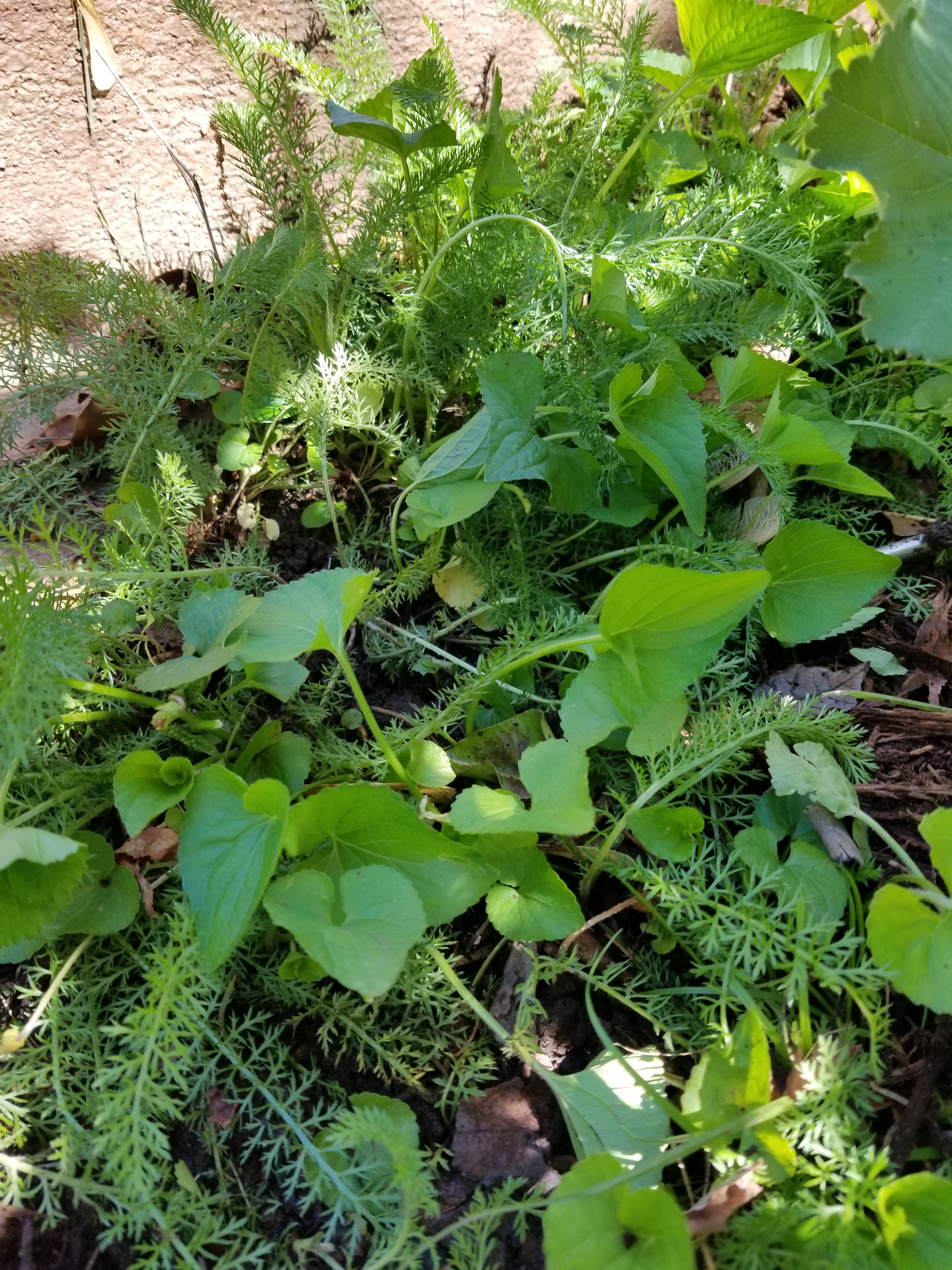
On a delightful day such as it was, even the weeding felt fine. I spent quite some time plucking violets from their unwelcome place amid the yarrow.
It was a day for spreading mulch. My mulch man places it throughout the beds and I spread it about. Tbis job takes a few days if I take my time with it.
And it was perfect for trimming the vines (Virginia creeper?) Climbing the fence and creating a wall of greenery.

It was a pleasant day for plucking up wayward black eyed Susan’s and dividing ostrich fern for friends and neighbors, trimming the Russian sage and watching with anticipation the beauty yet to bloom.

I savor days like these because I know that days like these are fleeting. As May advances toward Memorial Day it brings with it increasing heat and humidity. And that’s when play day chores like Friday’s begin to feel like work.


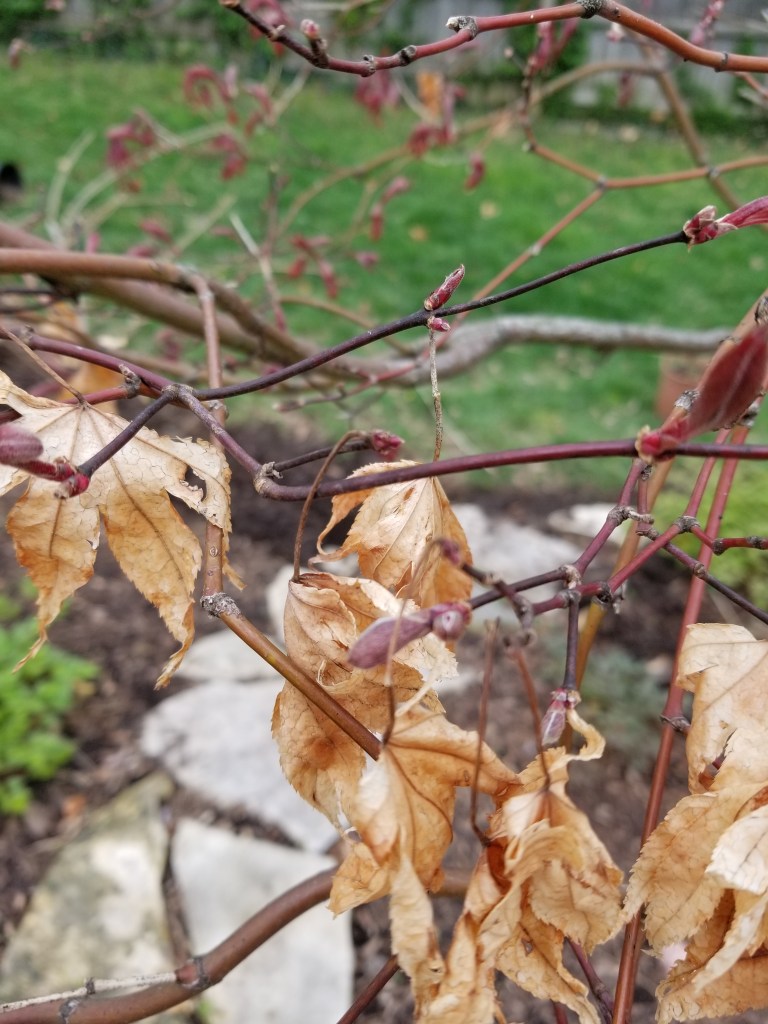
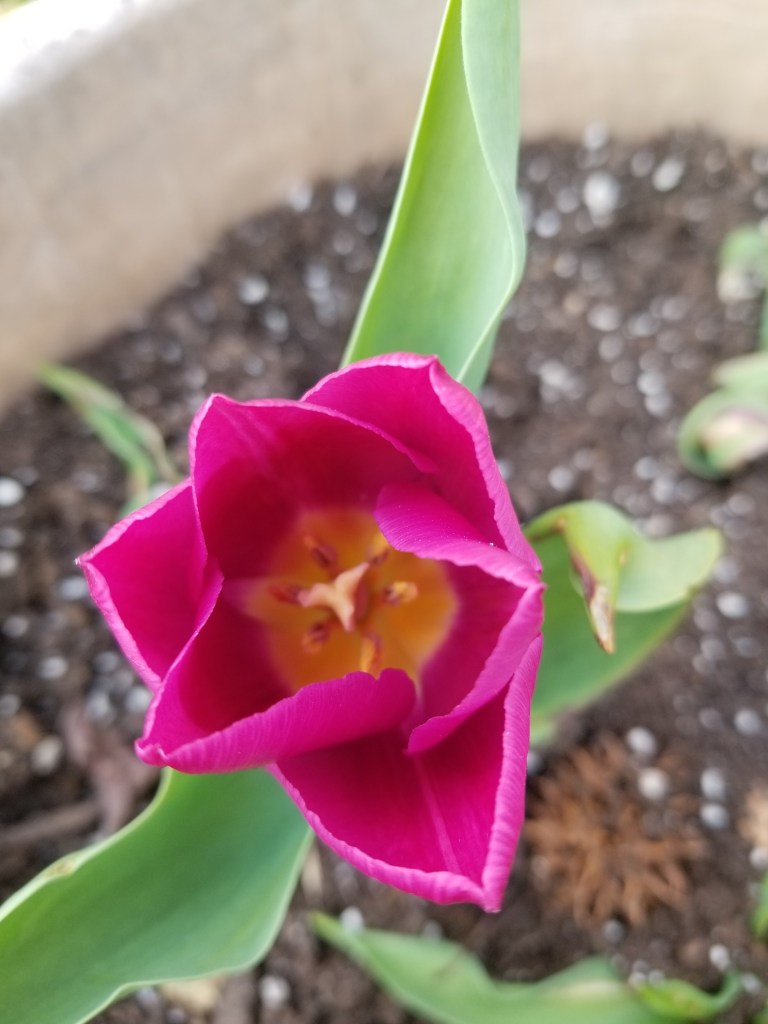
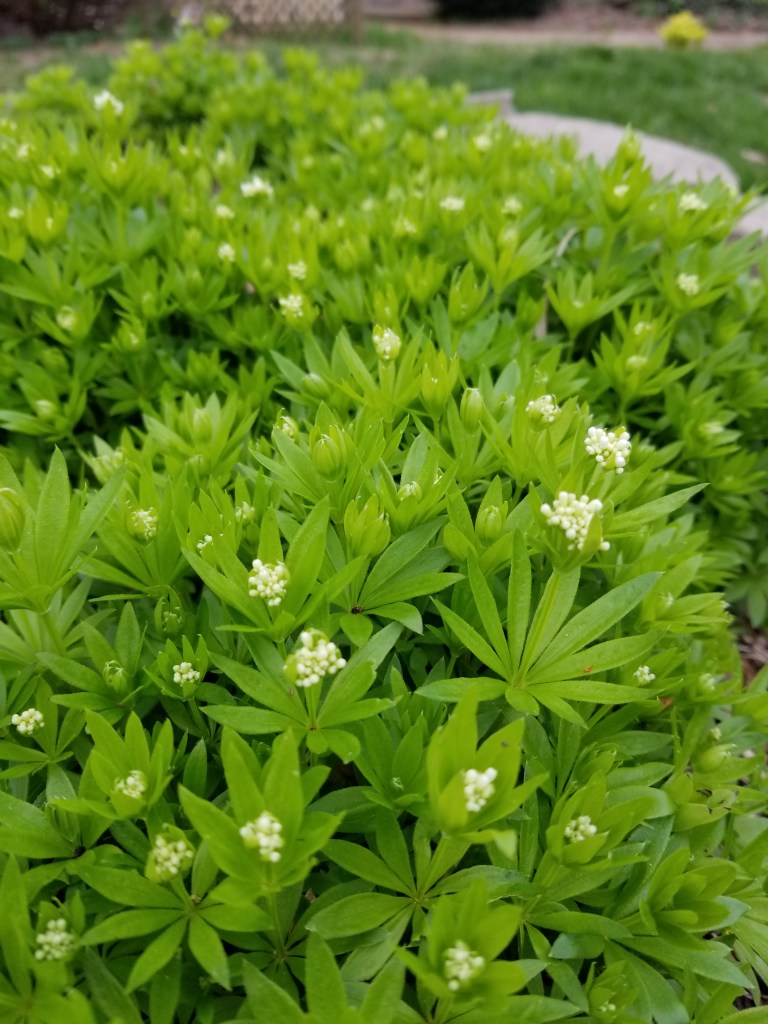
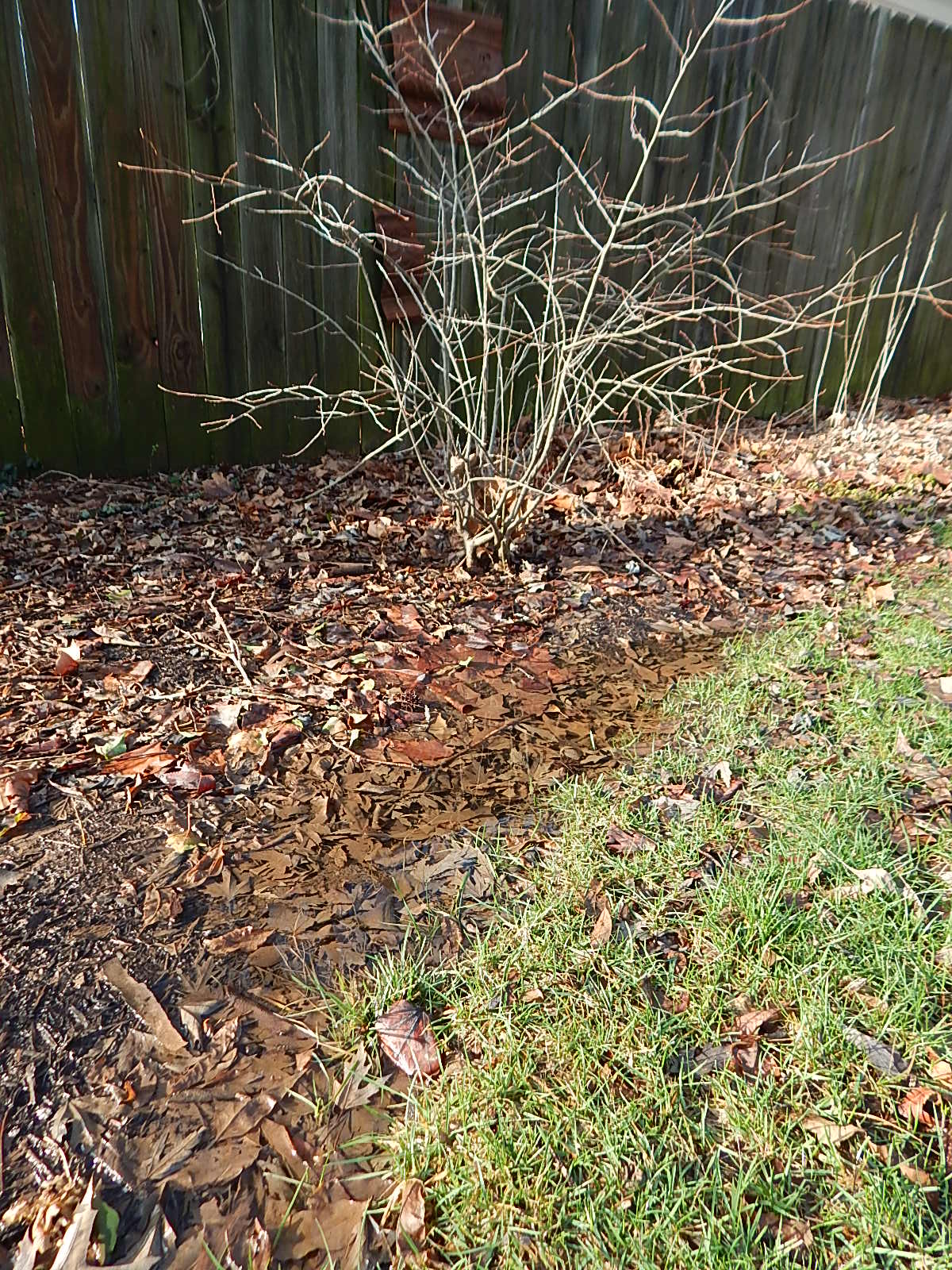
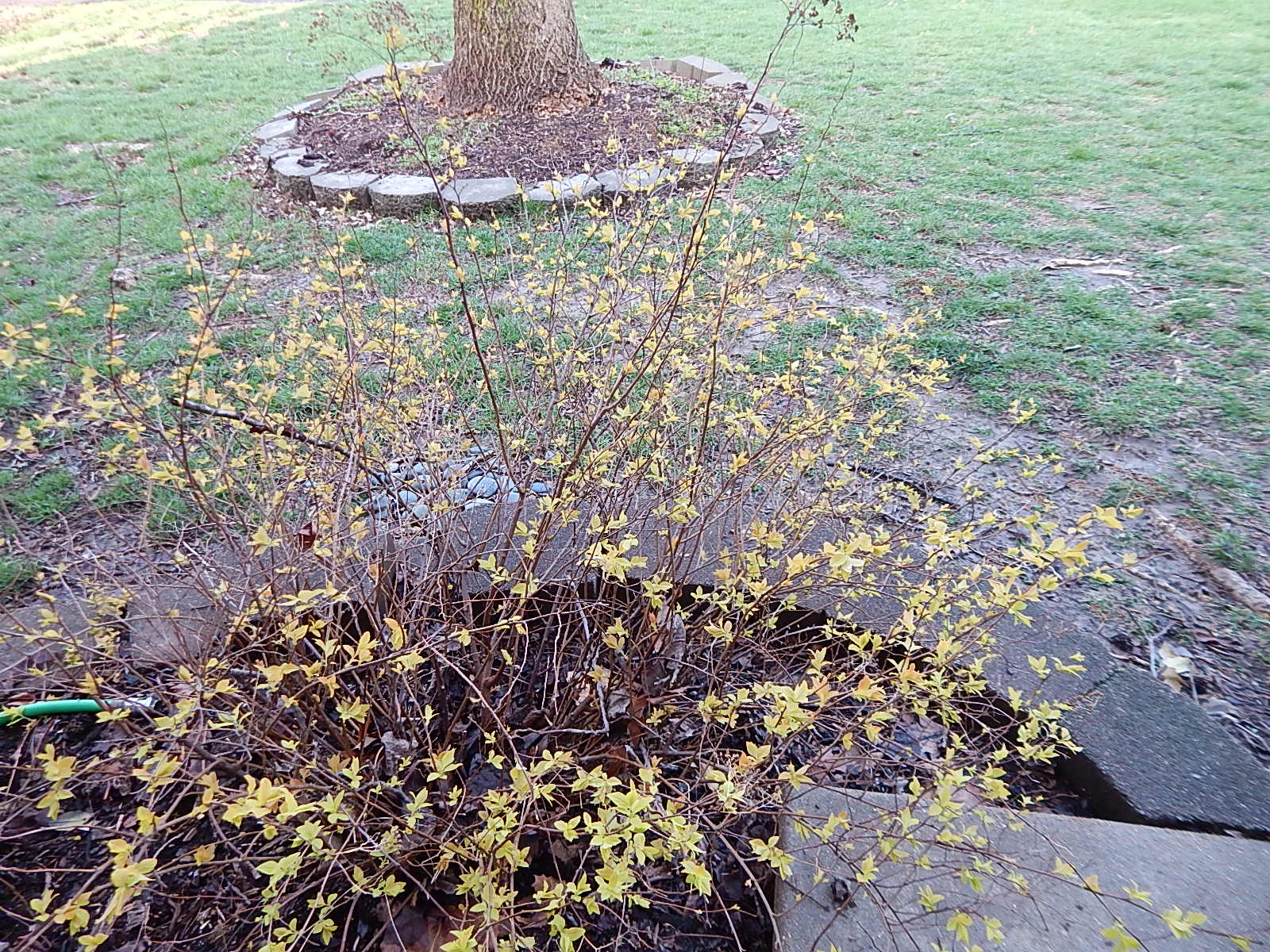
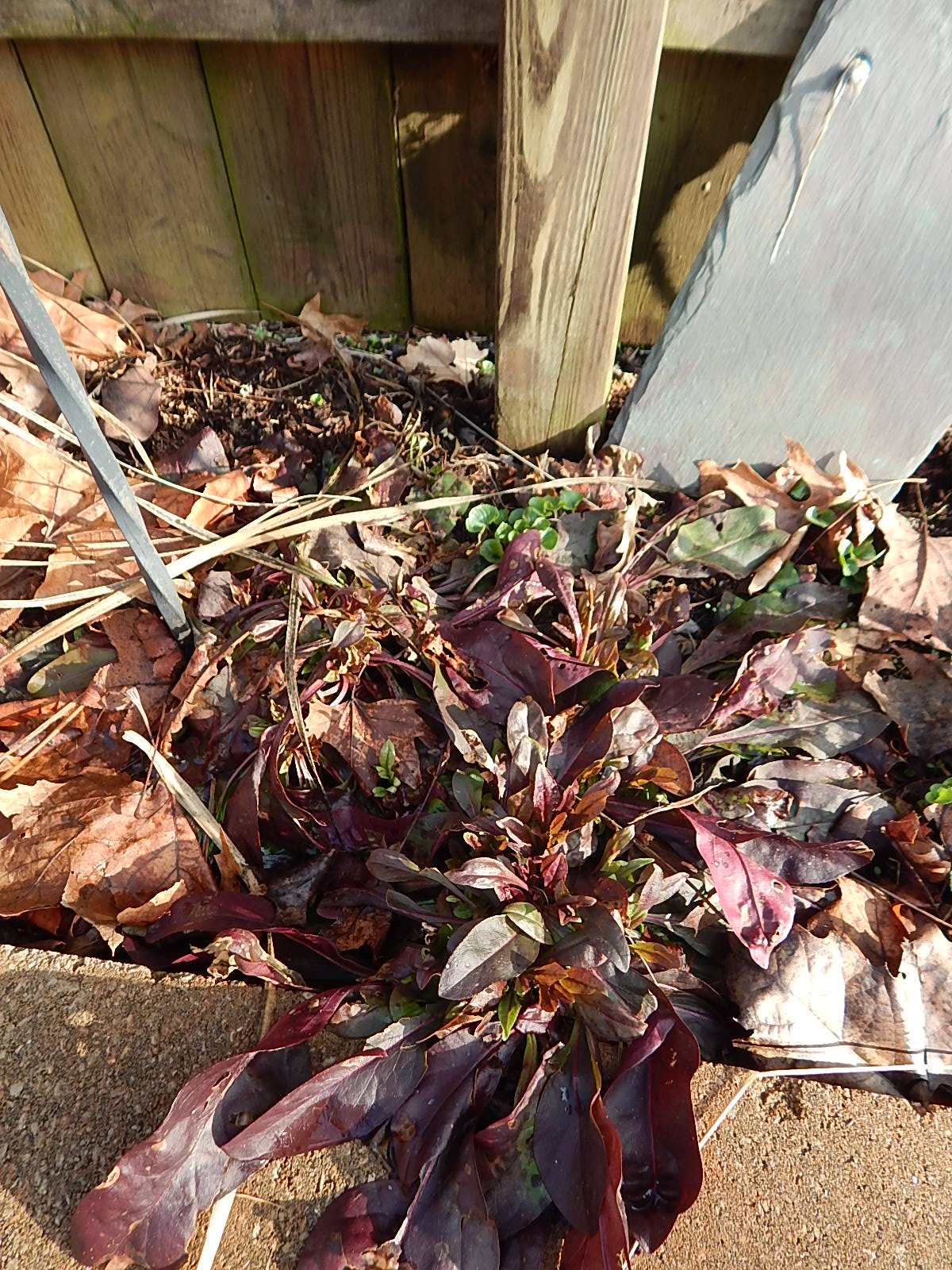 Penstemon’s lettucy looking red leaves. I love this plant, which has been happy in this spot for five years.
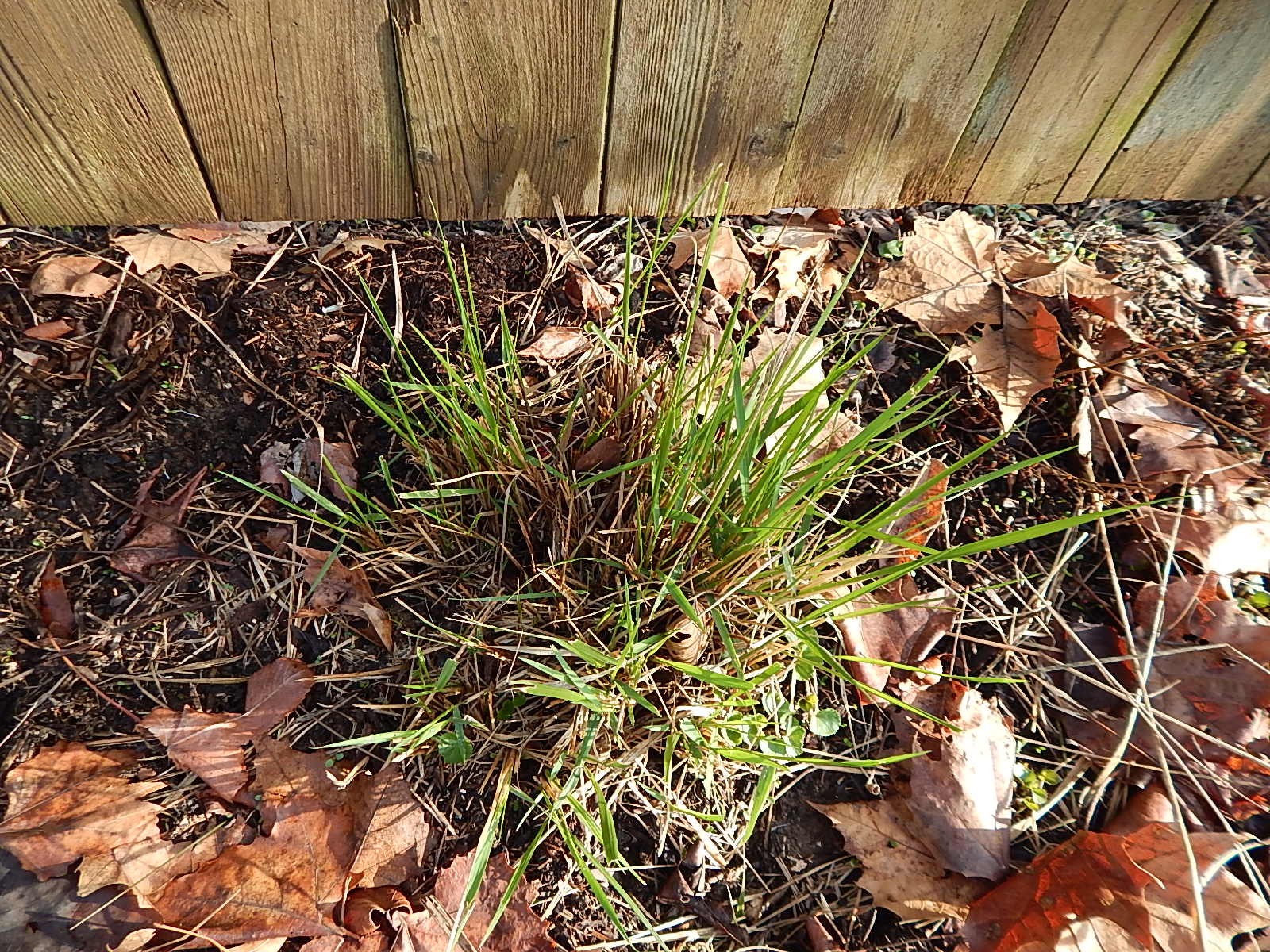 Karl Foerster grass is coming up
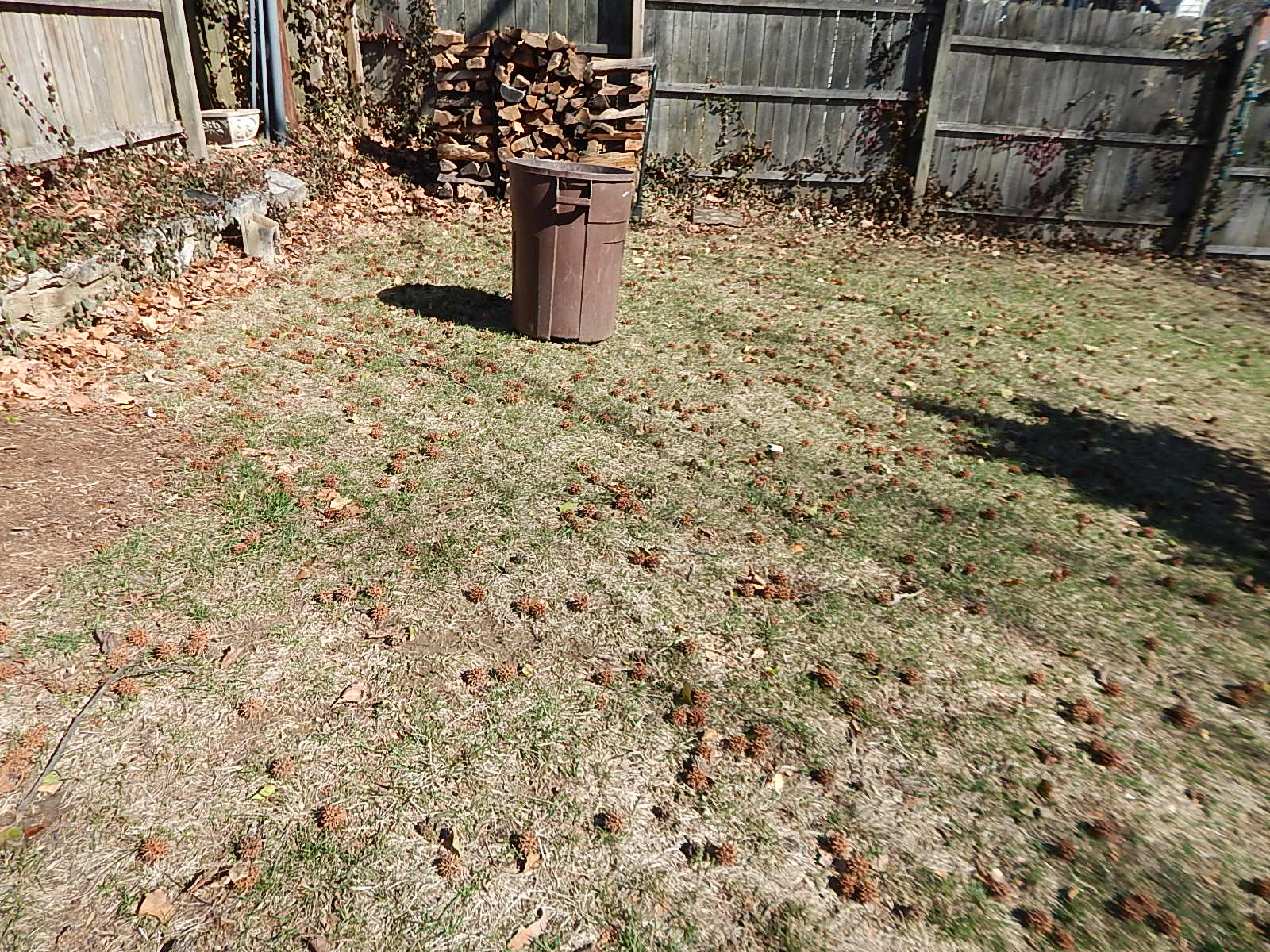 Just a couple of gumballs to deal with. This is Round 3 of the rake up.
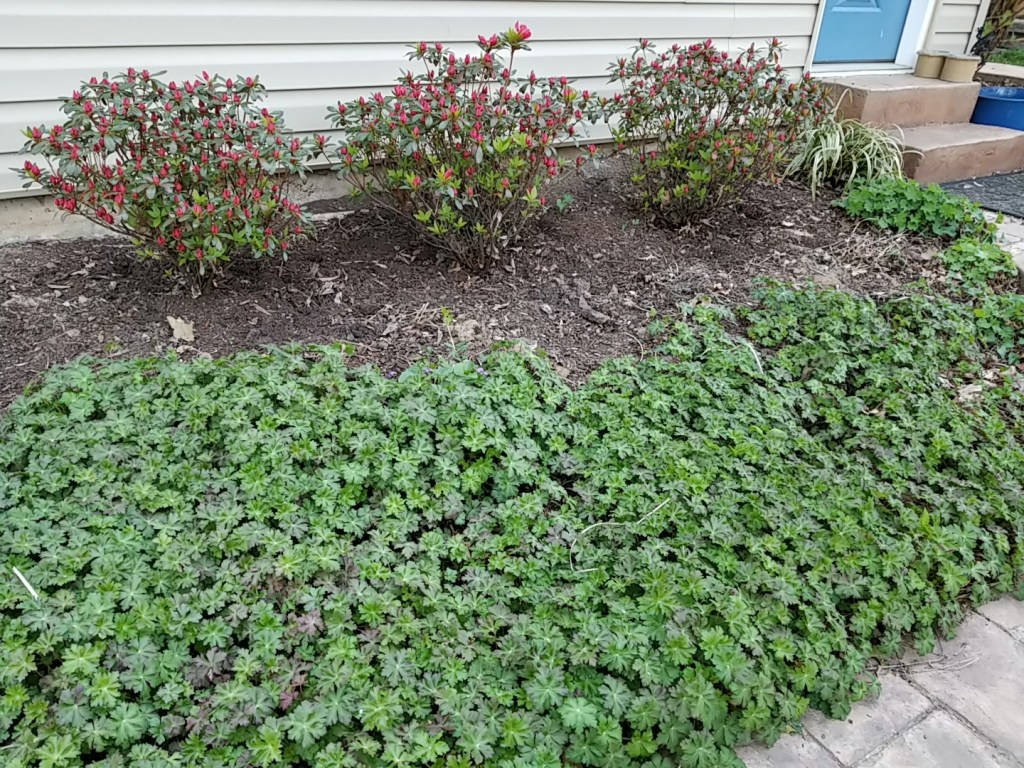
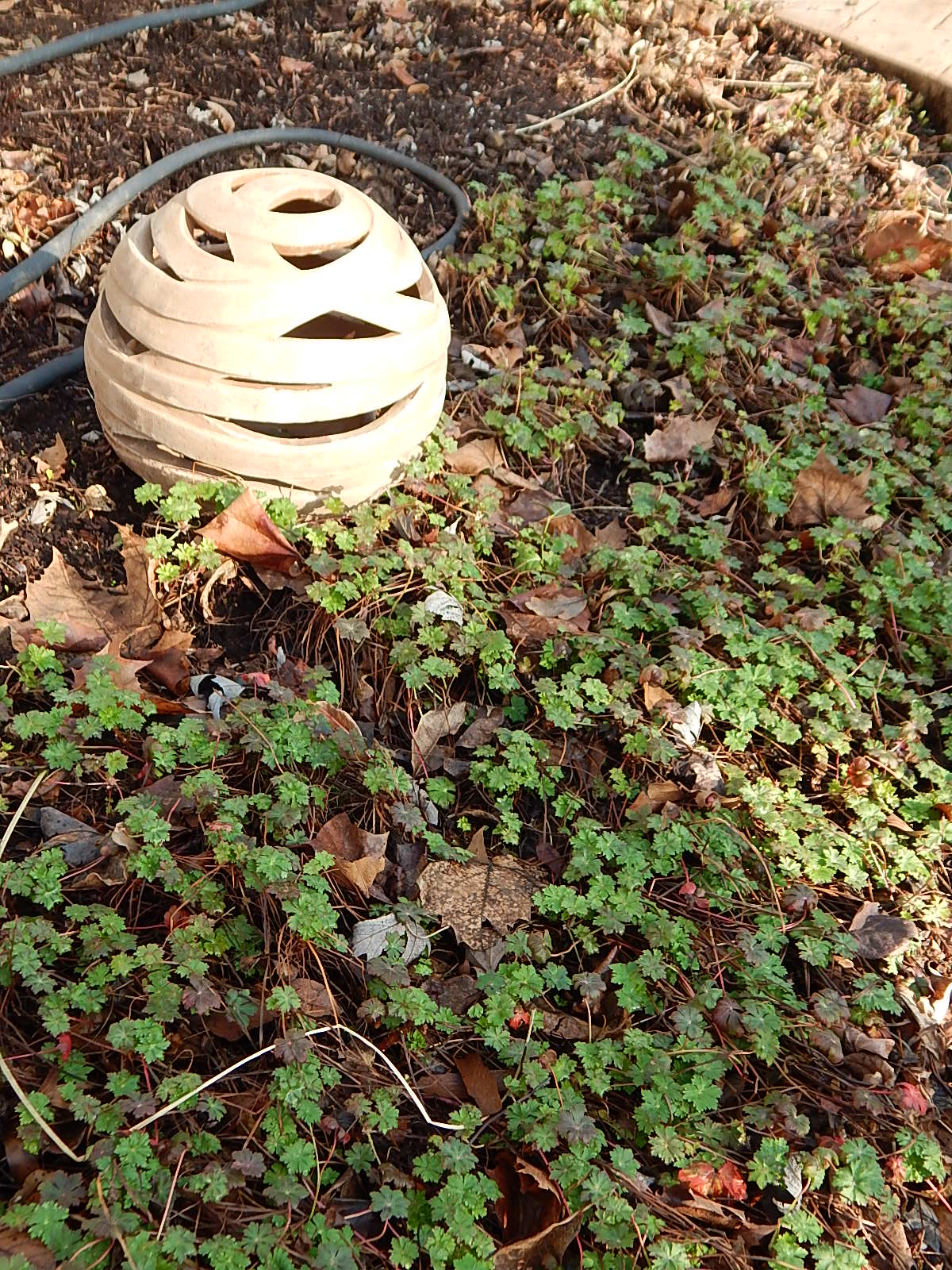 Cranesbill Biokova Karmina (geranium x cantabrigiense). What a wonderful groundcover. And talk about easy care!
 The oakleaf hydrangea “Alice” looks deceptively docile. My pet name for her is “Godzilla.” The blooms are incredible.
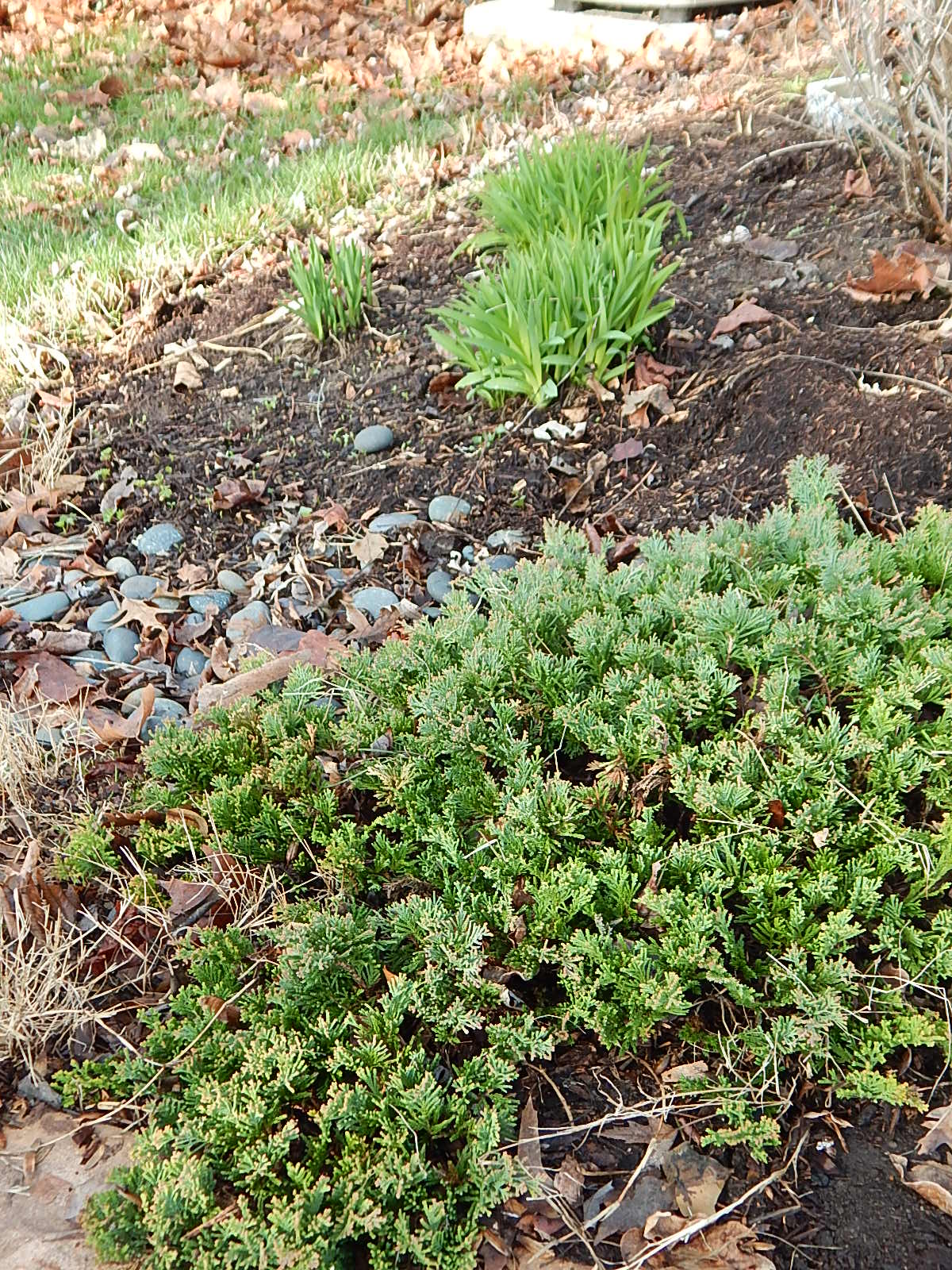 Planted about six years ago, this low-growing juniper (Juniper horizontalis) is a slow creeper and provides lovely texture with a green-yellow tint. Behind her are stella d’oro day lilies.
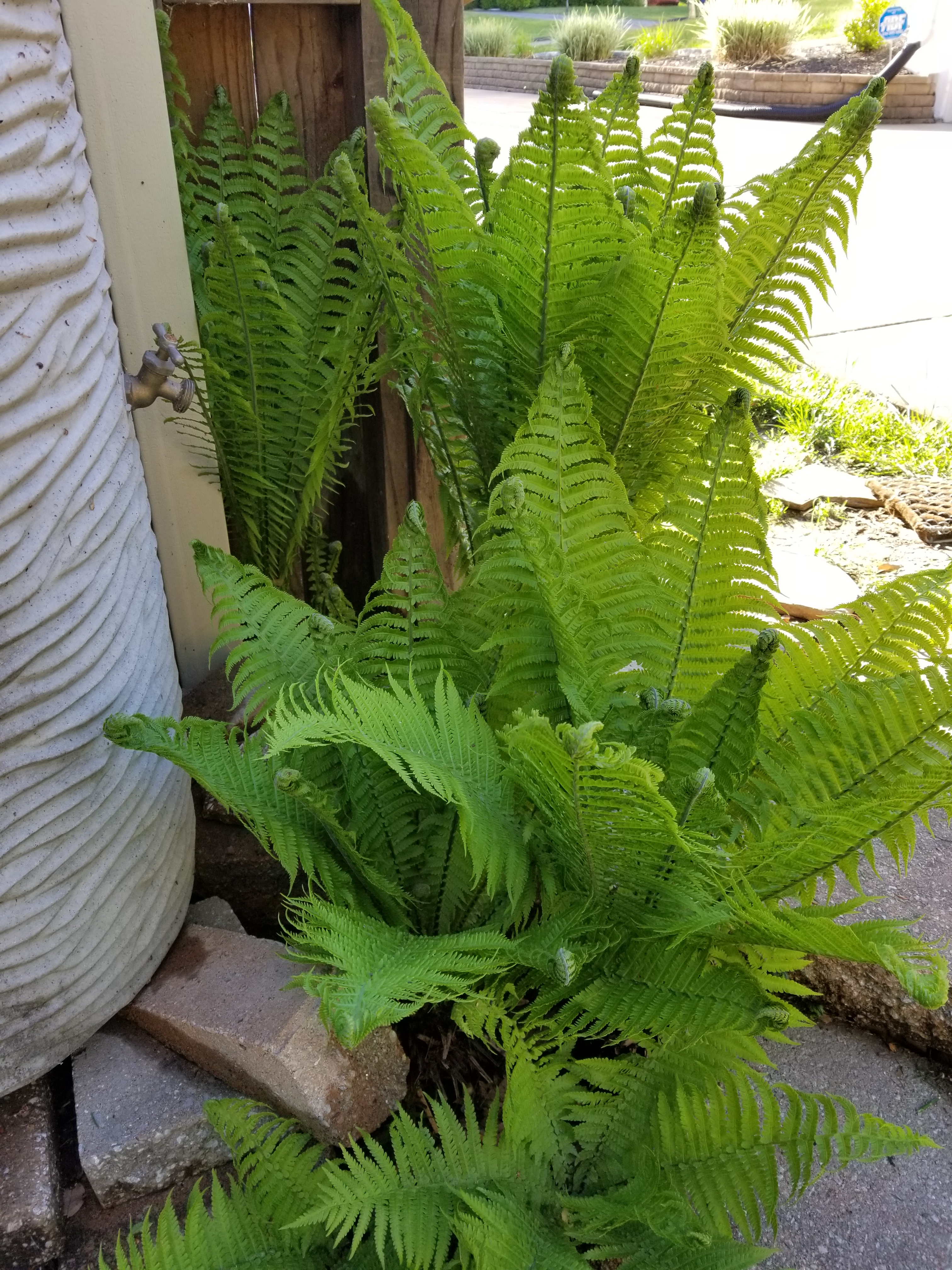
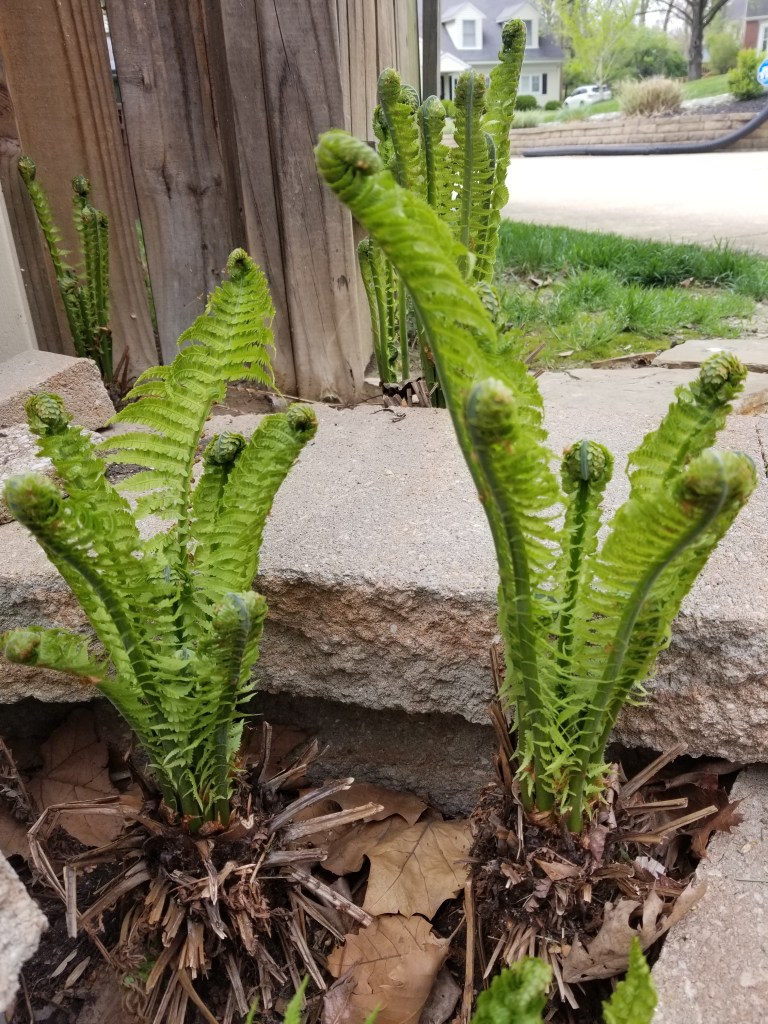
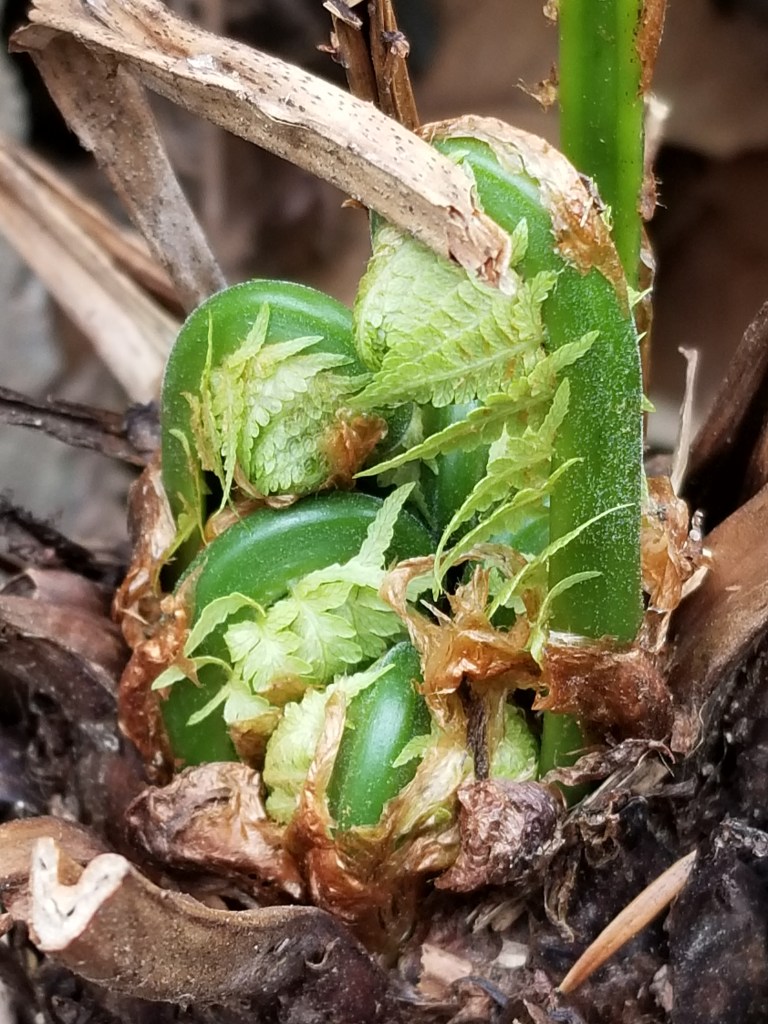
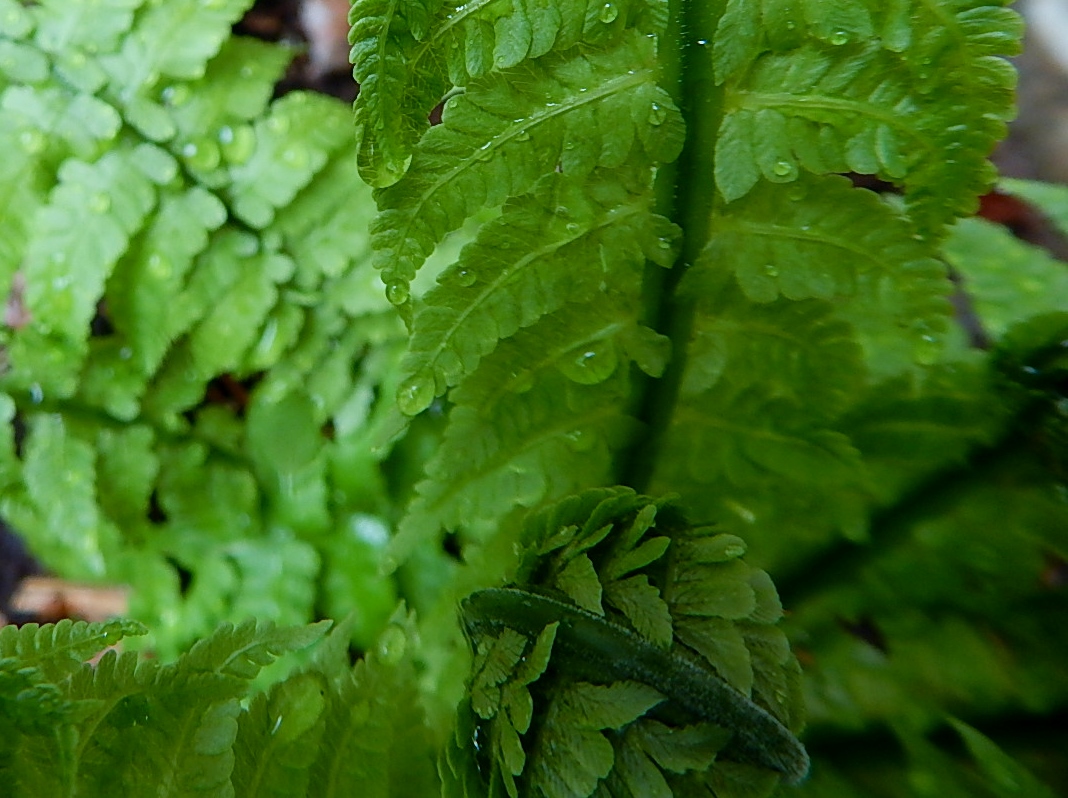
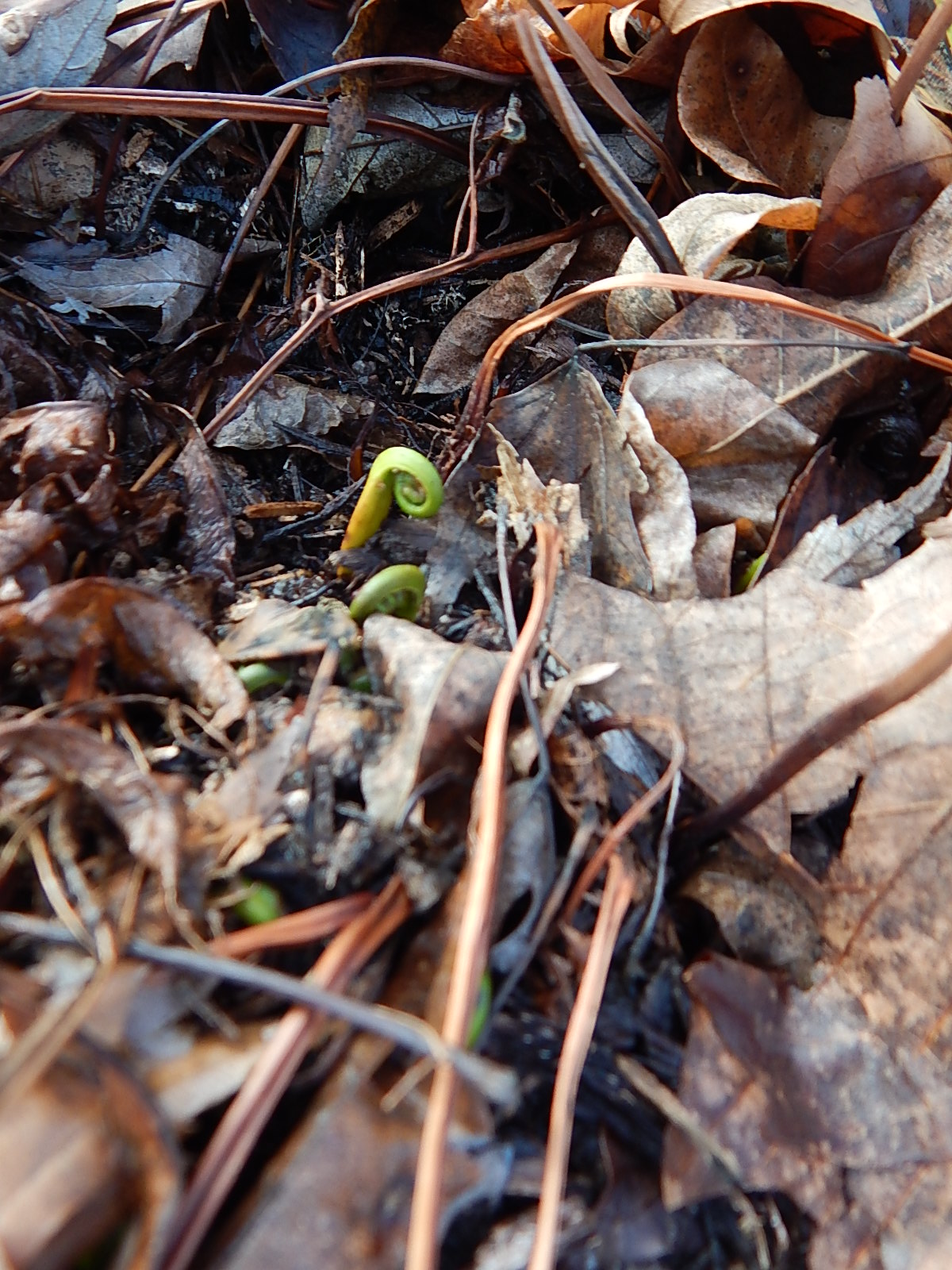 The fiddleheads of Ostrich Fern (Matteuccia struthiopteris) begin their graceful unfurling. Ferns are my favorite plants to observe.
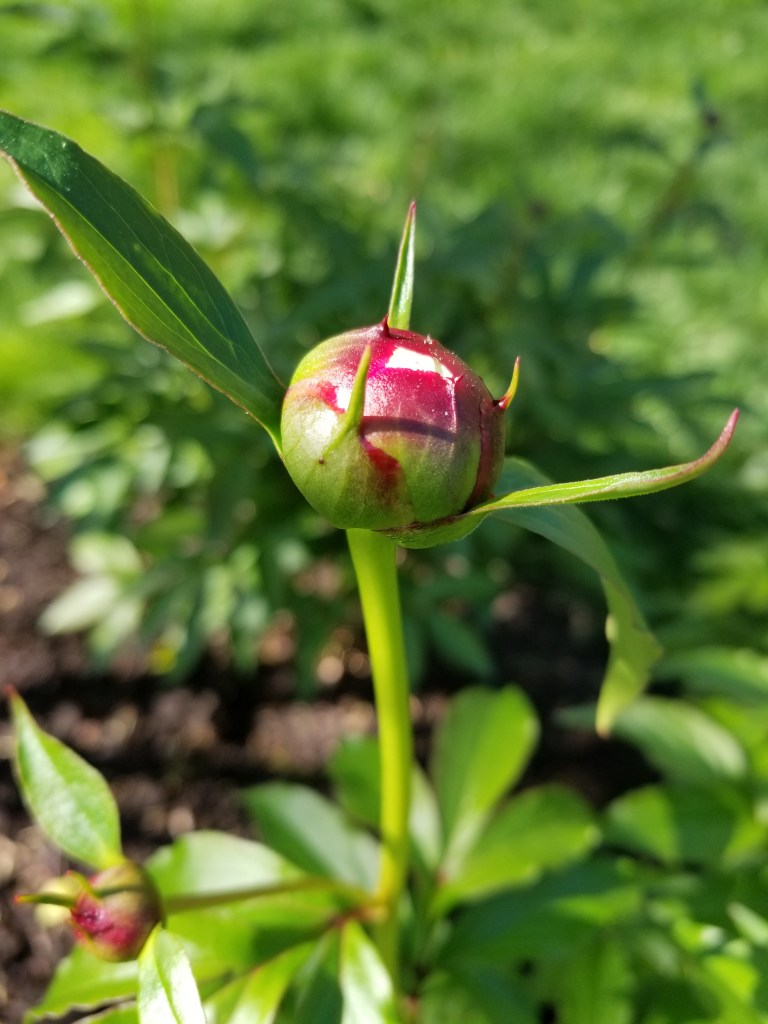
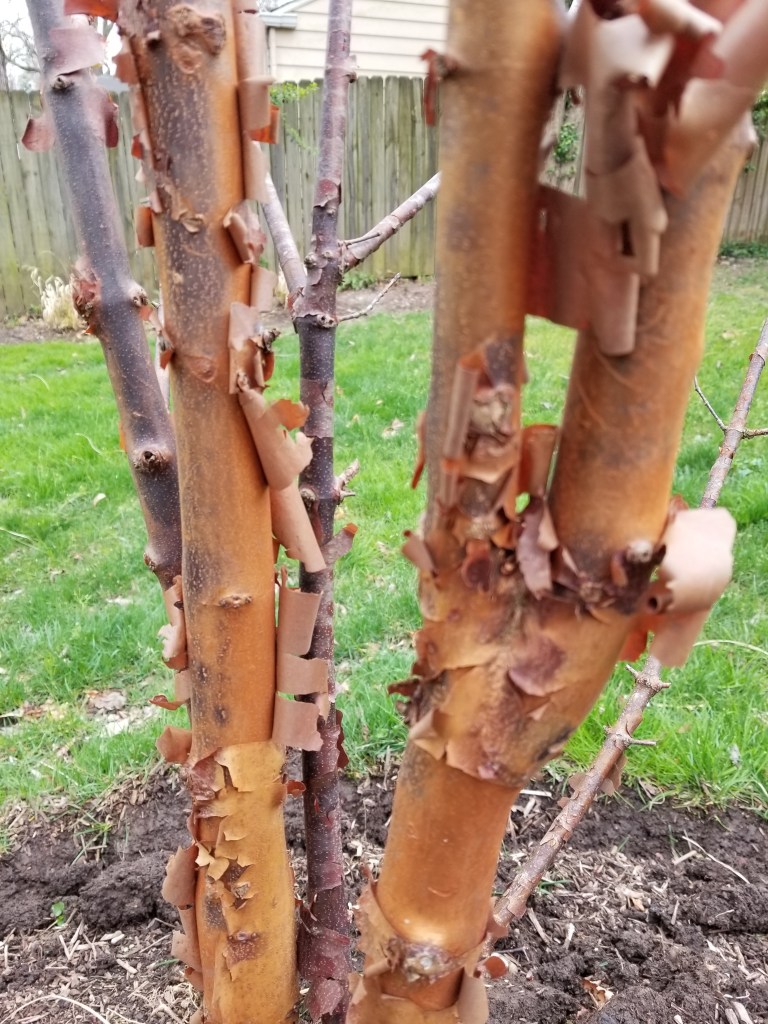
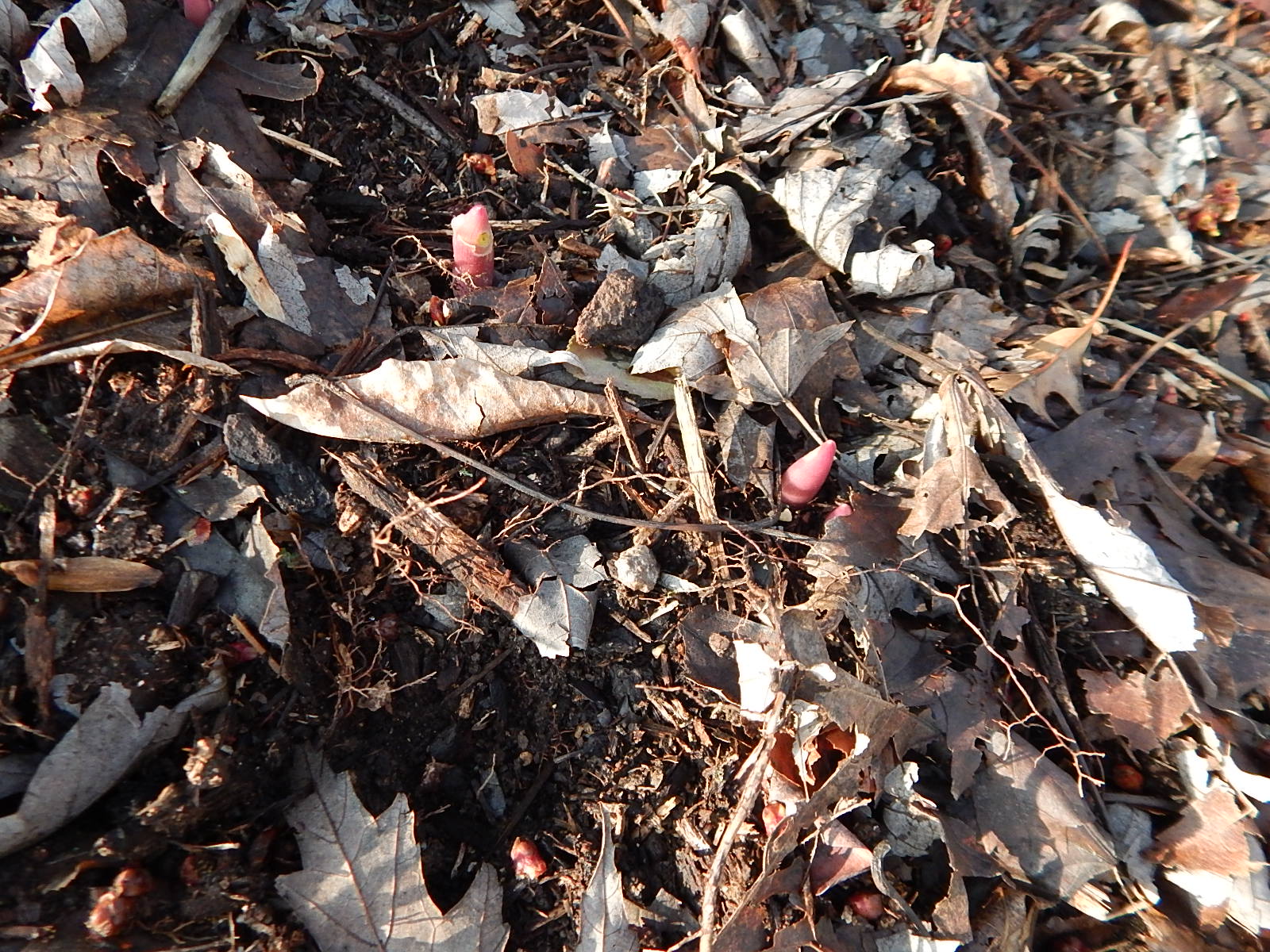 Peonies–Eden’s Perfume, Shirley Temple, and Sarah Bernhardt–peek through the leaves. The peonies were a new additions last year to the bed below the paperbark maple.
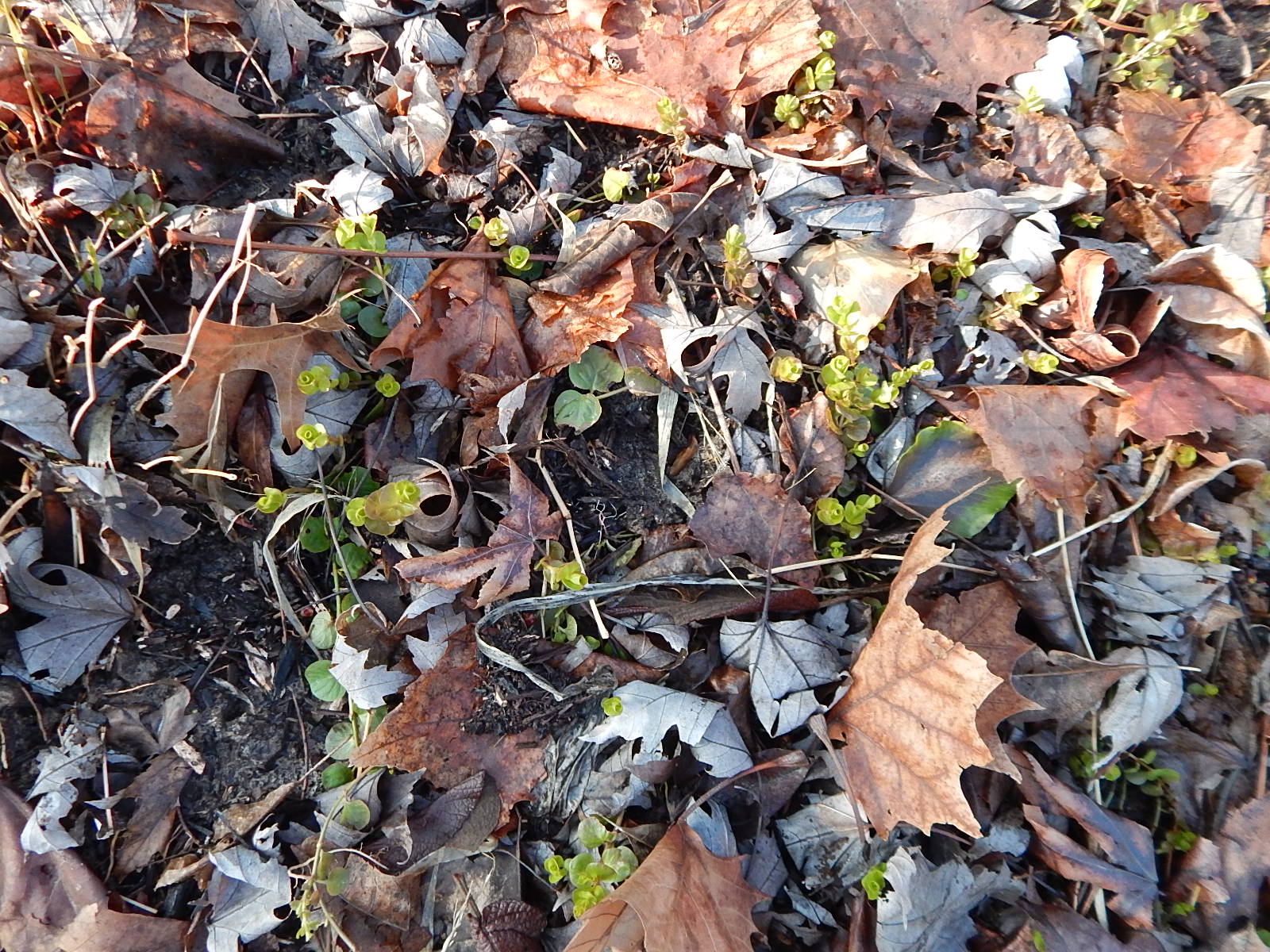 Creeping jenny groundcover is vigorous and advancing. It had better dry up so I can get out there and rake.


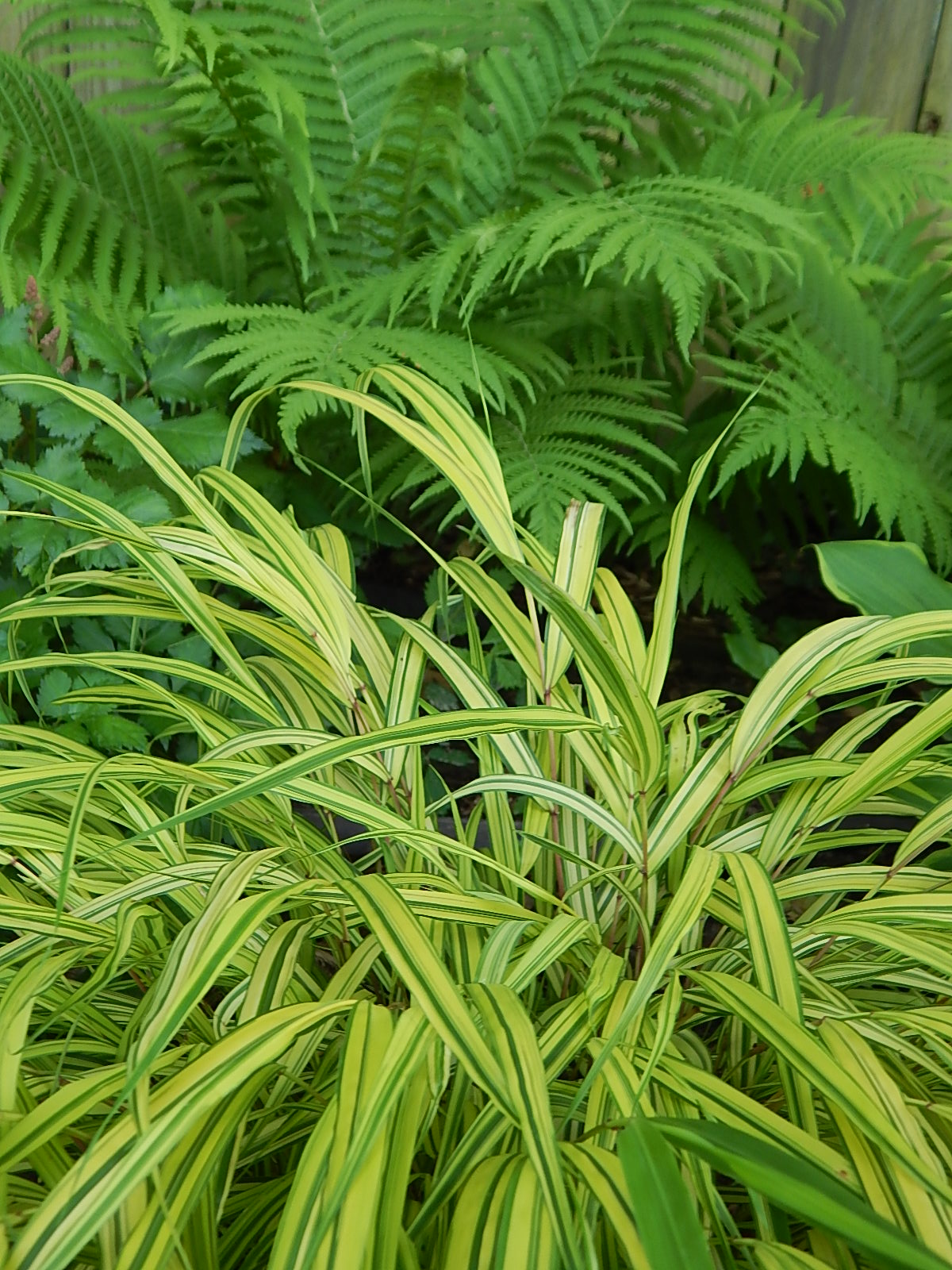


 I love ferns. Growing up we always had fern as a houseplant or in a garden bed. A graceful Boston fern hung from the window in the kitchen. My mom would mist it regularly, occasionally split it when it outgrew its pot, and adorn it with a red cardinal to show her support for our beloved basedball team, the St. Louis Cardinals. When she died, a lovely Boston fern was sent to the funeral home and I tended it for many years.
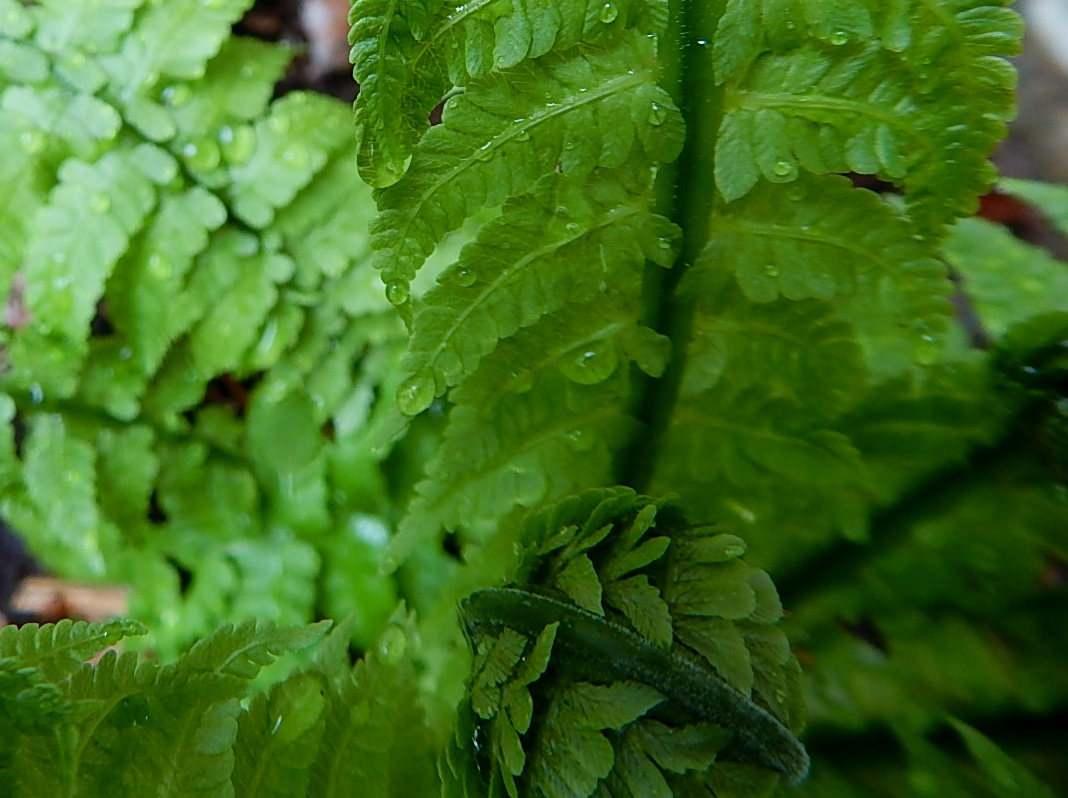 A couple of years before I put in the shade bed, I bought a couple of ostrich ferns and put them in to see how they would do. One quickly withered and turned brown while the other barely clung to life. I visited the nursery, asked what was up and was told I probably planted them too deep. They like to be planted very shallow and I was instructed to dig up the fern and replant it. “I’m pretty sure it’s dead,” I told nursery pro. Don’t worry about it, she reassured, this type of fern is really hardy.
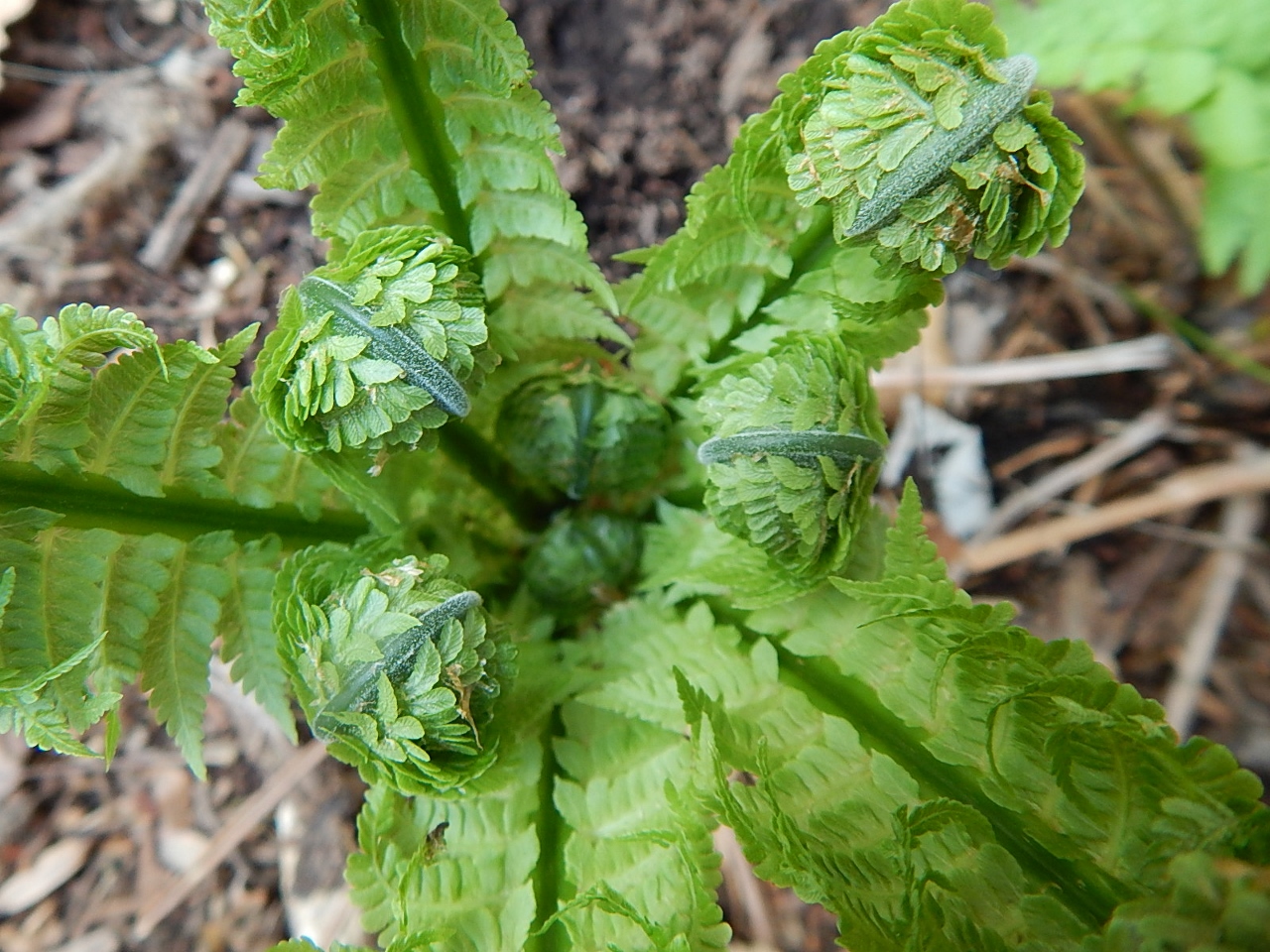
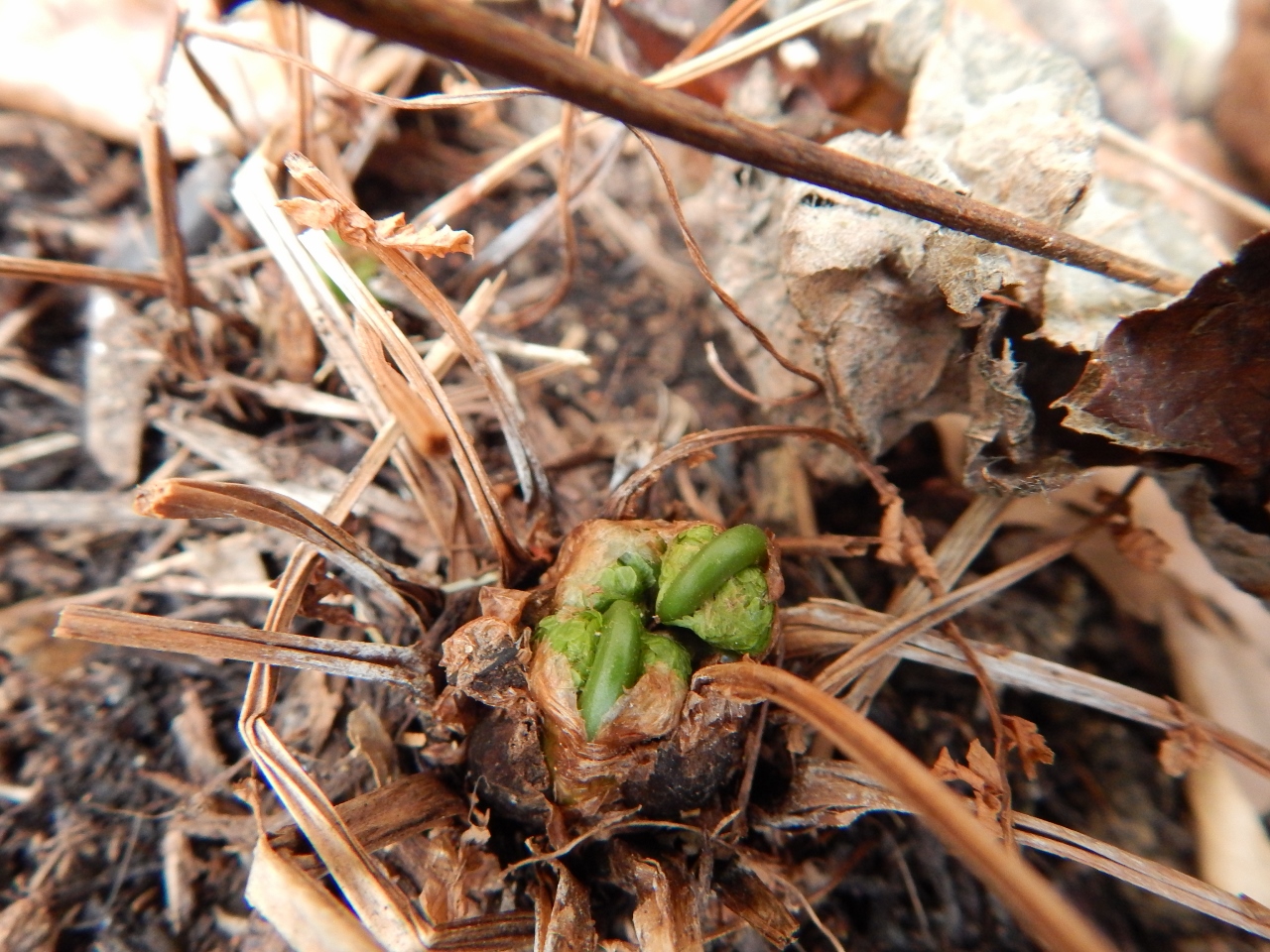 Early spring mornings find me running out before work, coffee in hand, to inspect the progress of the fiddleheads. Throughout the growing season, my ferns send out new fiddleheads, which gracefully become a frond supported on a stipe.
 A frond is made up of several leaflets, or pinna and the stipe. And a pinnule is a subleaflet of a pinna. Then there is the blade, which is the expanded leafy part of the frond. The roots of the fern grow on the stipe, which is below the blade. Looking at the photo above you can get the general gist of a fern’s anatomy.
 Ferns reproduce through spores; their fronds are sterile. As summer nears its exit spores grow on the ferns. This is as detailed as I am going to get on the reproductive cycle of the fern. This is a G-rated site, after all. However, you might notice that the underside of a frond has brown dots along the pinna, or leaf. These spore-filled dots are called sori and contain thousands of spores. Neither the sensitive nor the ostrich fern grow spores on the underside of their blades. Instead, they produce what is known as a fertile frond.
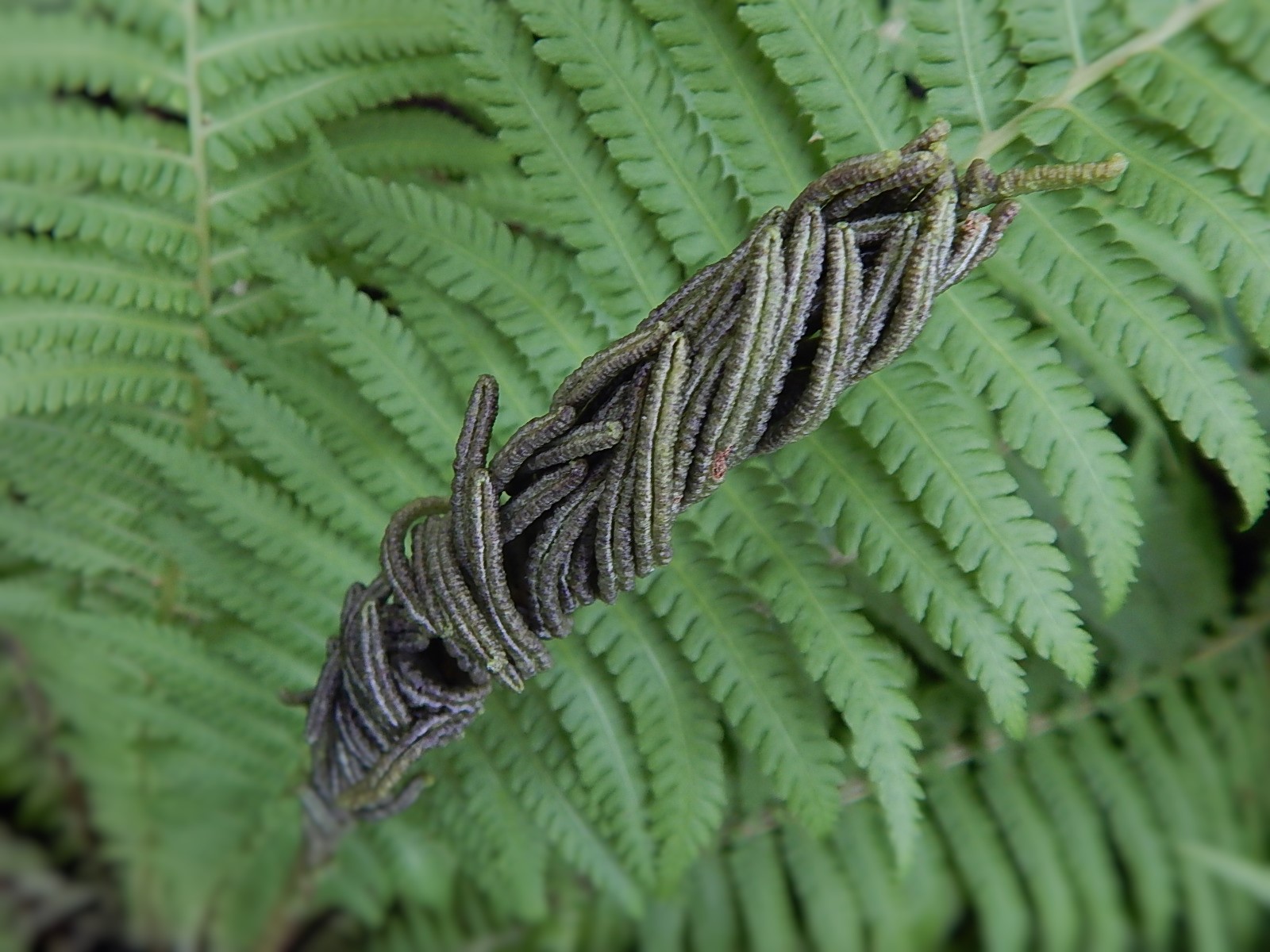
 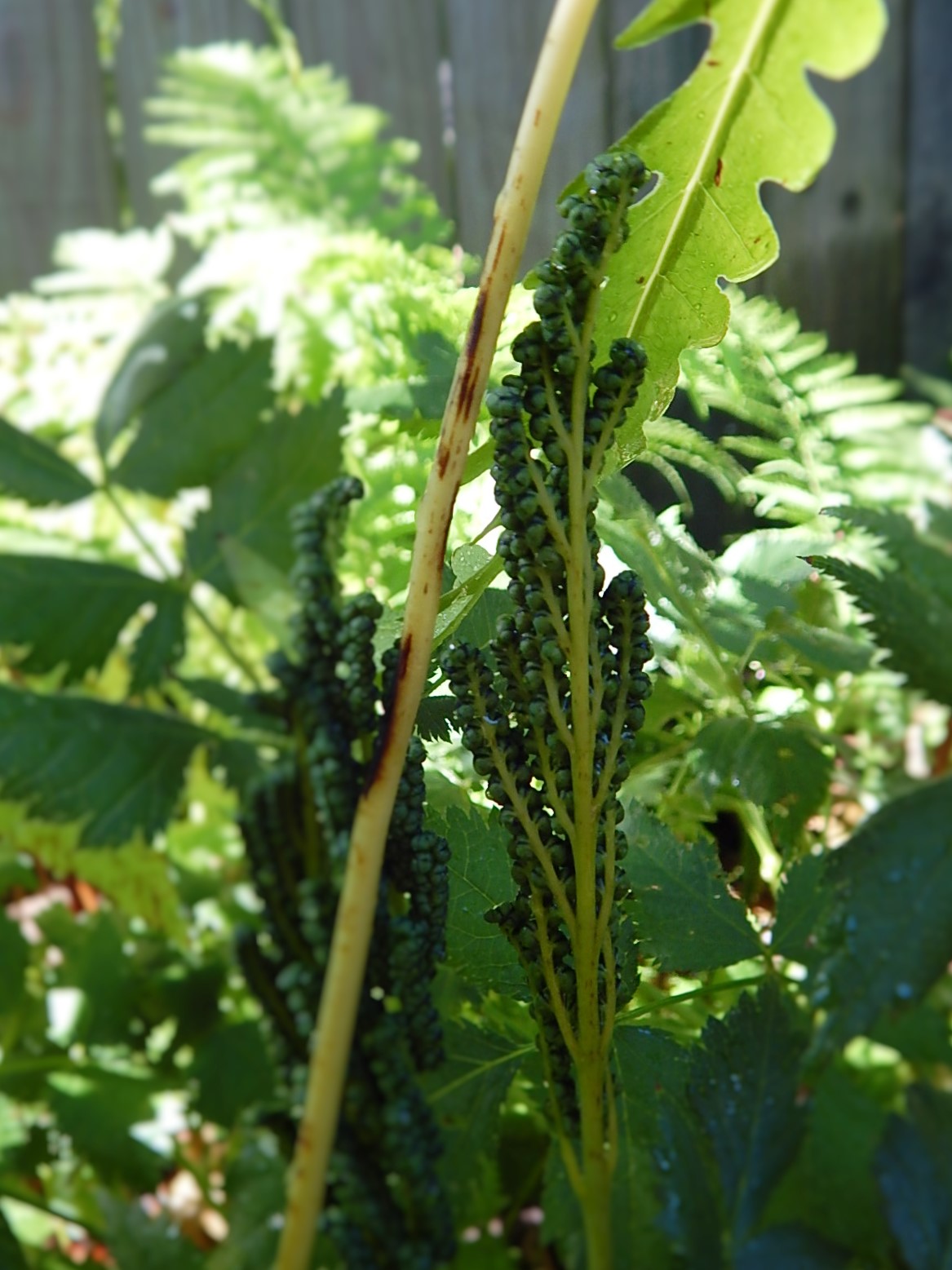 The beaded fertile fronds will eventually turn a cinnamon brown on the senstive fern. I think these dense clusters that make up a fertile frond look somewhat prehistoric. Just like the unfurling fiddlehead, the fertile frond begins to change color in a matter of days. The pictures below were taken about 10 days apart.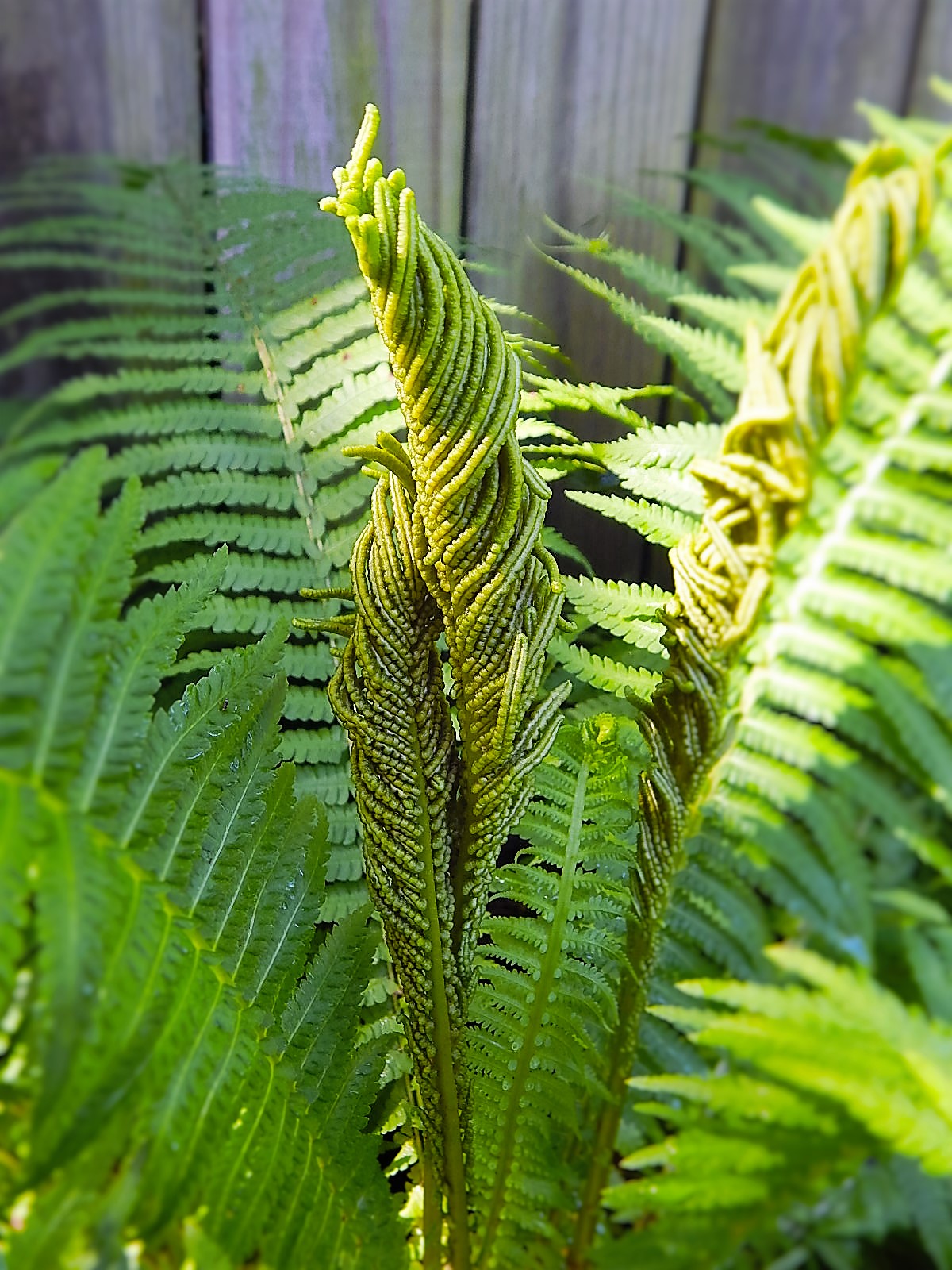
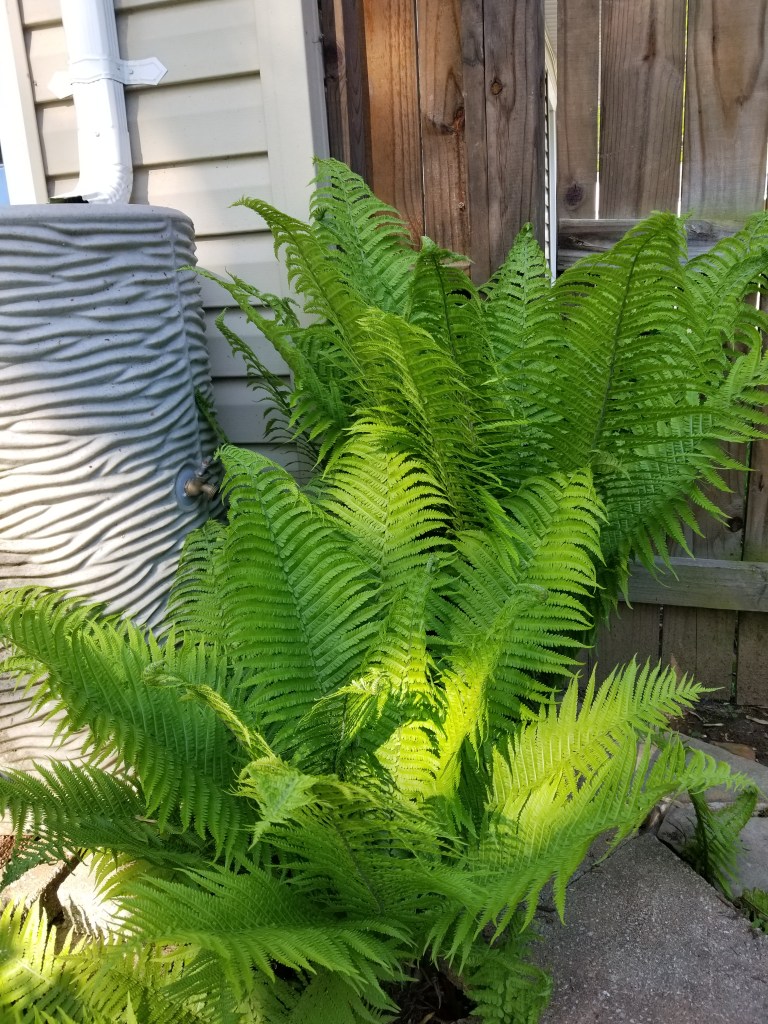
 I’m no longer concerned about the viability of ferns in my gardens. I now have them planted in three areas in the yard and they are very happy. The fern nearest the rain barrel probably gets too much sun but is vigorous nonetheless.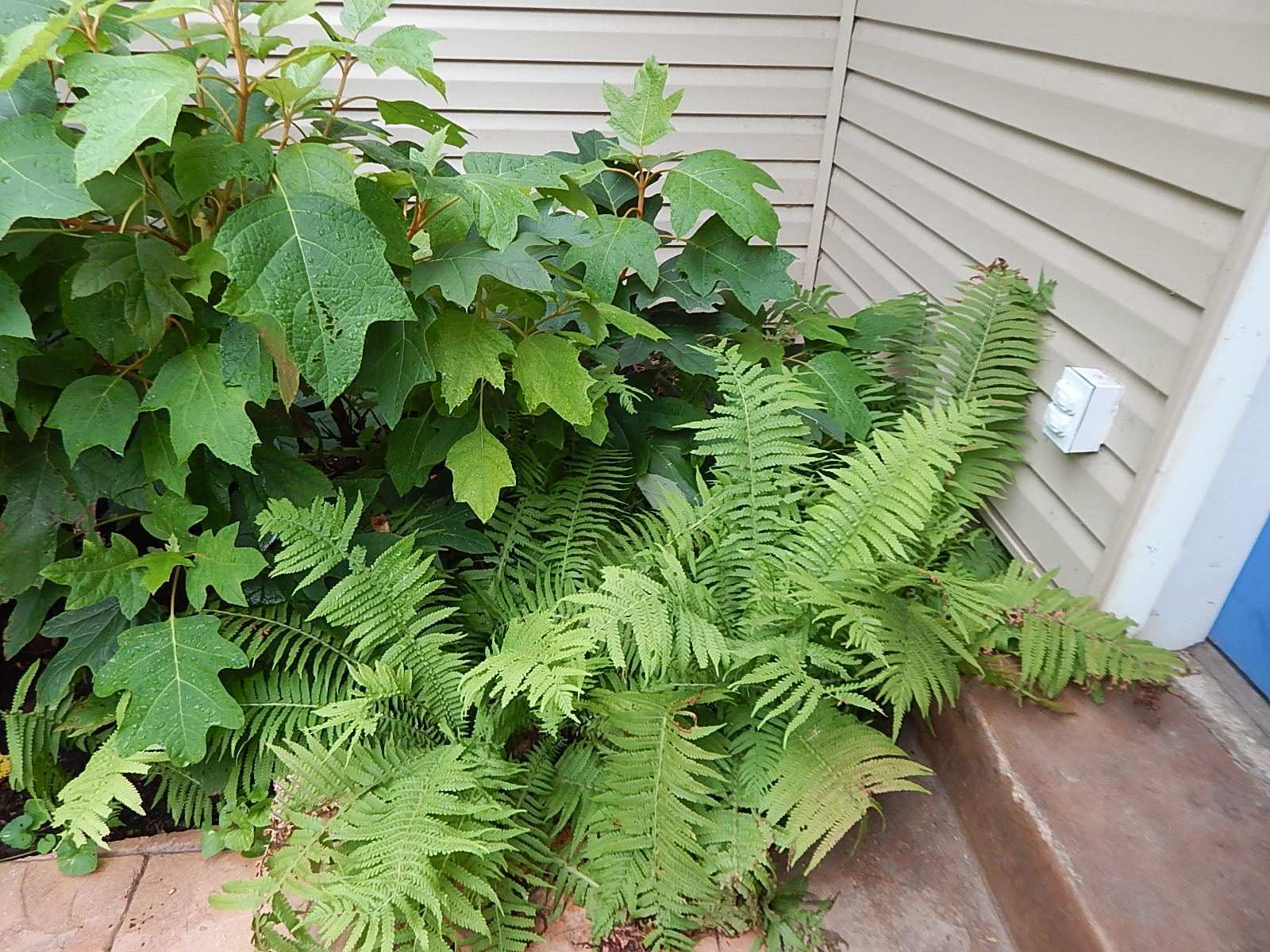
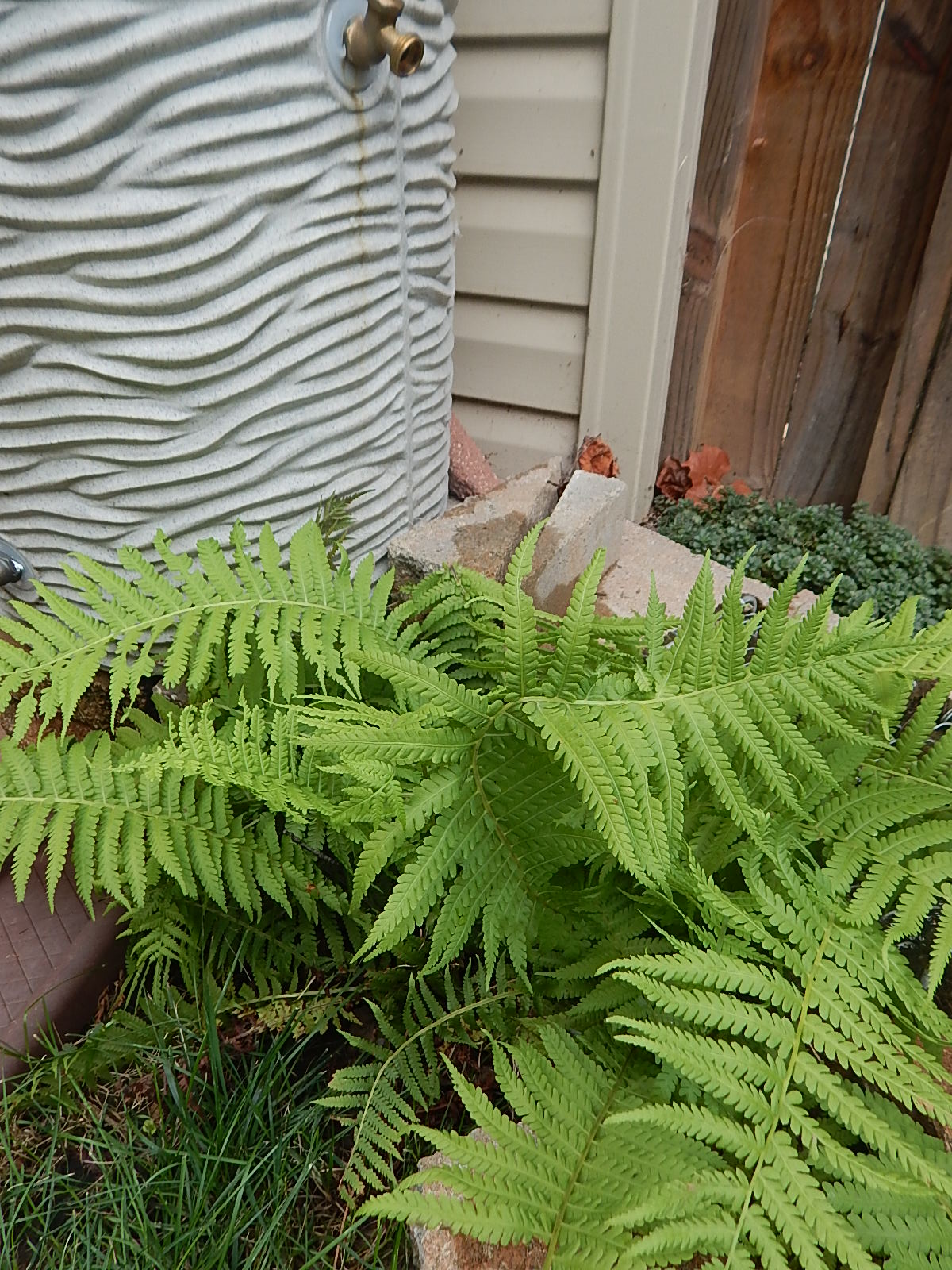 Ferns like moisture and humidity. One end of the shade bed sits in a low spot where rain may pool. I regularly mist the fronds with the garden hose and put soaker hoses in the shade bed. In a normal summer, I would water the bed deeply at least once a week. Fortunately this summer we have had plenty of both.


 The Arch City Gardener