
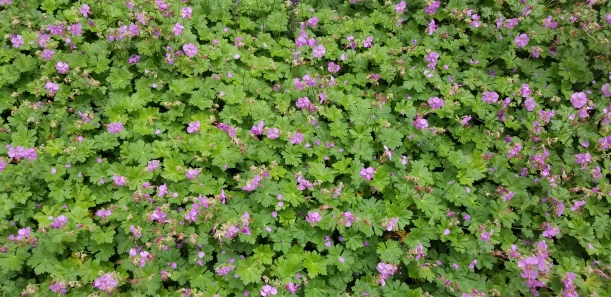
 In my gardens, groundcovers probably feel like Rodney Dangerfield. They get no respect. That may be partially true given their carefree nature and they are something I’ve put off adding to the garden. My garden “methodology” was to get in the big stuff–trees, shrubs–then fill in with perennials and annuals for their color and punch. Perennial groundcovers weren’t the stars of the garden I so desired. But I’m all about groundcovers now.
They are exceptional plants to fill in the nooks and crannies, provide a lovely carpet of green and crowd out the advancing weeds that seem to want to take over. I kept putting off the ground cover purchase, except for happy accidents like the cranesbill Biokova Karmina (geranium x cantabrigiense) pictured above. I thought it was a perennial. But it’s also a groundcover.
One of the first plants I added to the edge of a bed, this hardy plant has shoots of pretty pale pinkish-purple flowers in spring. Looking at its serrated, lobed leaves, you see it’s related to the geranium (Geraniaceae family). It is in just the right spot and gets just the right amount of sun and is carefree and seemingly happy when neglected. That makes low maintenance cranesbill a winner in my book.
I hadn’t considered cranesbill is a groundcover until it started slowly advancing a couple of years ago. In my untrained mind I just thought it was filling in. No, it’s creating a lovely carpet.
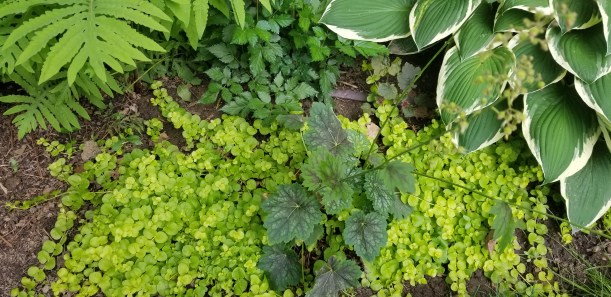 Creeping jenny (Lysimachia nummularia) is another favorite. Chartreuse and seemingly indestructible, I have moved this groundcover from the front yard where it got too much sun to my shade bed where is it beginning to spread and mingle nicely with ferns, heuchera, hosta, and astilbe. I like the bright green contrast of this versatile plant and have seen it in hanging baskets. In too much sun, however, it loses its green gets too yellow. Its roots are very shallow; division is easy because you scratch the surface of the soil and pop the plant right in.
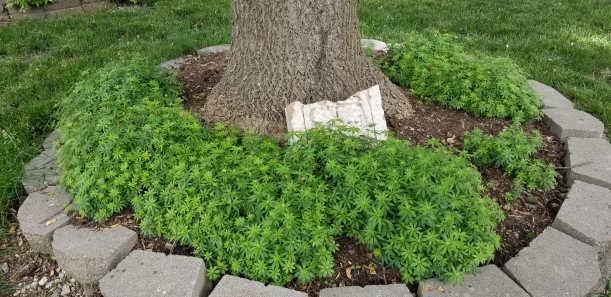 In the front yard I planted three small containers of sweet woodruff (Galium odoratum) beneath a tree. I had struggled to find plants suitable to this rooty space, and although I had planted a flat and a half of impatiens for a few years, they became hard to find due to downy mildew and I really wanted something perennial in this space. This spring (it’s 3rd year) we’ve had plenty of rain and it’s runners have really gone to town.
Like cranesbill, this is a mat-forming perennial that has taken off in no time. You can see that it still needs to fill in a bit, but I have no doubt this circle will be unbroken by the end of this season. Sweet woodruff gets lovely small white flowers in spring–in fact, it just finished blooming–and is well suited for the shade.
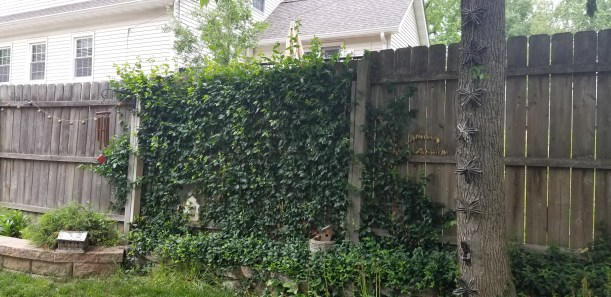 And, then there is wintercreeper (Euonymus fortunei). I am not sure I would call this my favorite ground cover but it is worth mentioning here. Is it a ground cover, a vine or a shrub? Maybe all three. In my last home, I spent a long hot summer pulling it out of a garden bed it took over. It was in abundance in a raised bed when I moved in this home and while it doesn’t look like it now, I trim it religiously. In the last year, I decided that the fence would be much prettier covered in green and have stopped cutting it back. You can see the result, which I really like, but I keep a watchful eye and shears and pruners nearby.
The Missouri Botanical garden warns that wintercreeper has been identified by a task force of the Missouri Botanical Garden as one of the top 20 plants known to be spreading into native plant areas and crowding out native species in our region. Naturalists recommend against planting this plant.
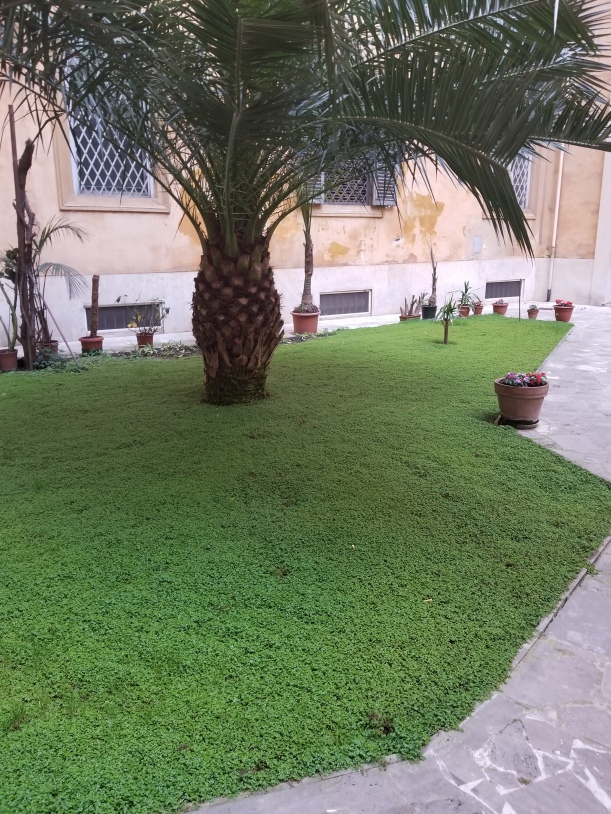 And finally, not in my garden but certainly admired is baby tears (Soleirolia soleirolii). An alternative to a lawn, baby tears carpeted the courtyard of the Airbnb I stayed at in Rome recently. I have read that it is somewhat invasive and needs to be consistenly watered, but I have no first-hand experience with this plant.
What are your favorite groundcovers?
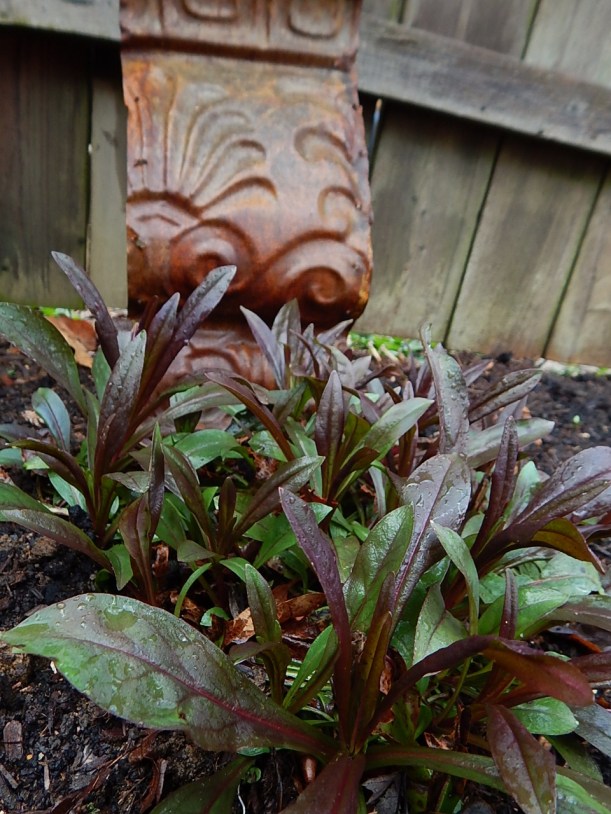
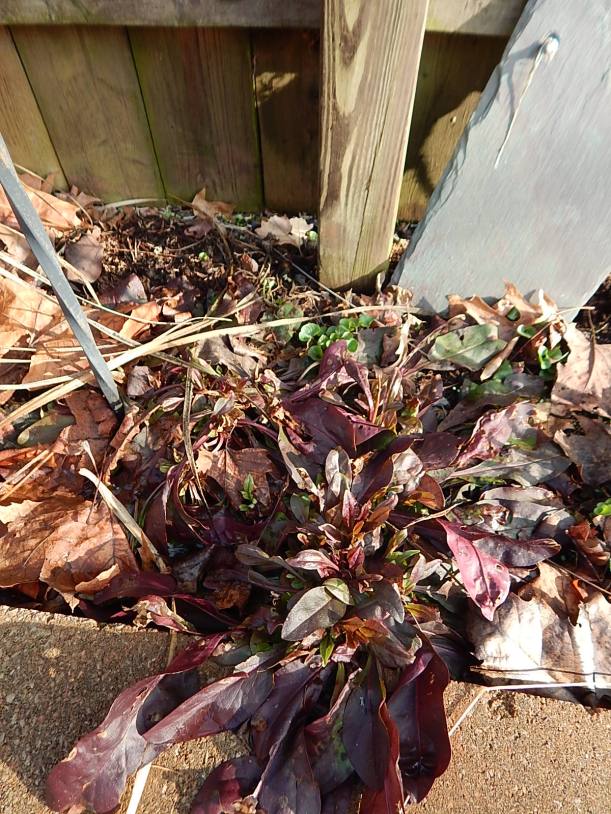 Penstemon’s lettucy looking red leaves. I love this plant, which has been happy in this spot for five years.
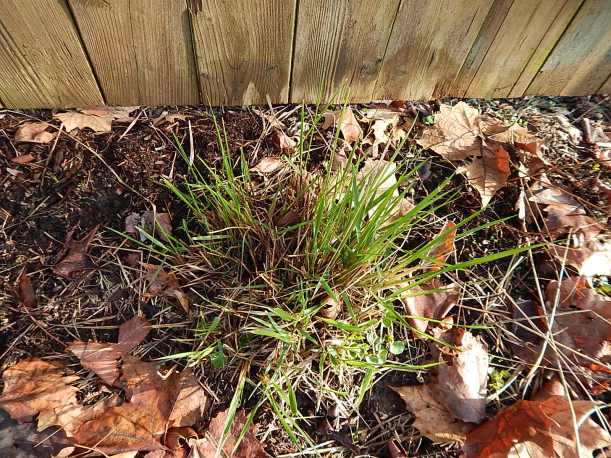 Karl Foerster grass is coming up
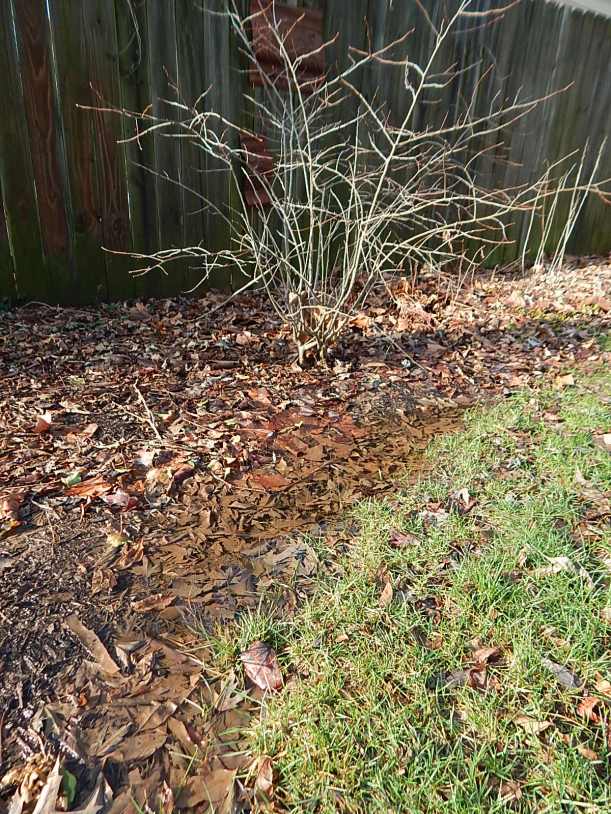
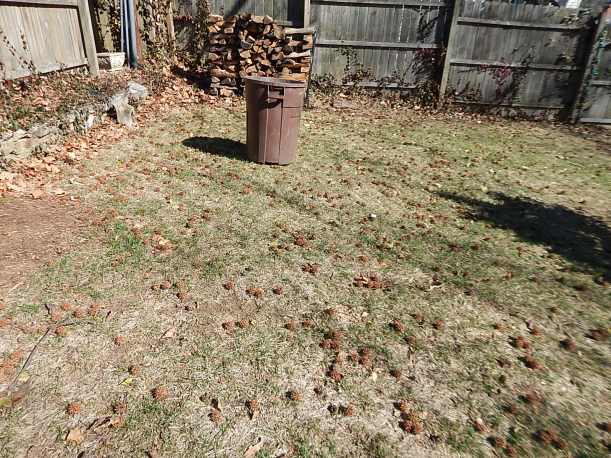 Just a couple of gumballs to deal with. This is Round 3 of the rake up.
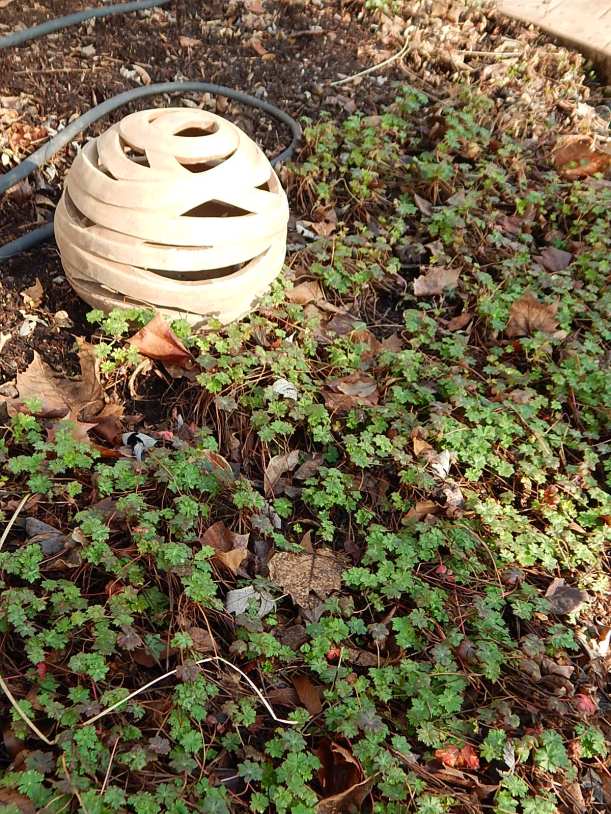 Cranesbill Biokova Karmina (geranium x cantabrigiense). What a wonderful groundcover. And talk about easy care!
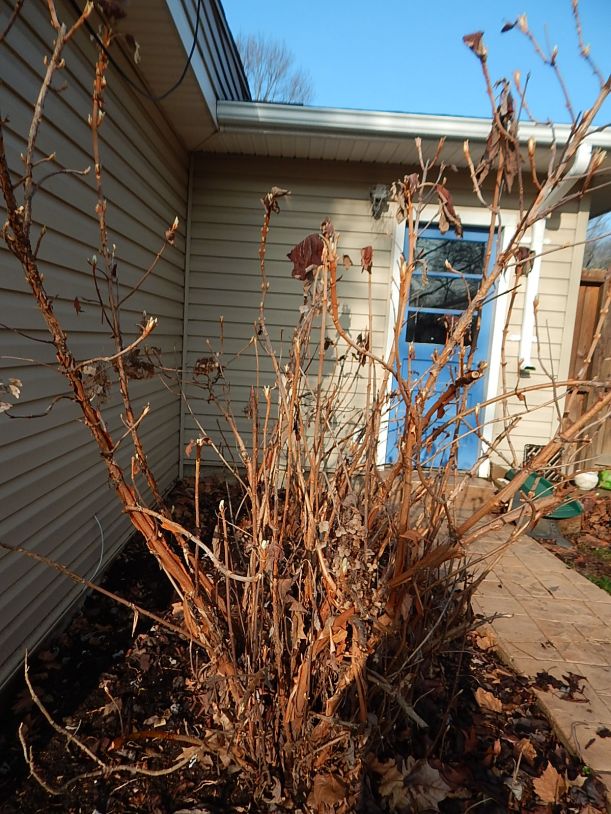 The oakleaf hydrangea “Alice” looks deceptively docile. My pet name for her is “Godzilla.” The blooms are incredible.
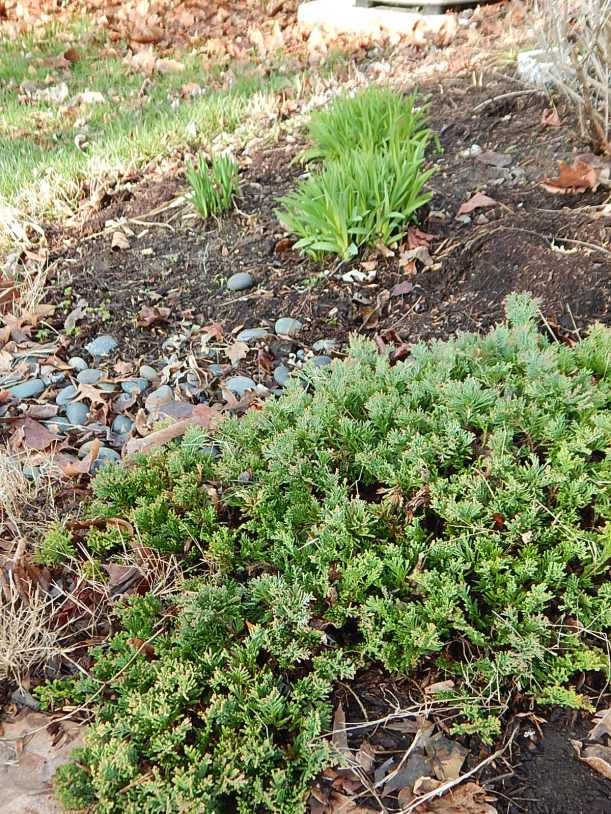 Planted about six years ago, this low-growing juniper (Juniper horizontalis) is a slow creeper and provides lovely texture with a green-yellow tint. Behind her are stella d’oro day lilies.
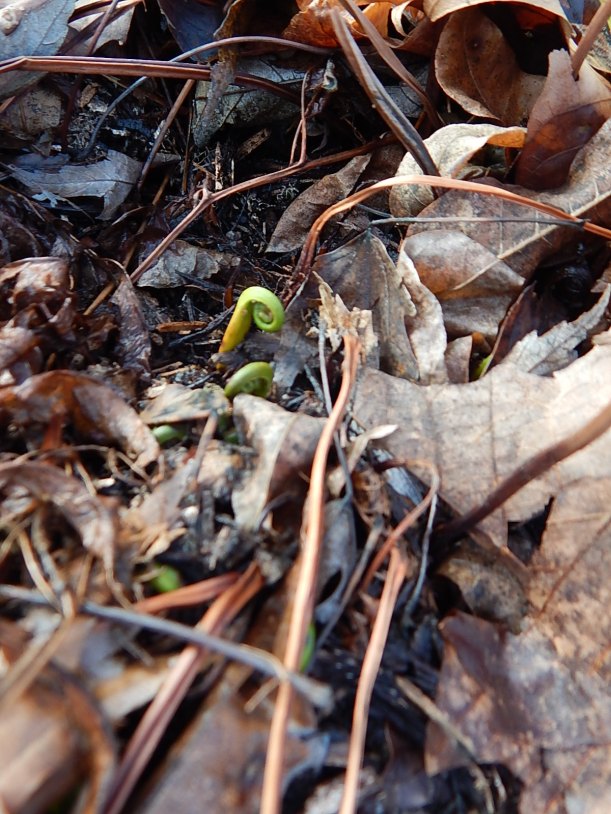 The fiddleheads of Ostrich Fern (Matteuccia struthiopteris) begin their graceful unfurling. Ferns are my favorite plants to observe.
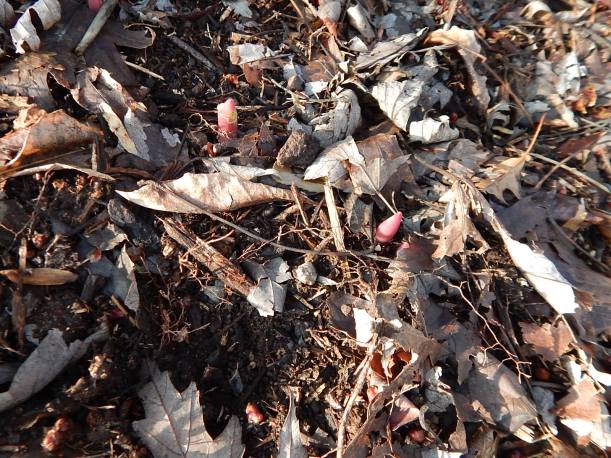 Peonies–Eden’s Perfume, Shirley Temple, and Sarah Bernhardt–peek through the leaves. The peonies were a new additions last year to the bed below the paperbark maple.
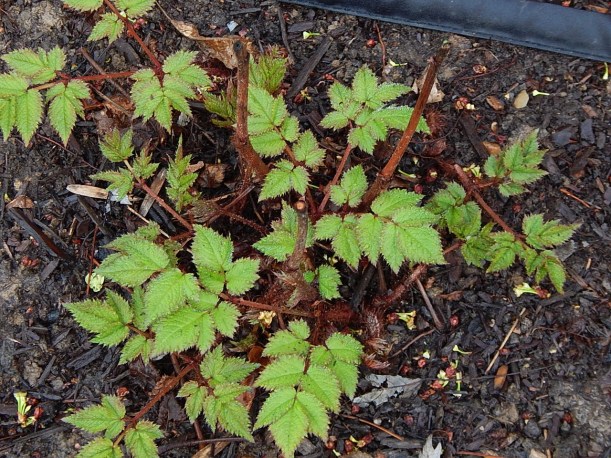
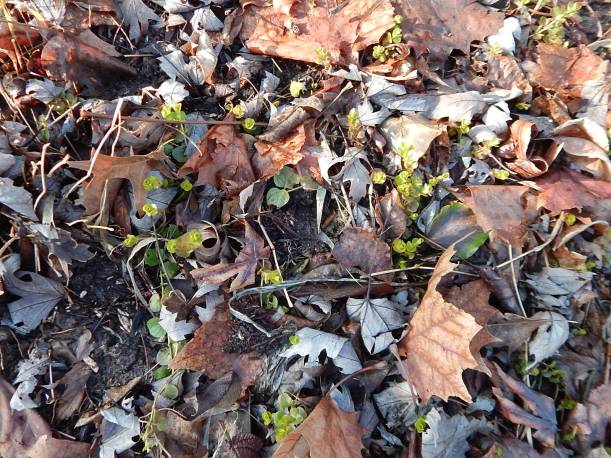 Creeping jenny groundcover is vigorous and advancing. It had better dry up so I can get out there and rake.
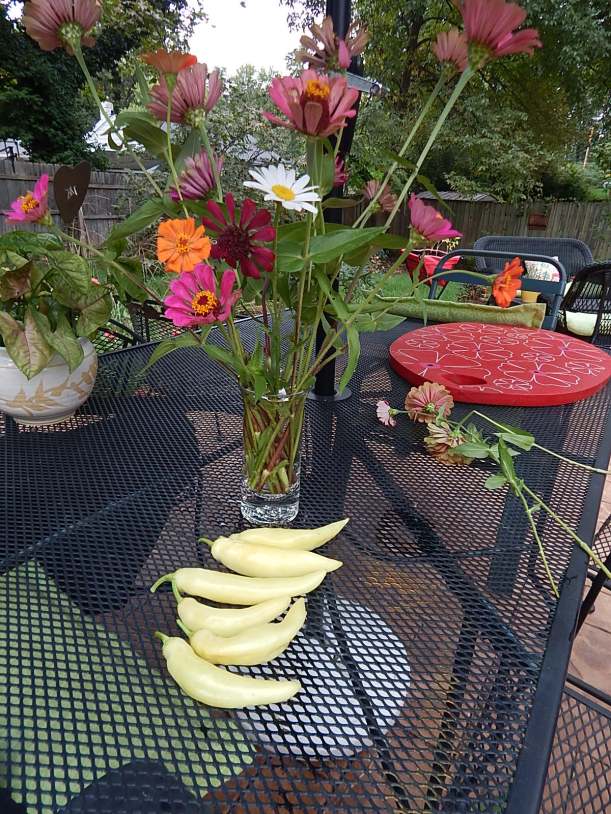 It’s hurry up time in my St. Louis garden–the last-gasp of nice-weather season before winter’s chill firmly camps out at the door. At least that is what the October calendar here usually means; this year, I am not so certain. Our temperatures have been very, very warm. Today we are just below 80 F. My sweaters are mostly tucked away, coats still in the closet and my garden flowers still abloom. Not to mention the frenzy of peppers tirelessly produced from one “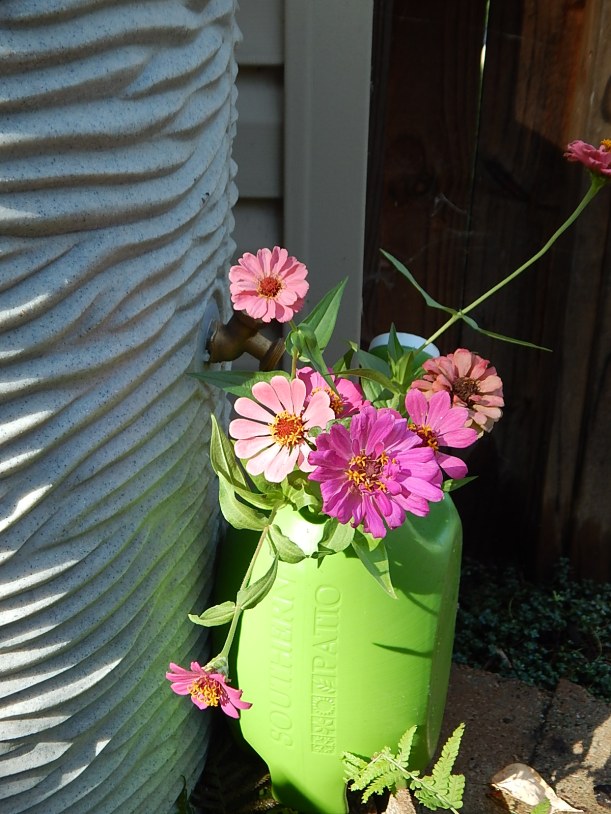
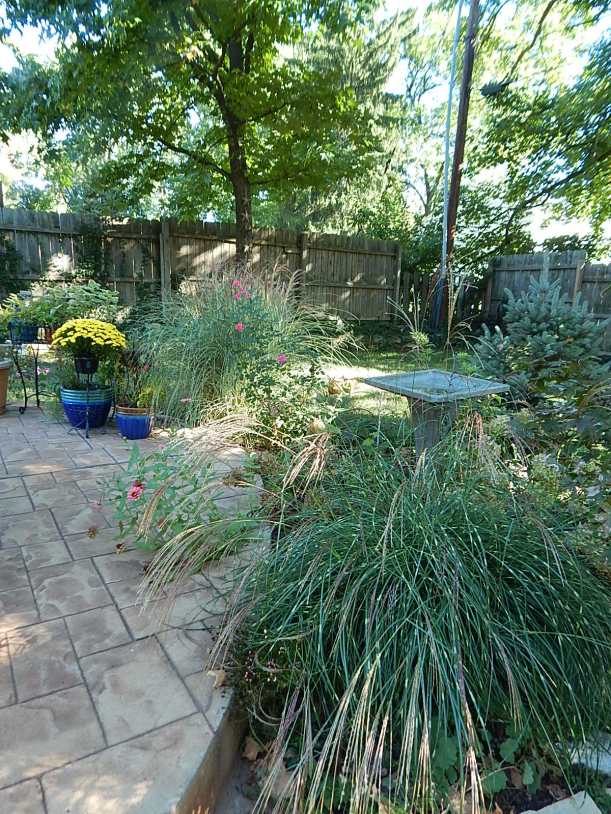
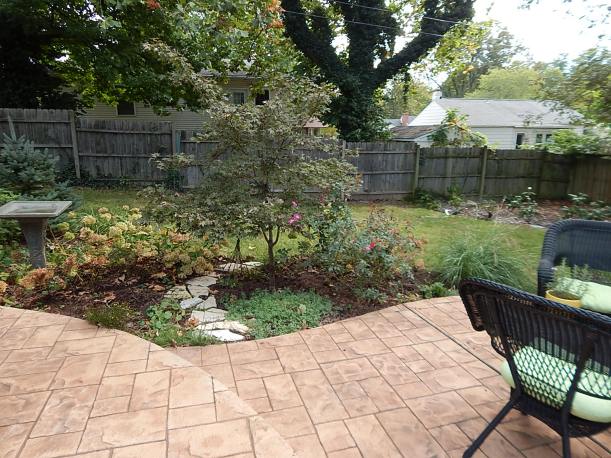
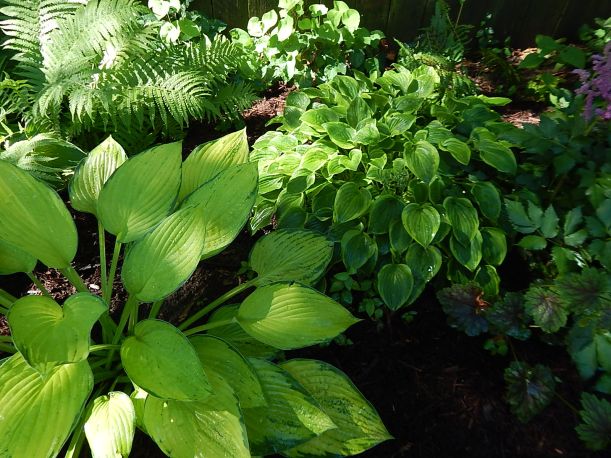 Hostas have so many of the elements I look for in a plant. Easy to care for. Can be divided. Comes in lots of varieties, both big and small. But truth be told, I’ve not always been a big fan of them–even though they have been in every garden I have planted. You’d be hard pressed to find St. Louis garden that doesn’t incorporate hostas into its design. These are workhorse plants in this part of the Midwest and they go well in many applications.
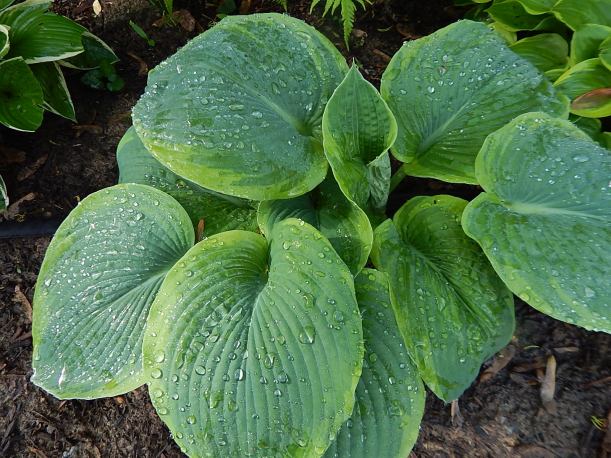
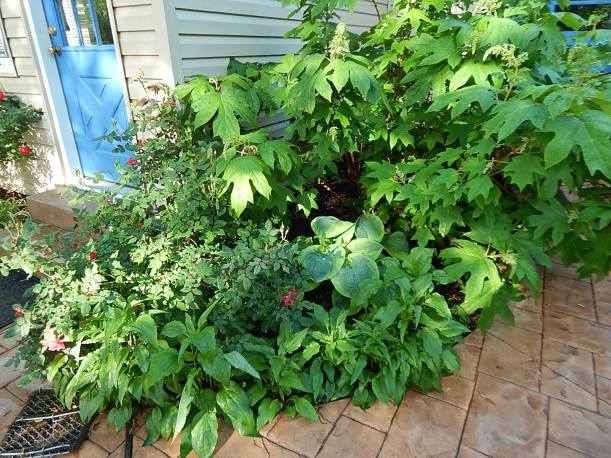 My fondness for hostas is growing. This plant is an essential element to my shade garden and I enjoy looking at them every day. I love the hosta in the photo above (taken in May) but will probably move it next year. Even though it is encased by the oakleave hydrangea, which filters the sunlight, it gets too much sun and by July it looks like its about to burn up. There are “sun loving” hostas but don’t be fooled, this is plant really a shade lover.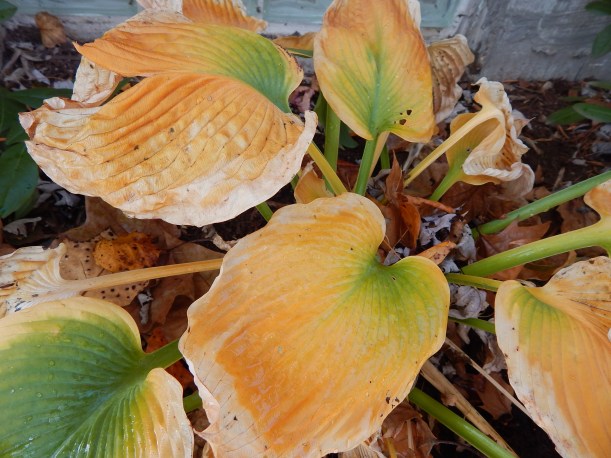






 The Arch City Gardener