The Arch City Gardener

Journeys In St. Louis Gardening and Beyond


4 Comments

It’s Piddling Season

St. Louis weather in February can best be described as variable. We have days that feel like a reprieve from winter–like today’s 70+ degree temps–and we have clear signals that it’s still winter–like last week’s soppy snow shower. So garden time is sporadic at best.

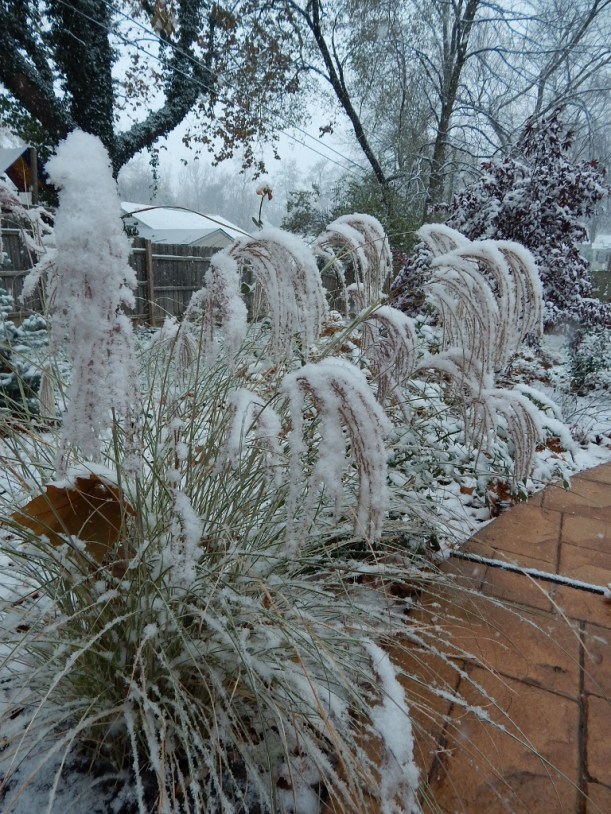
Snow on Grasses (768x1024)

The grasses plumes drape gracefully under the weight of a wet snow.

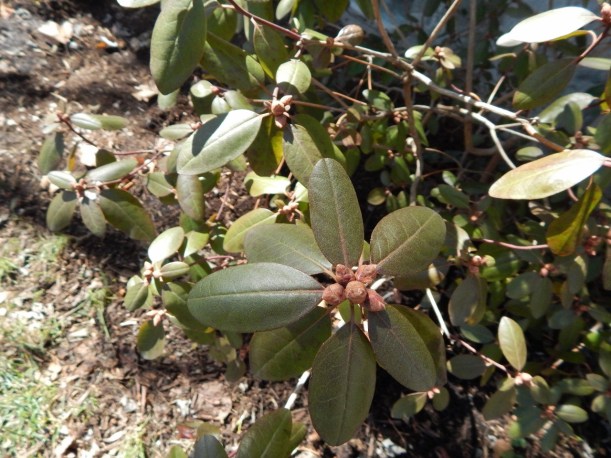
2016 budding rhodo

The rhododendron will bloom soon, a sure sign that spring is near.

Sunday’s warm weather was accompanied by gusty winds and the ground is very soggy still. I take advantage of these sorts of days to piddle. I rake up a couple of trash cans of sweet gum balls, cut back the tall ornamental grasses and generally enjoy a nice day. Tempting as it was, I resisted raking the leaves out of the beds. I thought about edging some of the beds but it’s too wet. This piddling around allows me to begin to stretch my back and take stock of what really needs to be done once the weather begins to warm in March.

How do you take advantage of a warm day in later winter?


1 Comment

A Sunday Stroll Through the Missouri Botanical Garden in July

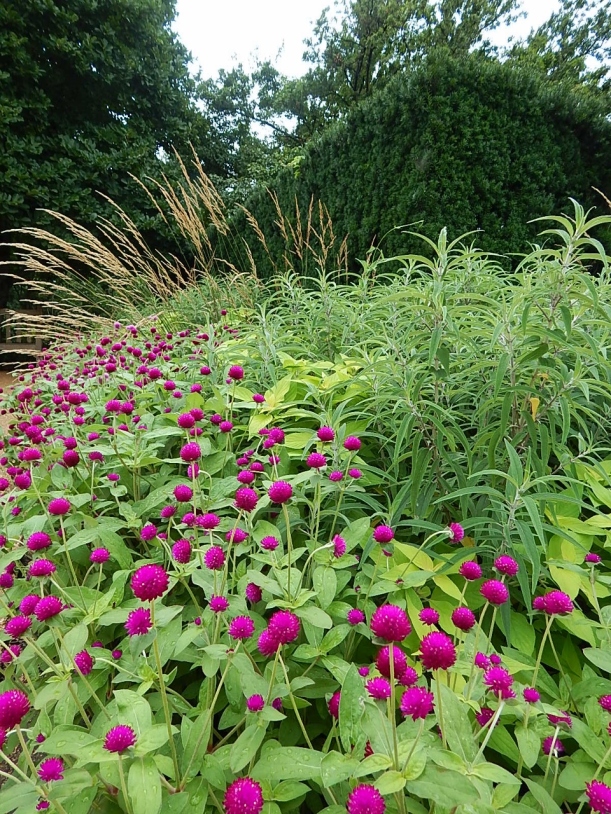
Gomphrena and grassesGardener or not, a visit to the Missouri Botanical Garden is a pleasant way to while away an afternoon. Today’s overcast skies were perfect for viewing all the vibrant blooms.

Right now my favorite area is the Kemper Home Gardening Center and its associated demonstration gardens. Here you can see all sorts of containers, butterfly gardens, kitchen gardens and the All American Selections demonstration. It’s a great place for inspiration and ideas.

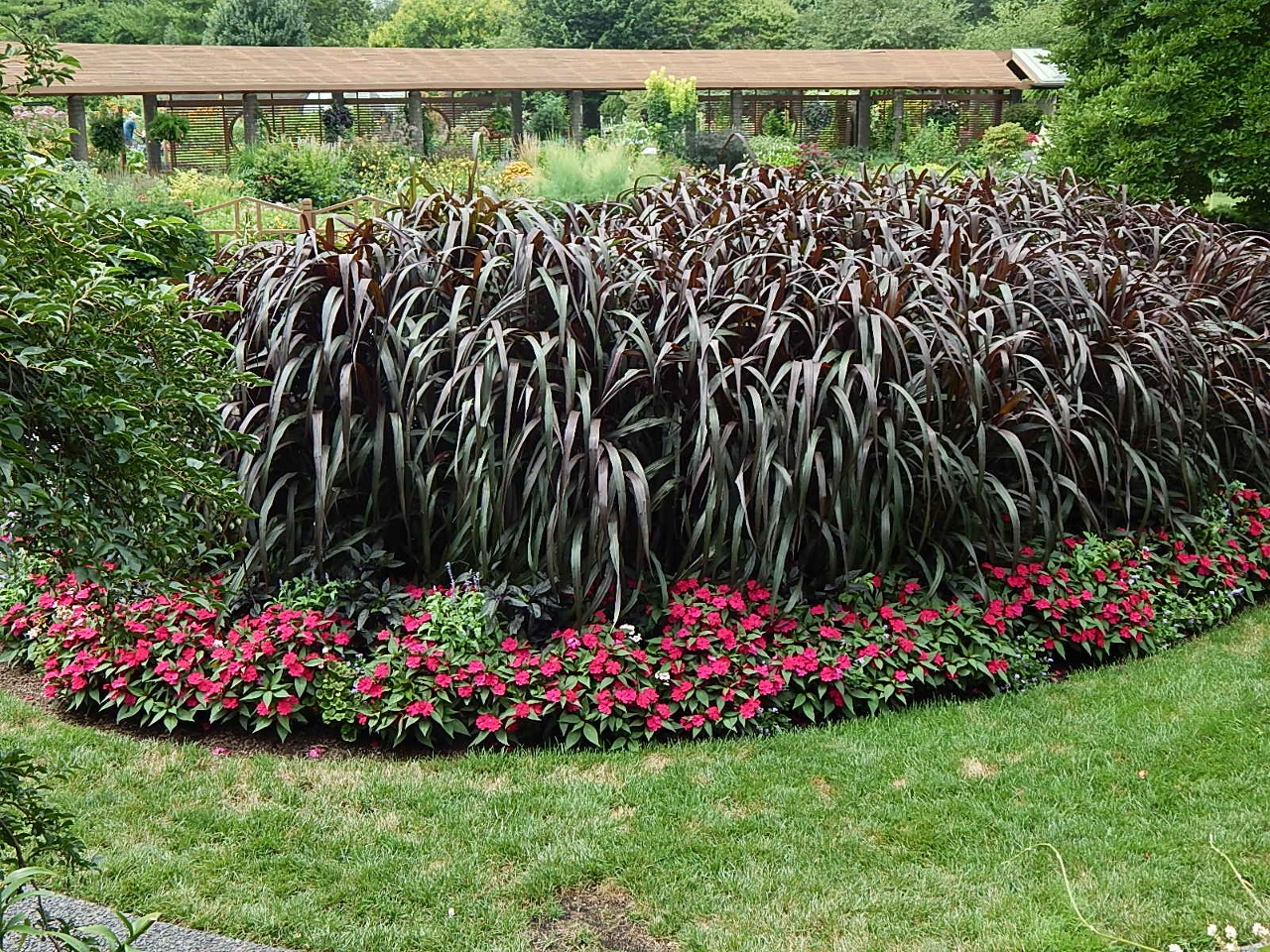
If there’s one theme I’d give the garden this summer it would be lush and high-contrast. Plantings with hot shades of purple, green, yellow and orange that contrast with dark hues of black like the giant grass below are common. I don’t know the name of this tall purple grass paired with vinca but it’s spectacular.
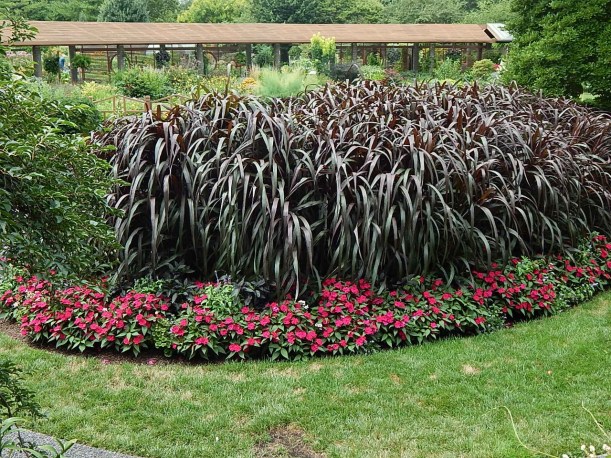
Tall purple grass

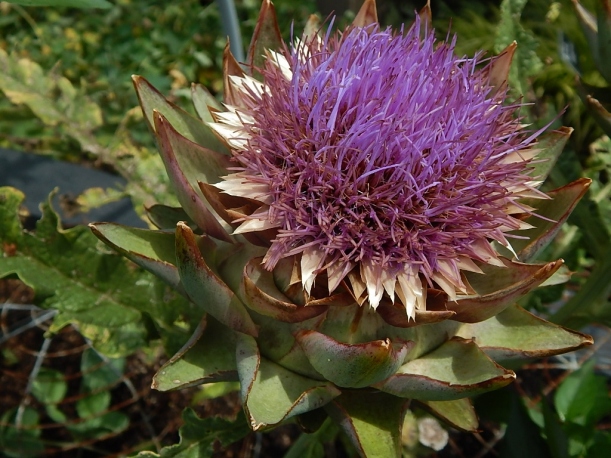
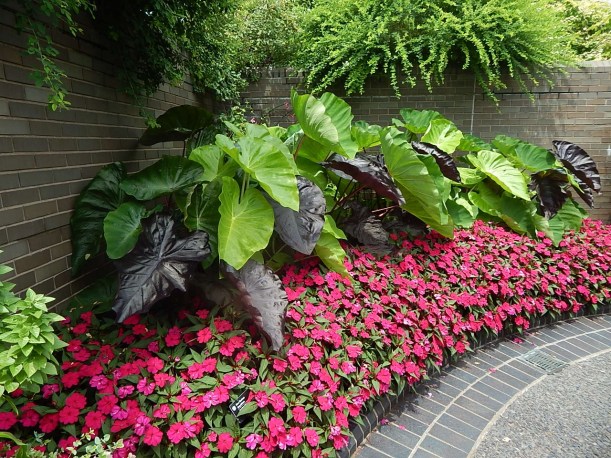
Green and black elephant ears surround a mass bed of lipstick pink vinca. As you can see, vinca grows quite well in our summer heat. So do the elephant ears.Elephant ears and vincaKeeping to the purple and black theme, how about these tomatoes? They’re called Indigo Rose tomatoes. I’d never seen an artichoke growing until today.
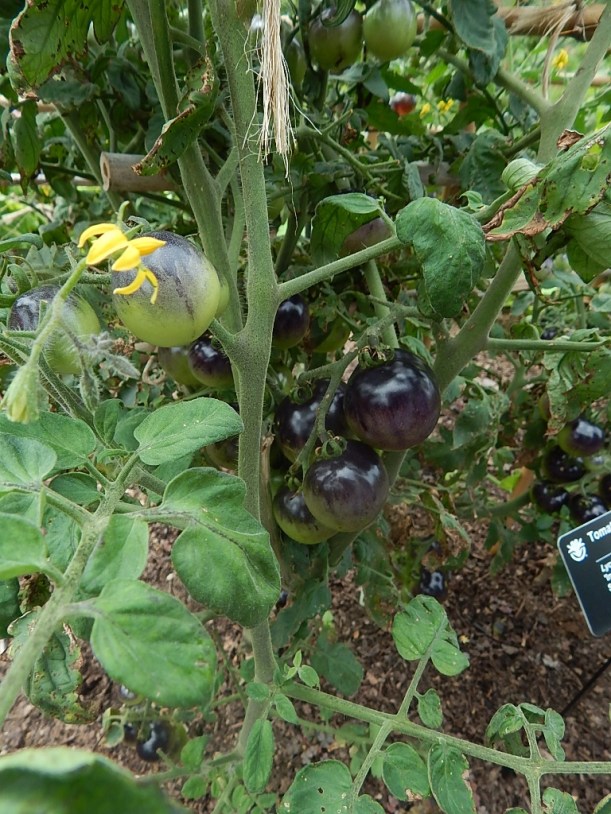
Indigo Rose tomatos

Artichokes

I’ve seen lots of posts on Pinterest for pallet gardens. This one is on steroids.
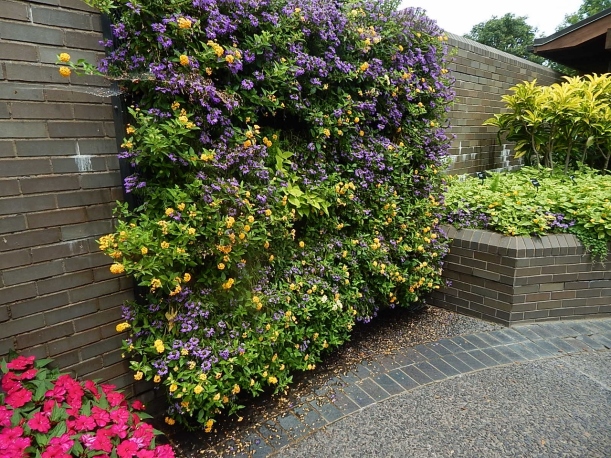
Pallet gardening

Coleus is predominant in many groupings. Here maroon coleus–accented with chartreuse coleus–rises above coral toned vinca. This is one side of the entrance to the children’s playground and you pass it on the Kemper Center. The large haybasket probably weighs a lot and such a structure would most likely pull down my fence. Here it has plenty of support.
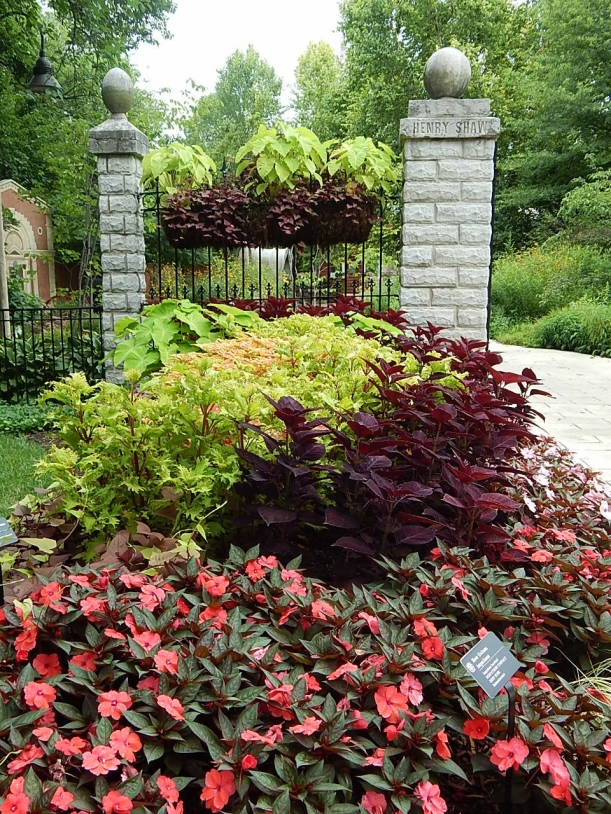
Entrance to Children's Garden

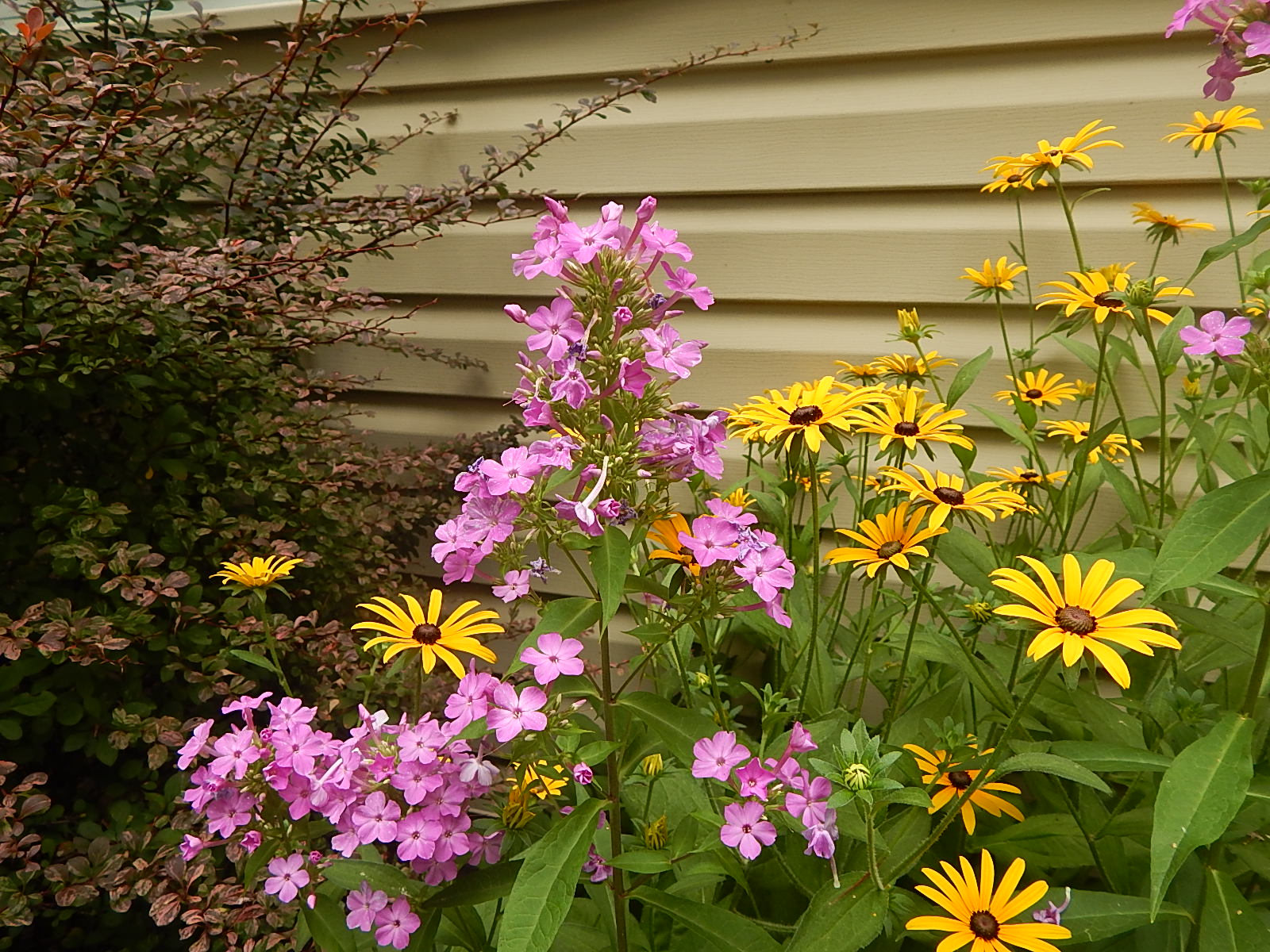
All is not pink, purple and black in the garden. The garden designers are far more versatile. This collection of black eye Susans and ornamental millet is an interesting combination of form and texture. I like the cat-tail bloom on the millet. I’ve not seen this in a nursery here but would try it in a container next year.
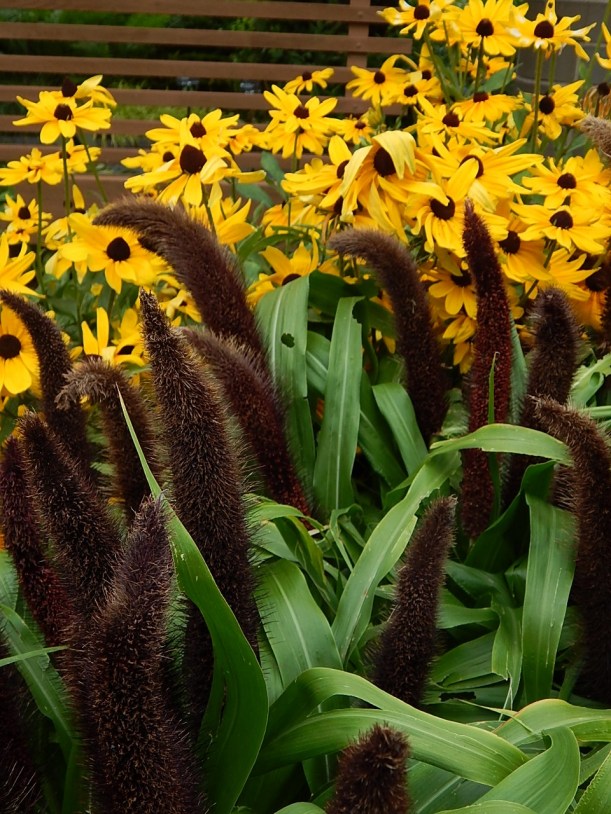
bes and millet

Of course, there are lots of black eyed Susan cultivars in the cutting garden.
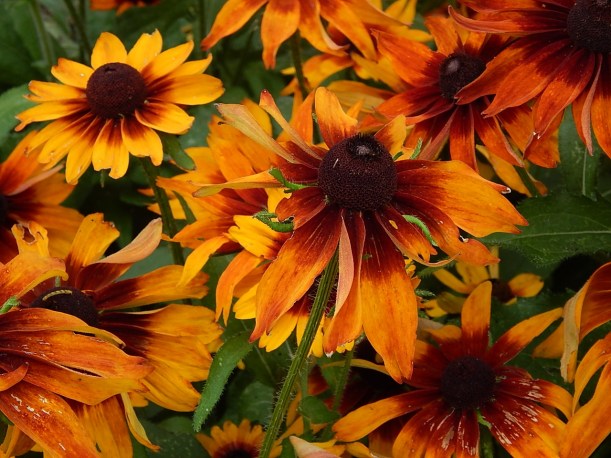
Black eyed susans at Kemper

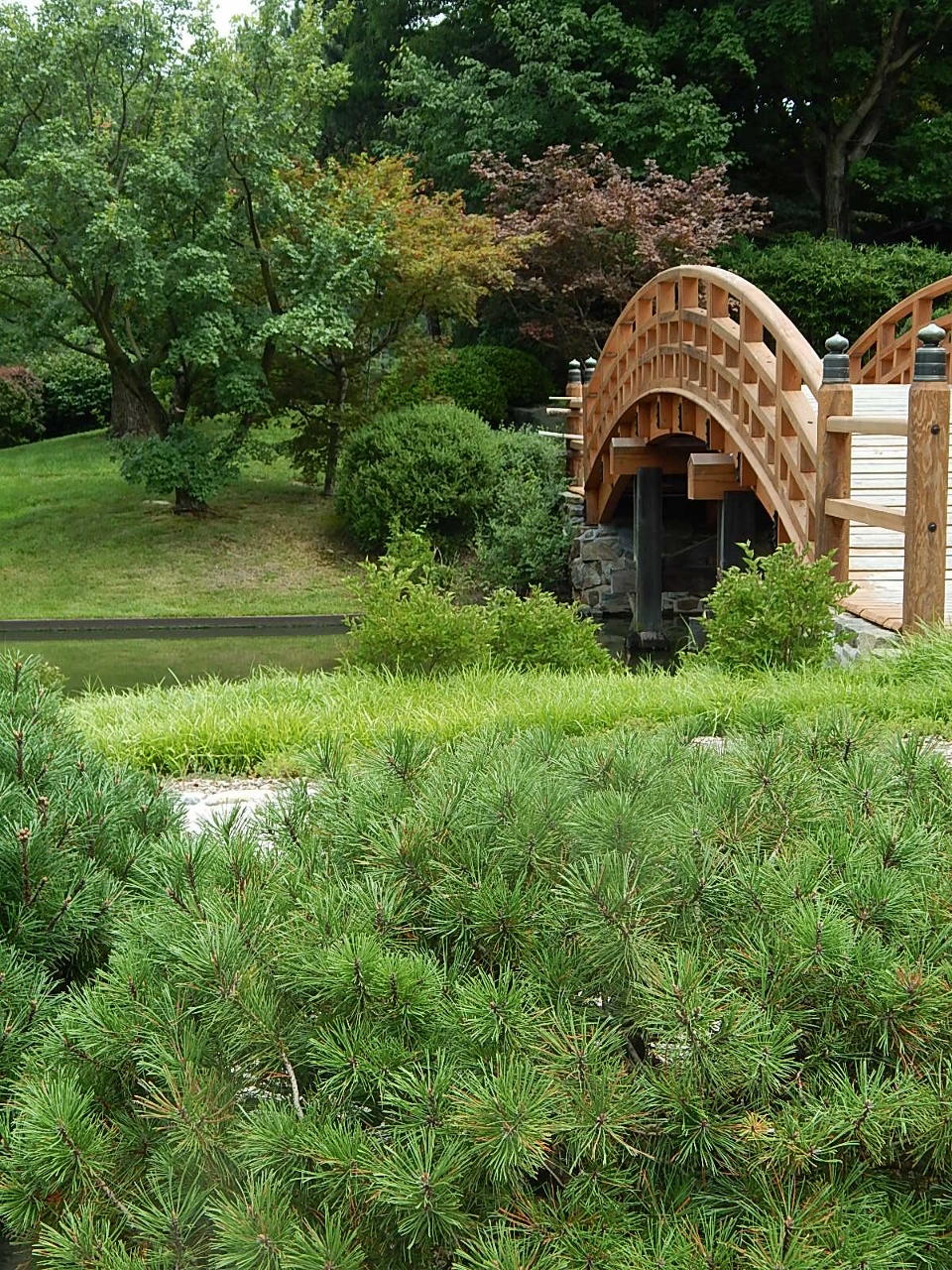
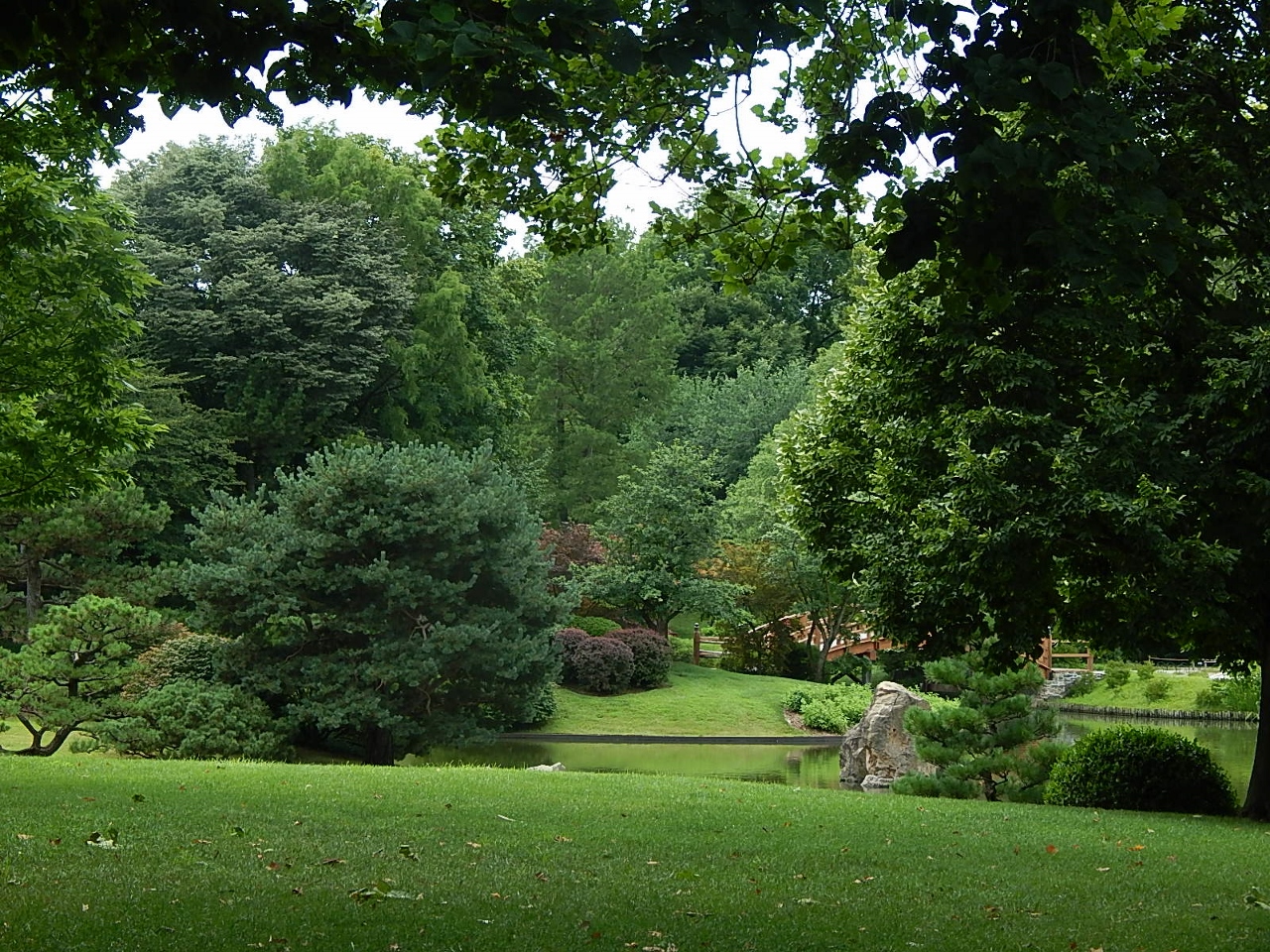
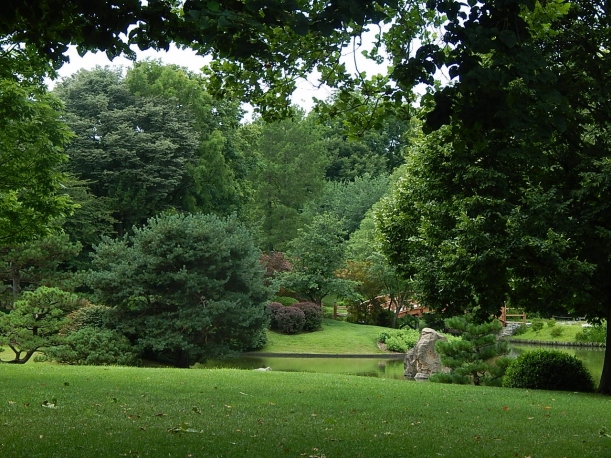
The Japanese garden with its tranquil lake and gently sloping hills lies beyond the demonstration gardens in the further reaches of the garden. It’s a nice place to sit and relax or feed the carp. In spring, blooming azaleas and dogwoods make this section of the garden a popular destination. Here you can enjoy a large selection of pines, dogwoods, barberries and maples.
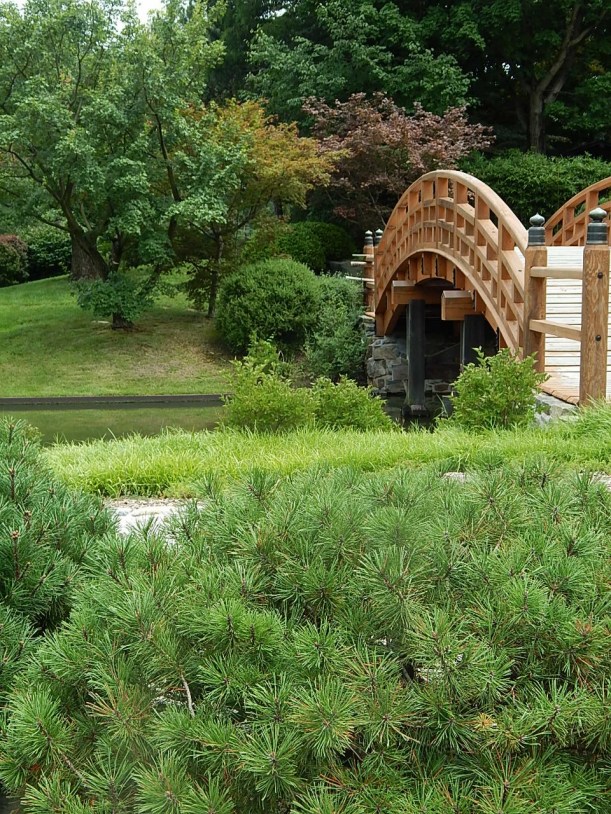
Japanese Garden bridge

Japanese garden

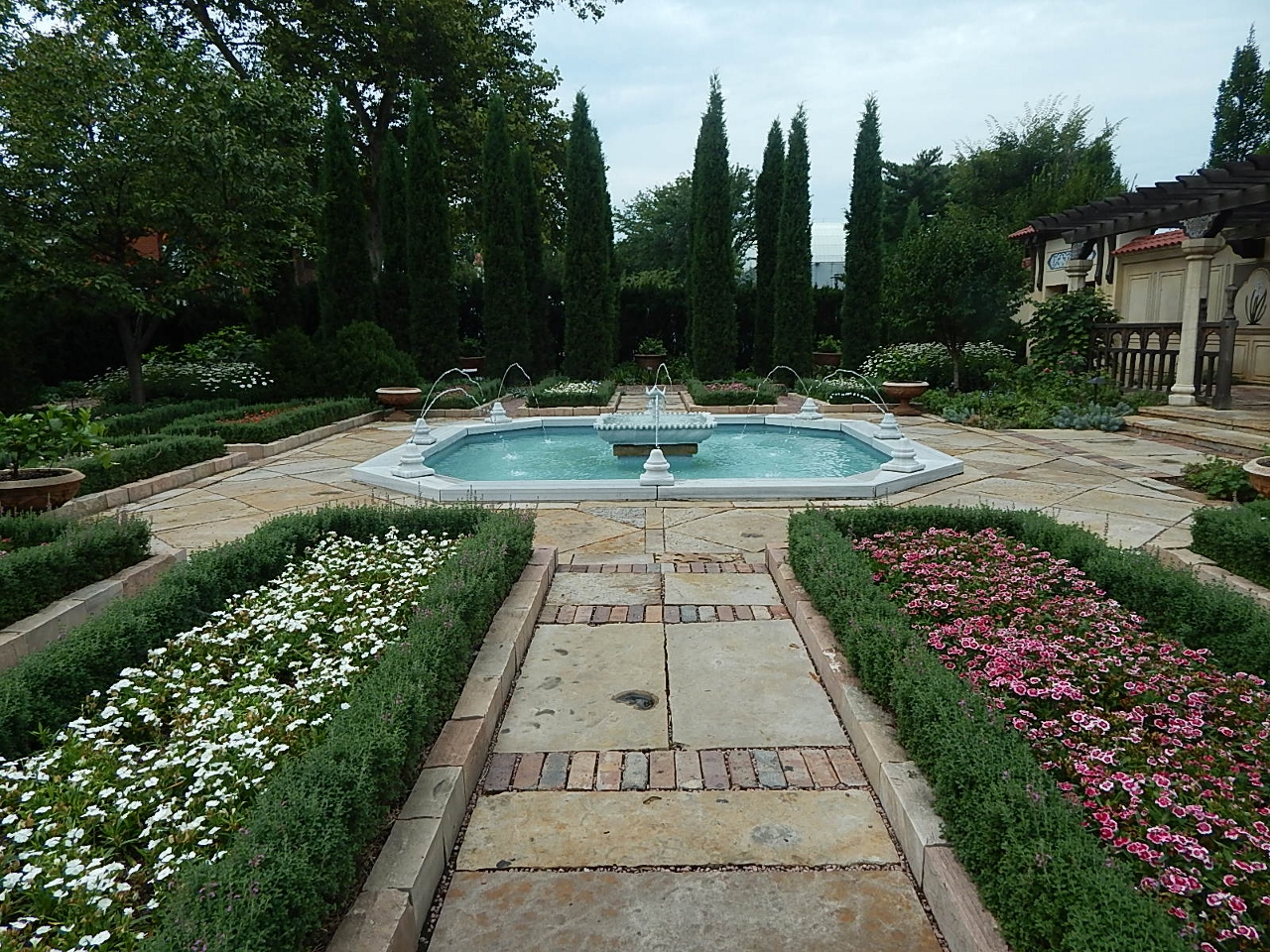
Winding my way back to main entrance, and continuing on the tranquil vibe, I made a leisurely stop at the Bakewell Ottoman Garden, a small walled garden planted in the gardening tradition of the Ottomans. Istanbul, which was home to the Imperial capital of the Ottoman Empire, and St. Louis lie on the roughly the same latitude, which means we can grow a lot of the same plants.
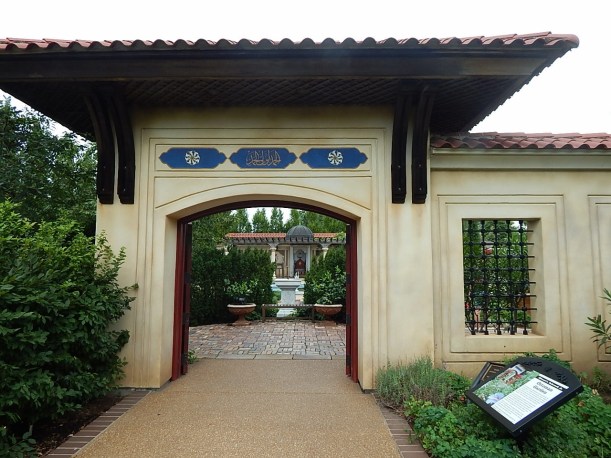
Ottoman Garden

Apparently there are no surviving types of this style garden, which was developed between the 16th and  19th centuries. The plantings here are primarily naturalized or native to Turkey. Hard fruits such as pomegranate and Meyer lemons are planted in pots throughout the garden. Currently, alternating pink and white beds of dianthus are bordered by germander but the garden is well known for its Turkish tulip and bulb display in the spring.
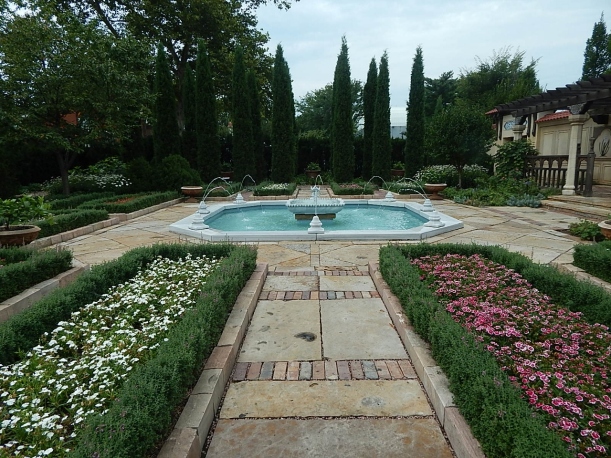
Ottoman garden pond

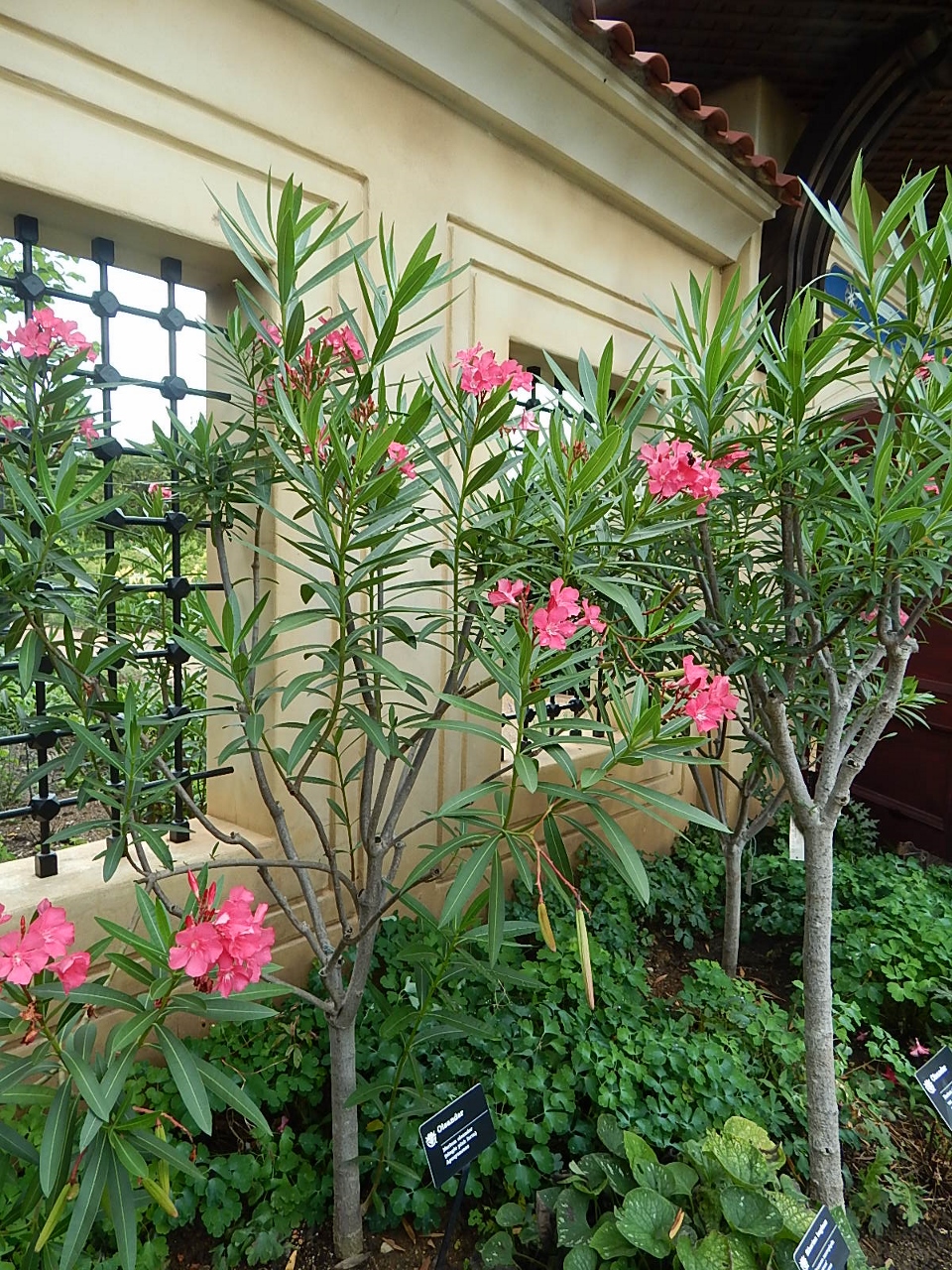
Oleander and columbine line one wall of the garden. The fountain is inviting and looks refreshing on a hot summer day.
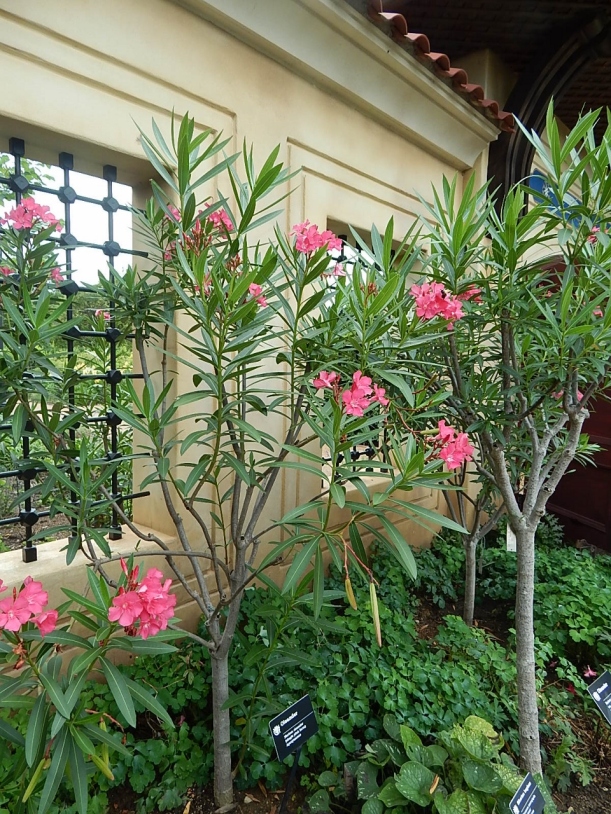
Oleanders

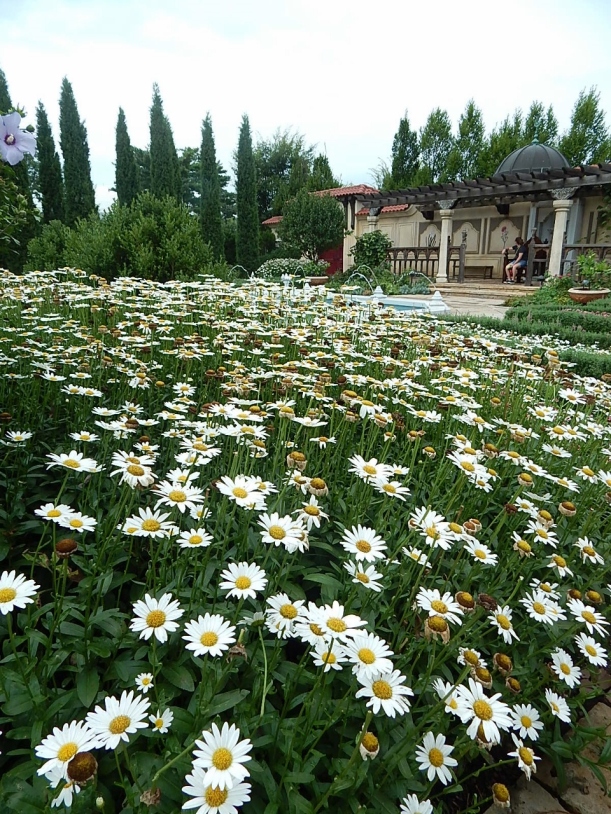
A mass of shasta daisies sway in the breeze. Ottoman Shasta daisy
Although I live just 15 minutes from this city jewel, I don’t get there near enough. Today, I am glad I took the time

1 Comment

Ah Yes Moments in 2015

DSCN3119 (768x1024)If you’re like me, it’s easy to look in the rear view mirror and lament what went wrong during the previous season and think about all the “could ofs,” “should ofs” and “only ifs” as I plan for the next.

Last year was not the best year for my back yard garden. The tremendous amount of rain we had in June took a toll on the way the plants performed, and it seemed like there was never enough time to accomplish what needed to be done. But, there were plenty of highlights to year 4 in my gardens. Here are few:

1. Improving the Entrance into the Yard. Visitors who came through the gate in 2014 were met with a raised bed supported by rotting railroad ties whose 5-inch nail spikes stuck out. The step down into the yard was deep, making it awkward and potentially dangerous. I said goodbye to the ties and installed interlocking stone that coordinates with the stamped concrete patio. An added step provides a more natural distance down into the yard.

The addition of a step off of the raised area, makes stepping into the yard easier.

The addition of a step off of the raised area, makes stepping into the yard easier. The shasta daisies are transplants from a friend, as are the cannas.

The entrance to the backyard.

Goodbye rotted railroad ties. The  previous entrance to the backyard.

2. Attending the Garden Bloggers Fling in Toronto. Okay, this is technically not in my garden, but I’ll extol the virtues of expanding your network to anyone who enjoys gardening. First, who doesn’t like a garden tour? The Fling was a 3-day-plus extravaganza of garden tours. This experience allowed me to learn first-hand from other gardeners–hobbyists to the pros–what they are doing in their gardens and public spaces. It was an outstanding way to expand my thoughts on gardening and meet many of the people behind the blogs I so enjoy. The Fling has me thinking more seriously about natural resources conservation, starting a vegetable garden, composting and the joys of connecting with those who share a common passion.

DSCN2761 (1280x960)

A rooftop garden overlooking the Toronto city skyline. The Garden Fling provided multiple venues to learn about gardening, sustainability, conservation and plant selection.

Claire Jones near Cabbagetown

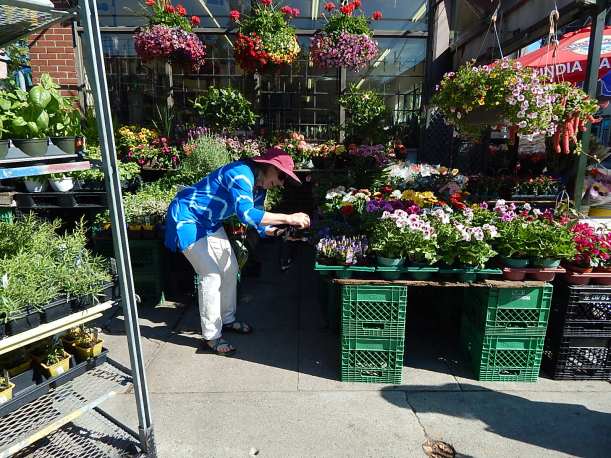
Claire Jones, author of the Garden Diaries blog, takes time to appreciate the offerings at a city nursery in Toronto.

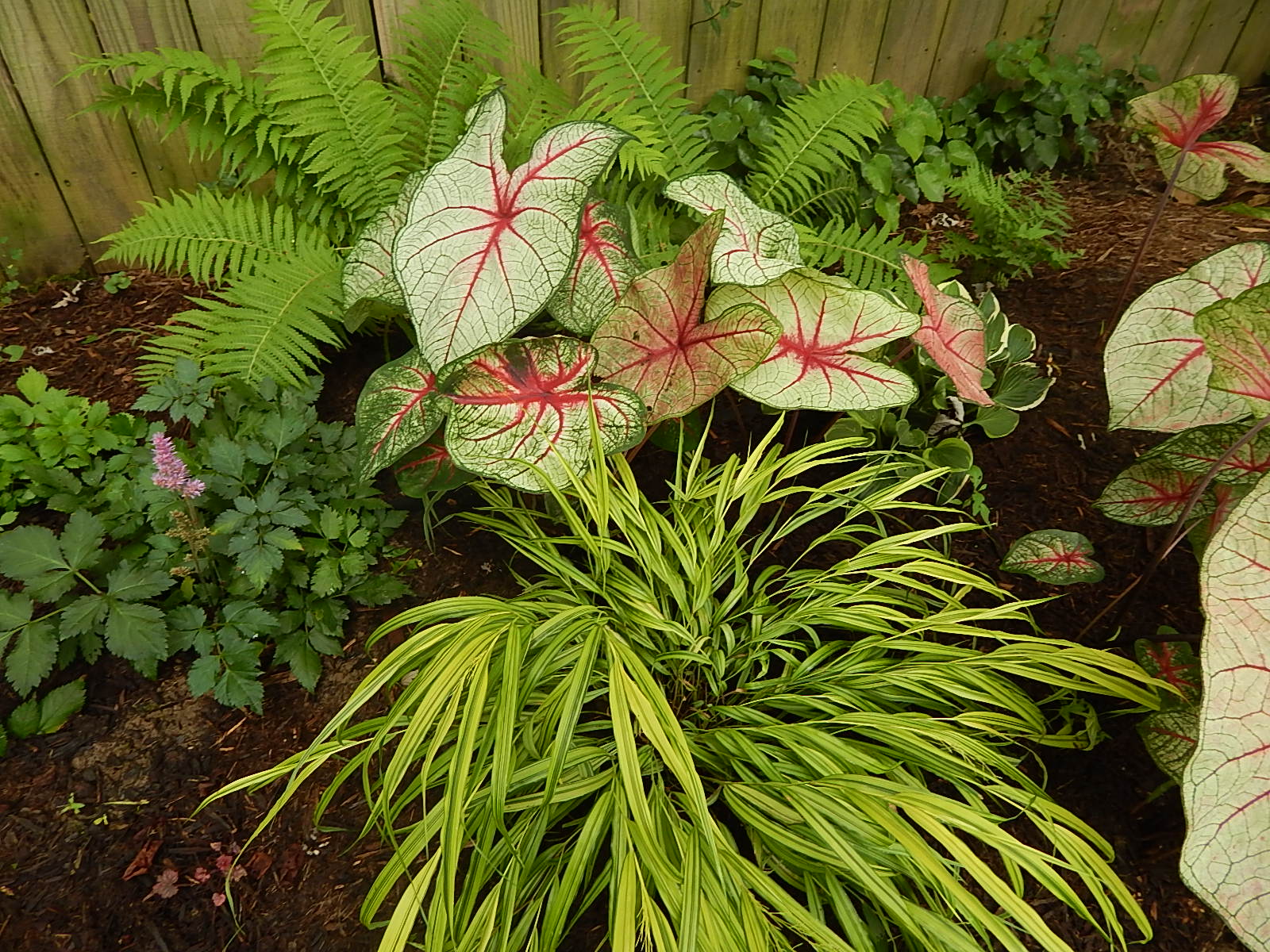
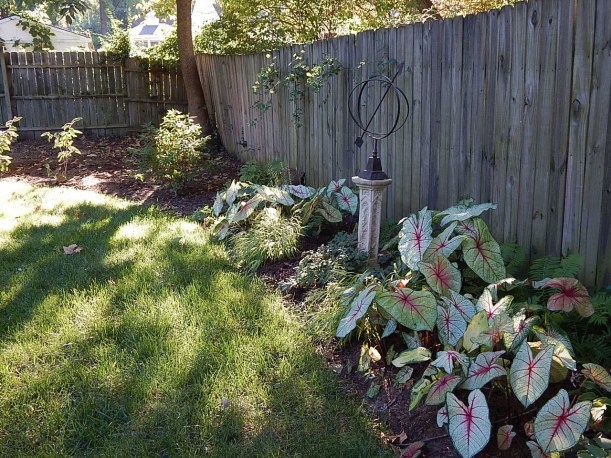
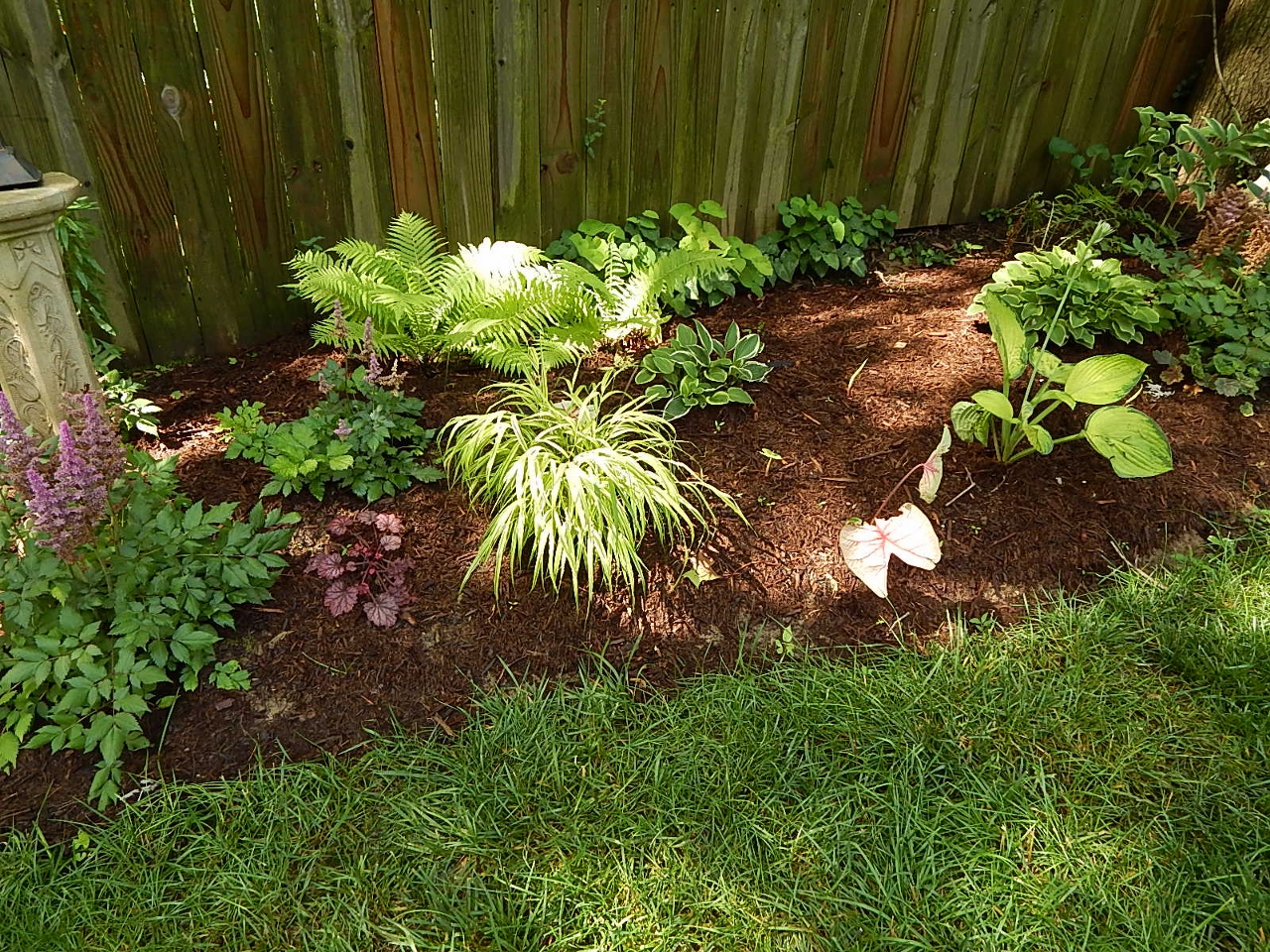
3. Installing a new bed along the south fence. Outside of raising children, nothing teaches patience like gardening. I may be planning and planting for four-season beauty, but each garden season (spring/summer/fall) is just one cycle and it took me several cycles to finally get to the south fence. I enjoyed sitting on the patio looking at this lovely, lovely shade garden.

September south garden

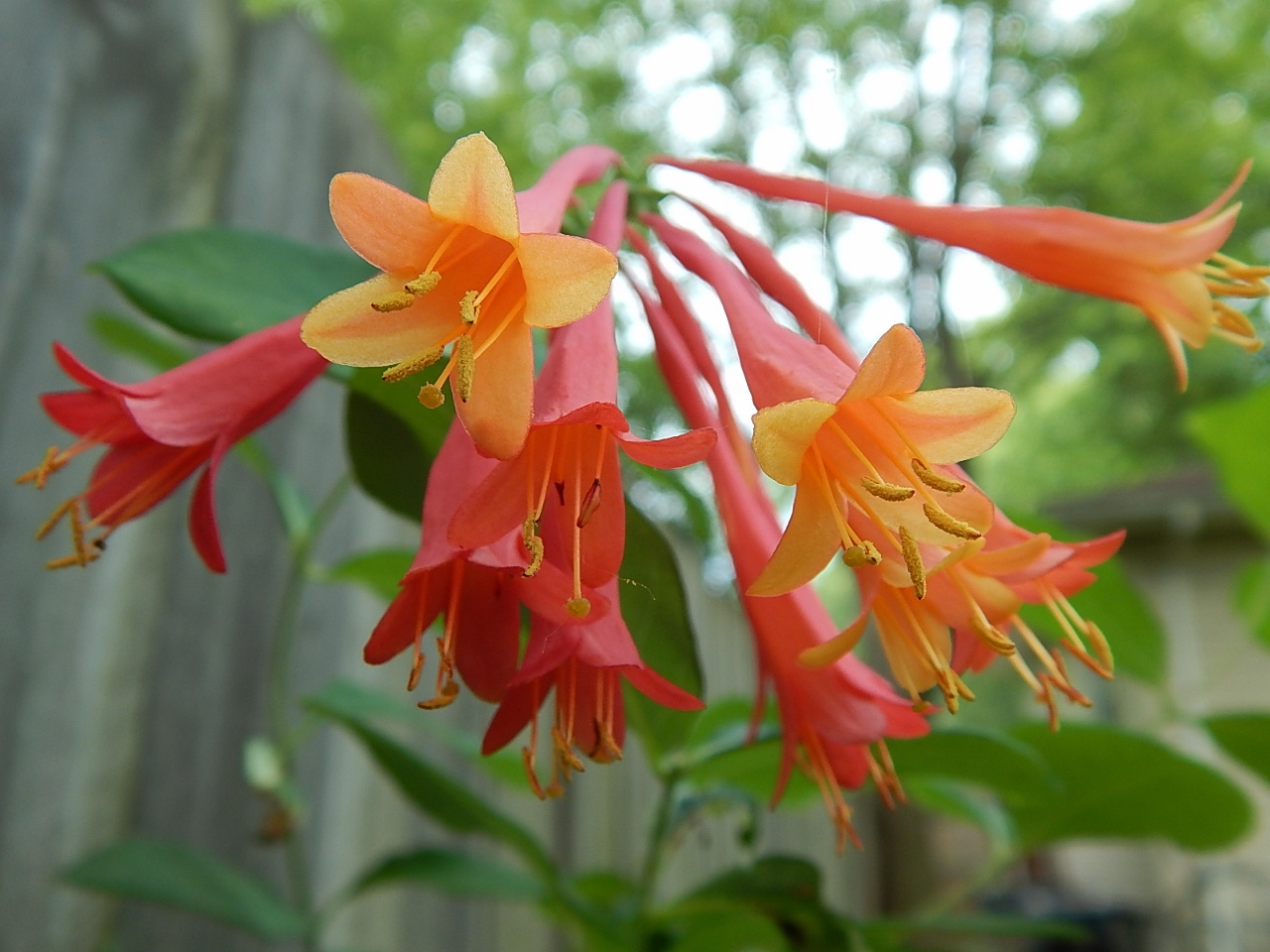
The caladium take center stage in the bed in September. The honeysuckle trailing over the fence from my neighbor’s yard was a welcome guest.

DSCN3038

Freshly mulched, the south fence bed in June. Japanese forest grass, heuchera various fern, hosta, creeping Jenny, solomon seal and astilbe provided lots to look at all season.

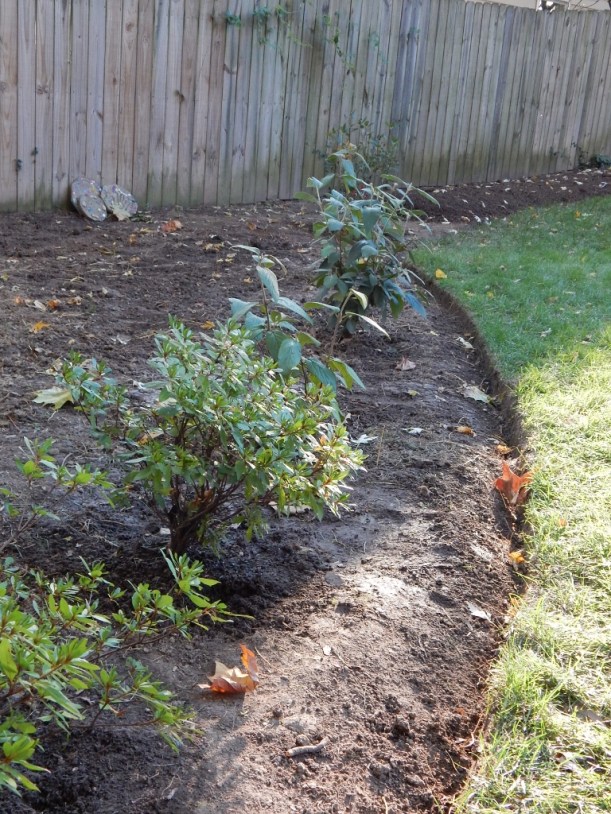
4. Edging the Beds. What a difference a seemingly small task makes in giving a garden bed a finished look. I considered installing metal edging, but instead opted for the back labor (someone else’s, as I hired this job out) to cut a nice edge around my main garden beds.


Replanted azaleas 2 (768x1024)


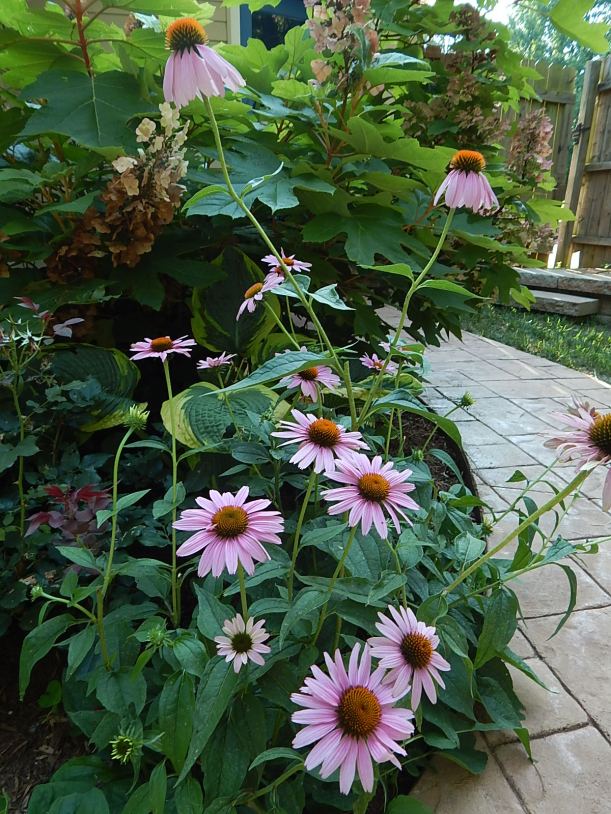
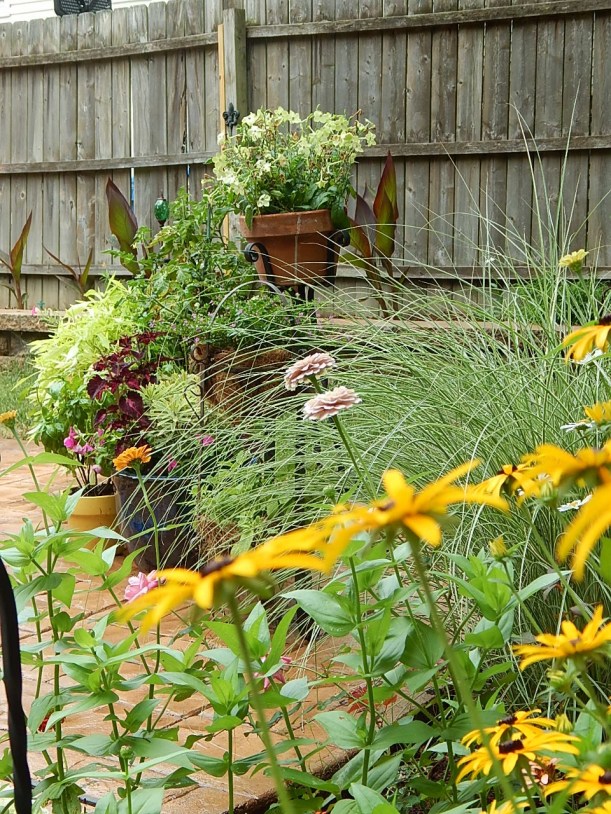
3. Plant division. Want to save a little money? Get more of a plant you just love, love, love? Fill in a space in the garden bed? Share with a good friend? Improve your garden design and color balance? Two words: Plant division.


DSCN3227

First purchased from the Webster Groves Women’s Garden Club plant sale, these purple coneflower have been divided and added throughout the gardens. Self-seeders, they quickly and easily multiply. 

patio containers by perennial bed

The black-eyed Susans in the foreground have three homes in my yard. Profusive in Zone 6, I gladly divide them to share with friends. 


1 Comment

Easy Container Gardening Using Succulents

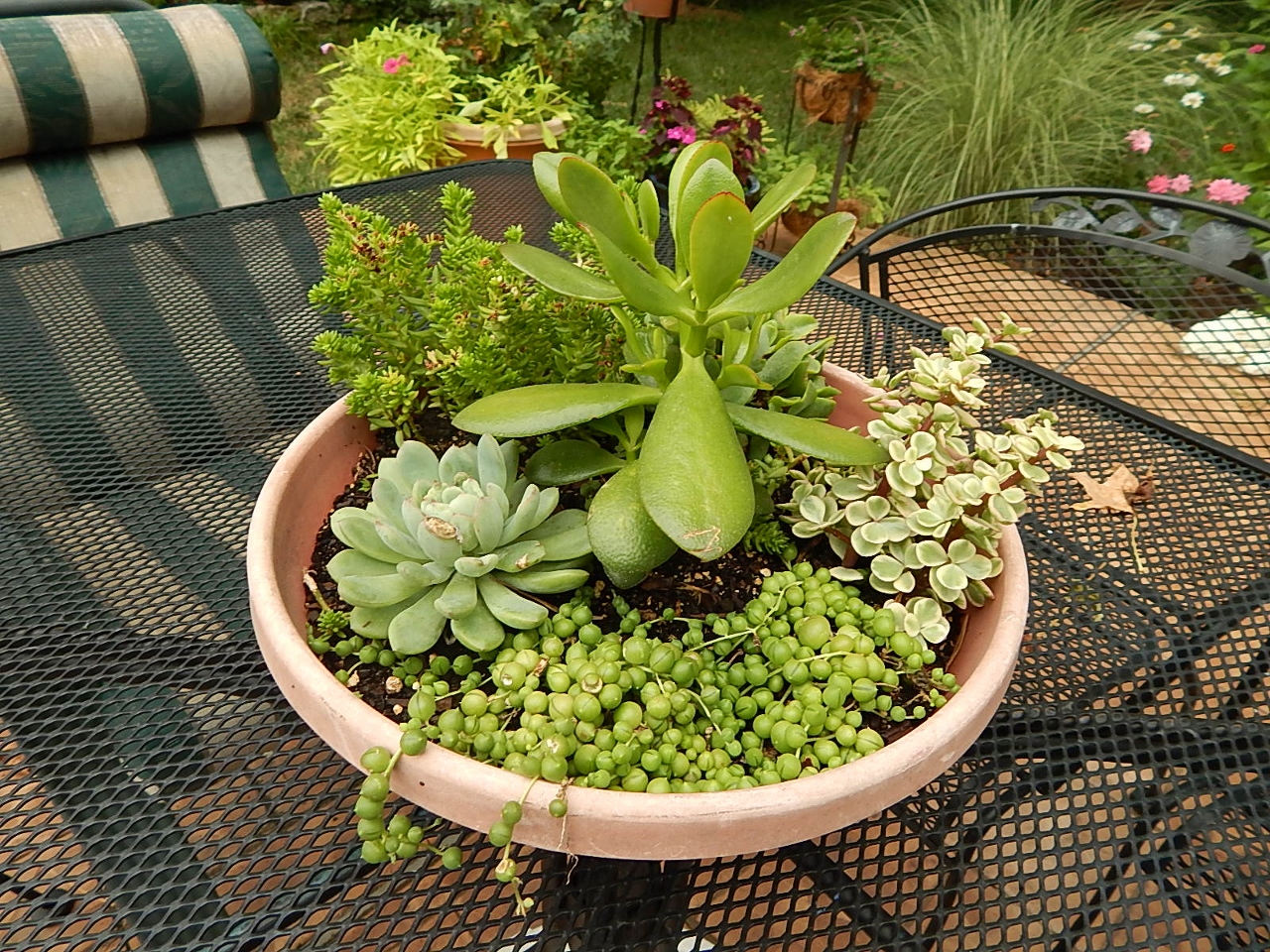
DSCN3335 (1280x960)It started with a thank you gift: a small jade plant from my dear ones for watching my granddaughter. I dashed off to the store to buy a cute container. Instead I came home with five new varieties. I justified this purchase by reusing an old container I had laying about. Why plant just one lonely jade plant in a container, when I can add others and enjoy the container all that much more?

After all that’s the basic premise for adding multiple annuals when planting containers. Sometimes the obvious whisks past me but fortunately, not that day.

This may not have been the ideal year to begin my succulent garden. I planted the container in June and we promptly had 19 inches of rain that month. Fortunately–that is, before a storm came and destroyed it–my red table umbrella provided shelter from the raindrops when I was astute enough to move the container.

This small garden has flourished. I attribute most of that to using the appropriate soil. Each year I am more cognizant of how important the soil is to successful gardens. I bought a mix specifically designed for succulents. The jade in the center may have received more moisture than it ideally needs due to the excessive rain in June, but it seems very happy and has more than doubled in size.

When looking at the photo above, the jade (Crassula spp.) is surrounded container by five varieties. Starting from the front center and moving left, are: string of pearls (senecio rowleyanus); ghost plant (graptopetalum paraguayense), princess pine (crassula mucosa pseudolycopodiodes),topsy turvy (echeveria) and elephant plant (crassula portulacaria afra)

I will bring this inside for winter enjoyment and have already staked out the perfect location in my home office. Do you enjoy a succulent garden? And do you have any tips for bringing it in from the outside?


2 Comments

Week in Review: Need I Say More?

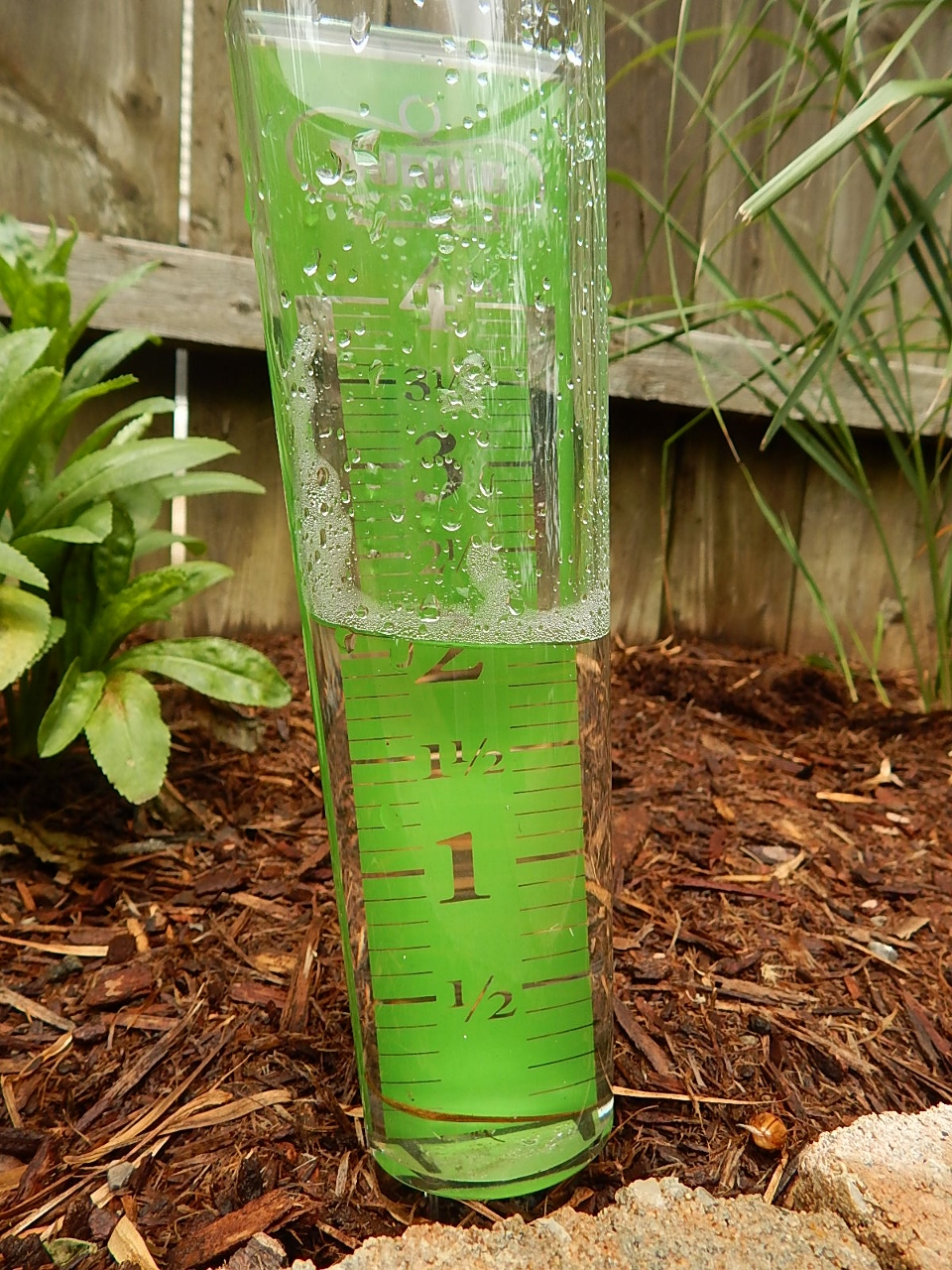
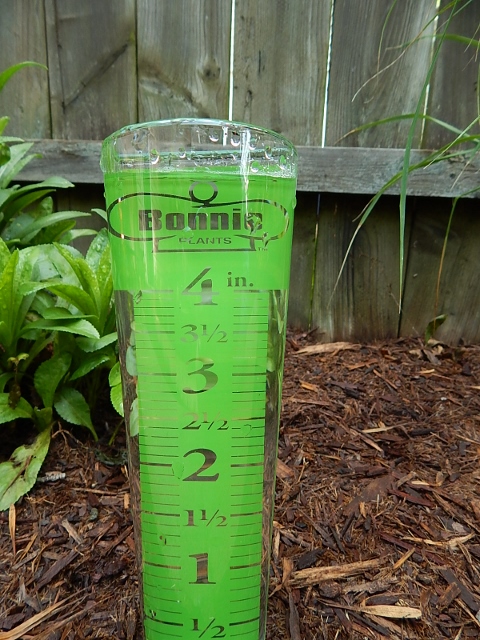
DSCN3103 (960x1280)Yes, of course, I will say more. And those who know me best would be surprised if I didn’t. The 2 inches of rain displayed in my Bonnie’s rain gauge follow the 6 inches we had last week. This rainy period is wreaking havoc not just in my yard and humble garden but in farmers’ fields, basements, rivers and roads.

But like Little Orphan Annie, I am an optimist–The sun will come out tomorrow. Should it not, I heed Scarlett O’Hara’s sage wisdom–tomorrow is another day. And our well-educated meteorologists promise both, in fact.

Finally, evoking the words of Martha Stewart–that’s a very good thing.

DSCN3107 (1280x960)


2 Comments

Upside/Downside in the Garden This Week

DSCN3054 (480x640)I don’t need my new rain gauge to tell me we’ve had a lot of rain in St. Louis. The “tap” has been running since last Sunday, and this morning the rain gauge was filled to the brim, indicating we’ve had nearly six inches of rain. Needless to say, all this moisture has had upsides and some downsides. Without further adieu, here’s a quick recap of my Arch City garden:

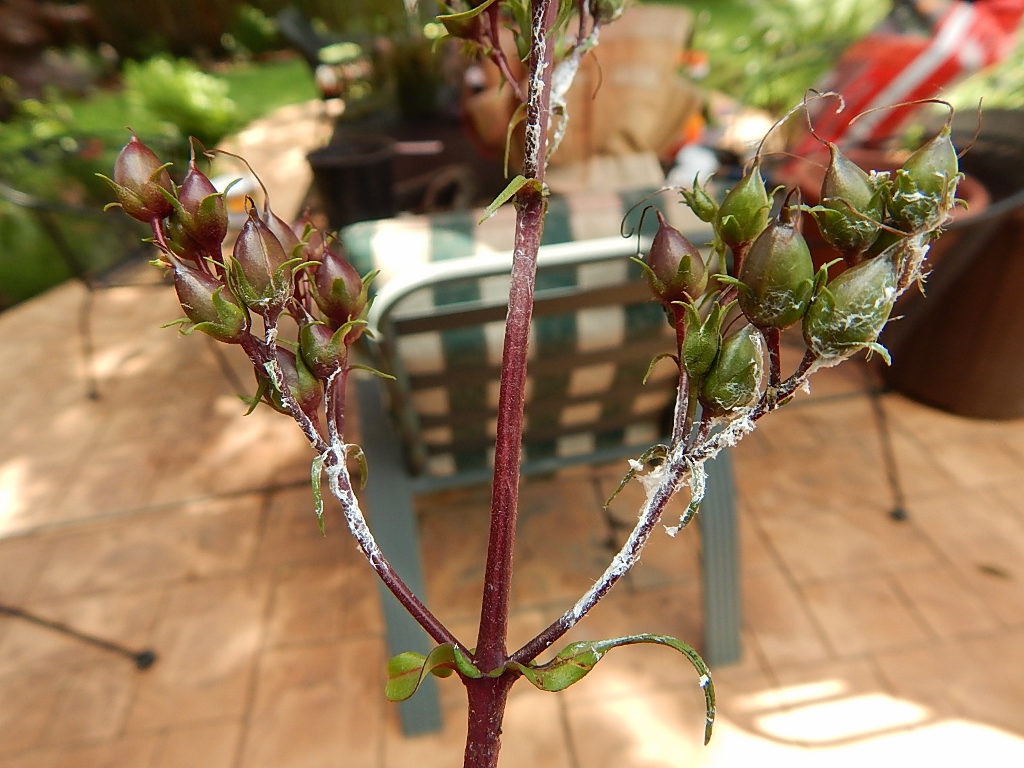
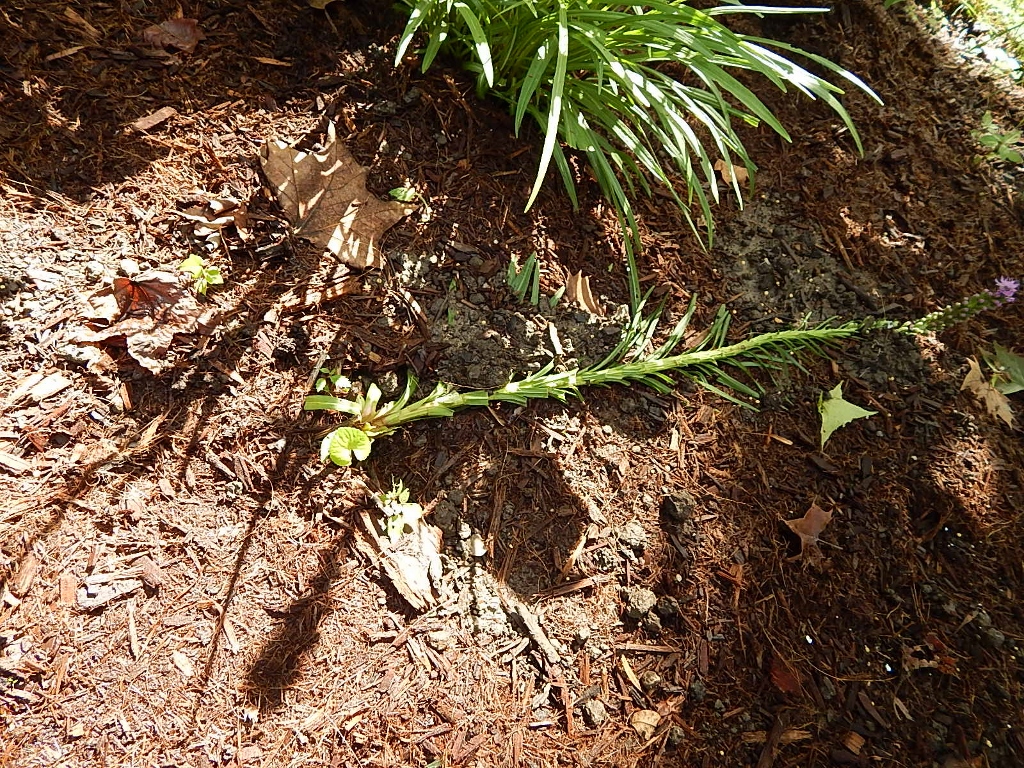
I was gone for the first part of the week so the upside is I did not need to water; the downside is ponding in parts of the yard, plants soaked to the bone and weeds, weeds, weeds. It finally stopped raining today and I spent an enjoyable few hours this morning tidying things up. You can translate that to mean trimming back spent blooms from the penstemon, lilies, lady’s mantle and roses, as well as the annuals. I have noticed lots of spots and white stuff on some of the plants, including the penstemon, echinacea and rudbeckia, so I cut back quite a bit. The roses have been food for some insect and now are displaying lacy leaves. Not a good sign.

By noon the sun was out in full force, the humidity unbearable and yours truly headed back inside.

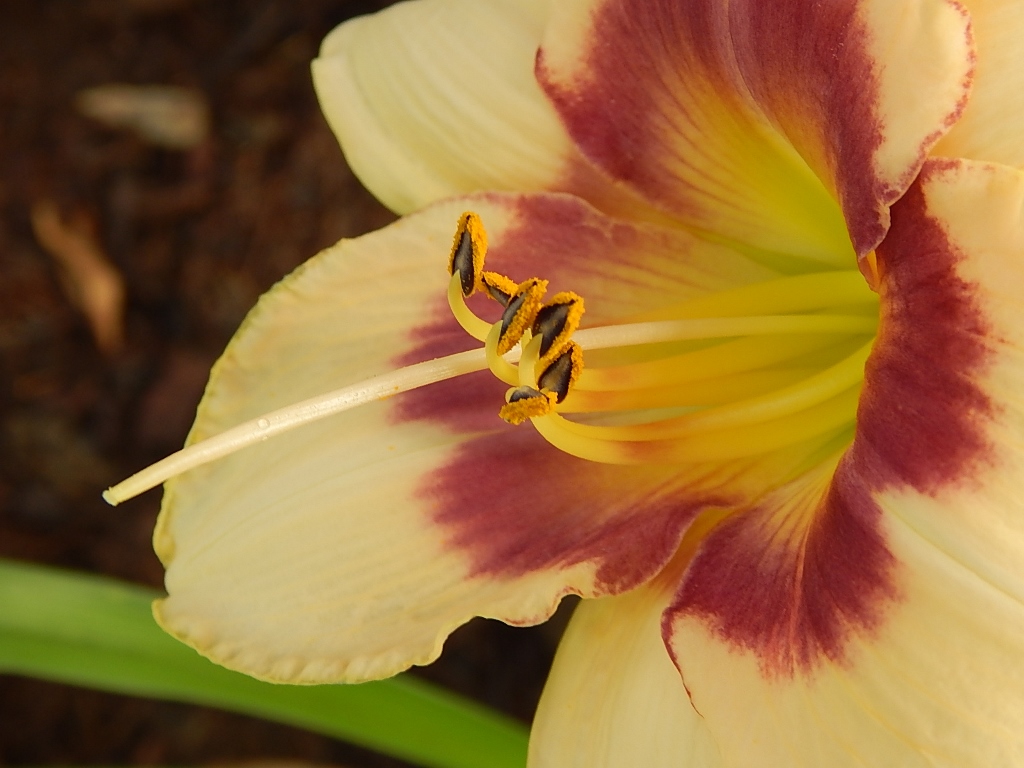
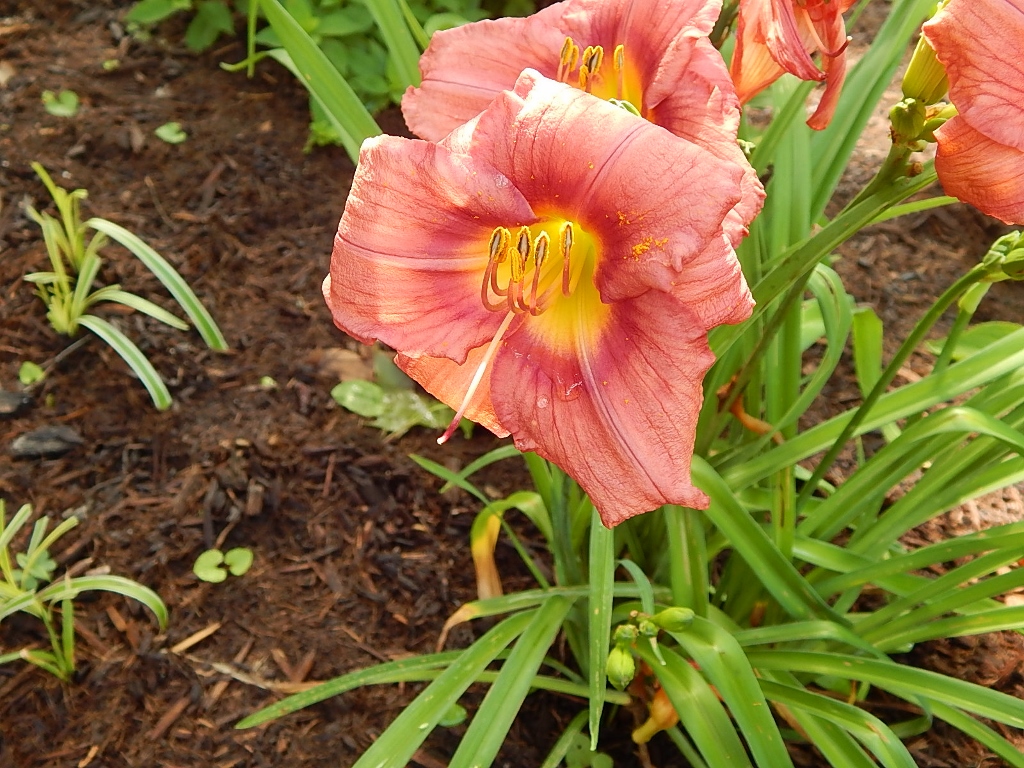
DSCN3089 (1024x768)DSCN3058 (1024x768) (2) There are some bright spots to the garden as well. The daylilies my neighbor generously gave me last summer are starting to bloom and they are lovely, although the liriope nearby have been heartily munched upon (I suspect rabbits) and the more than one dozen tomatoes on my patio plant are g-o-n-e. That would be squirrels. In fact, they left half-eaten tomatoes scattered upon the lawn. Ingrates.

DSCN3077 (1024x768)

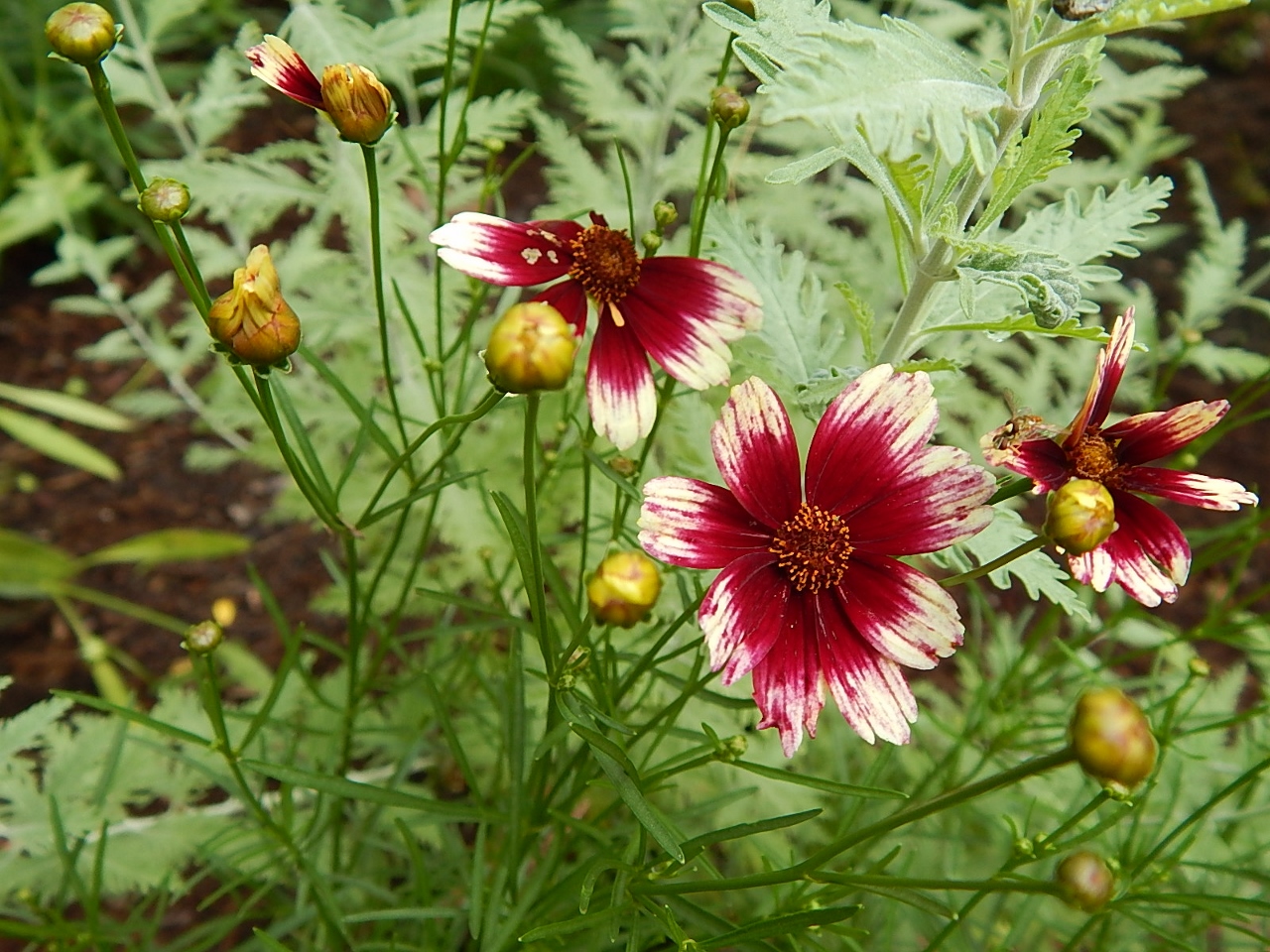
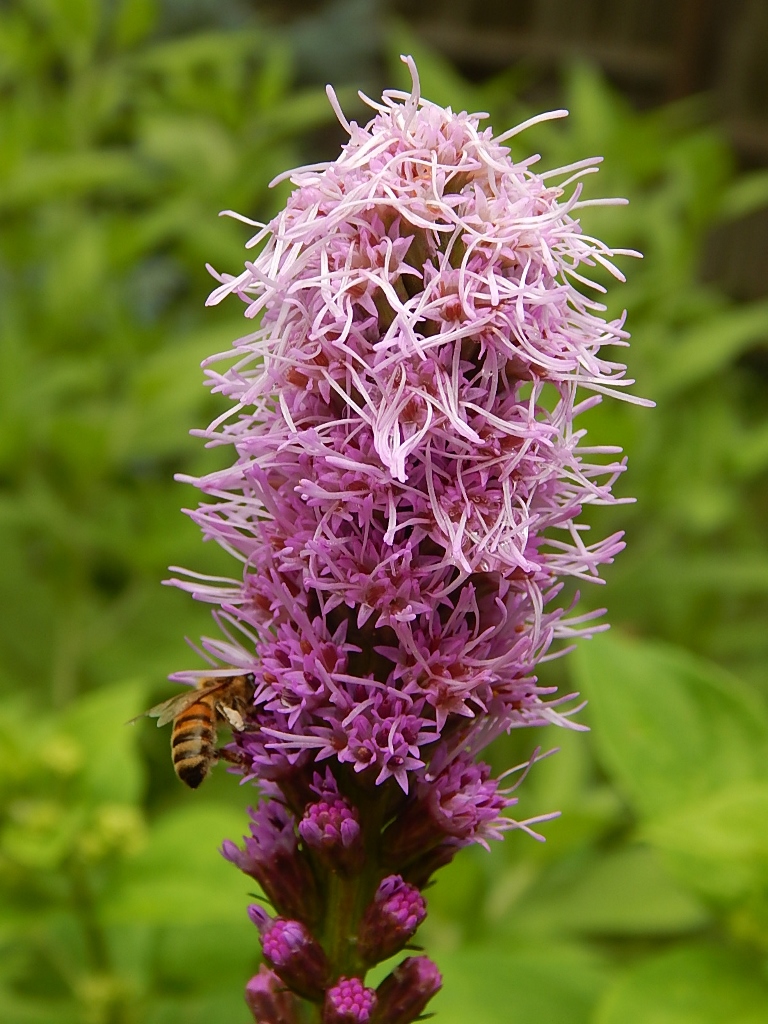
DSCN3073 (1024x768) DSCN3087 (1280x960)The “Berry Chiffon” tickseed I planted before I left for the Fling has begun to bloom and is quite showy with deep pink petals whose tips appear to be painted white. Yet some of the liatris nearby has been trampled just as it is beginning to bloom. It is now cut back and in a vase in the family room.DSCN3060 (1024x768)

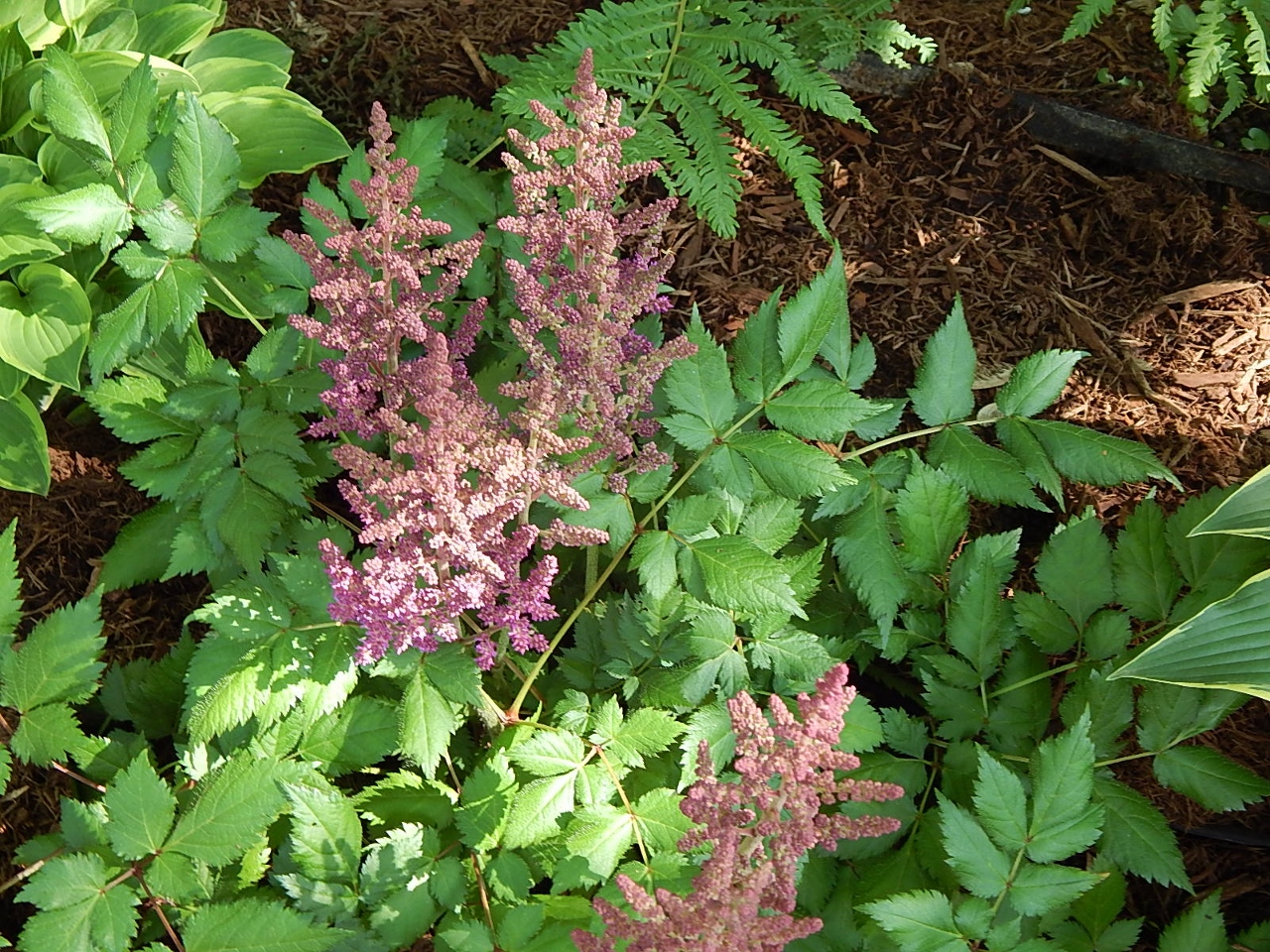
The astilbe in the newly installed south bed were stunning and I could not be happier with the plants in this shady part of the yard–fern, Japanese forest grass, hosta, Solomon seal, coral bells. As the raspberry plumes on the astilbe begin to fade, the caladium are starting to emerge, although some critter seems to have had a nibble or two on them as well. Rabbits? I suspect so but am not sure. I’ve never grown caladium in the ground. Readers, any tips for critter control?

The true test of the garden will be when the heat really kicks up. I guess that test will be tomorrow, as we expect temperatures in the mid 90s.DSCN3063 (1280x960)


6 Comments

Feeling Smart, Curious and Happy? Plant Something Yellow

DSCN1945 (960x1280)

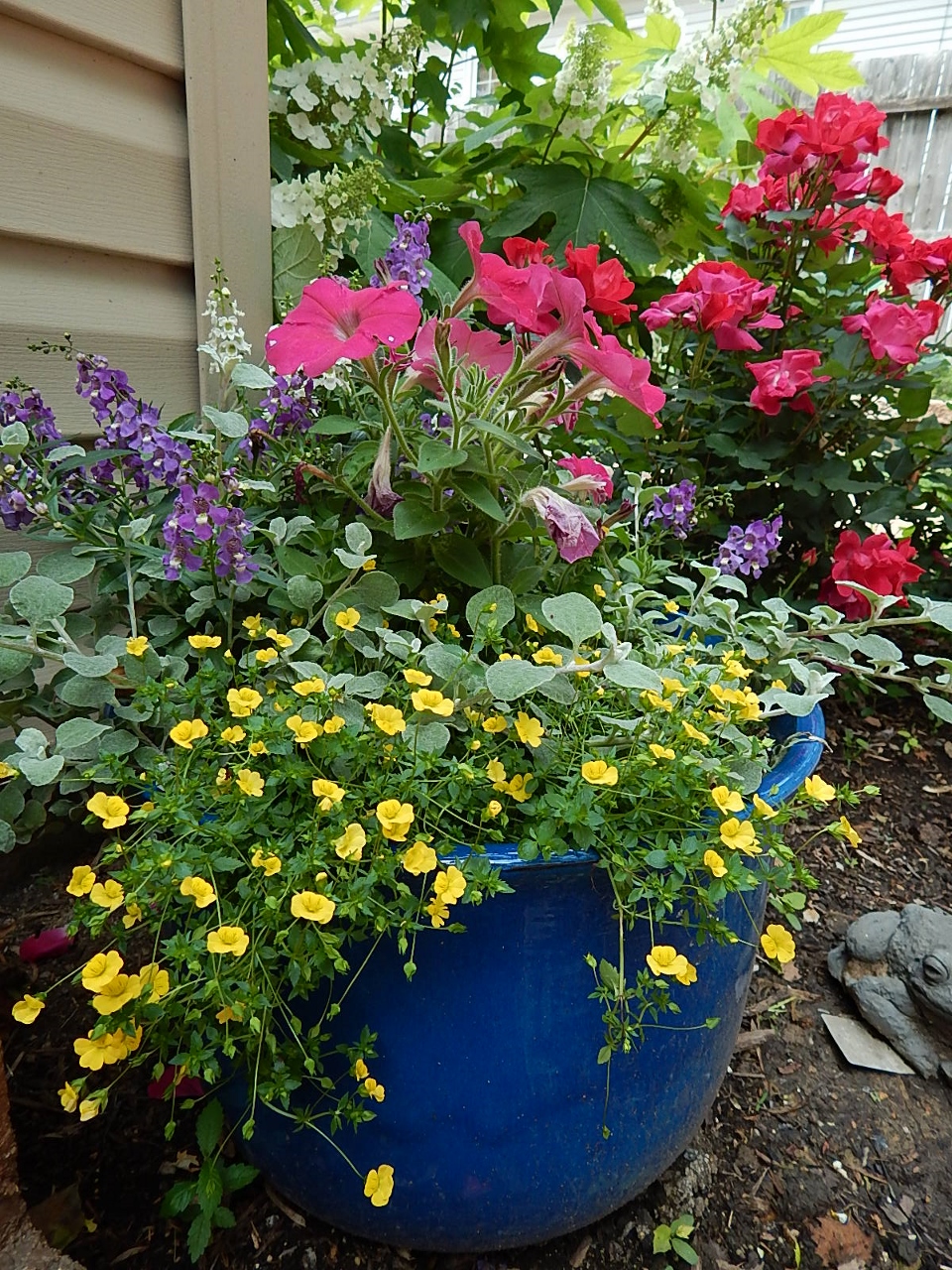
Clusters of small yellow Mecardonia hybrid get along well with everyone in this bright blue container. From the mid-tone purple of the angelonia to the deep pink petunias to the grayish creeping wire vine (Muehlenbeckia axillaris)

Upbeat, optimistic and friendly, yellow flowers cheer a garden like no other.

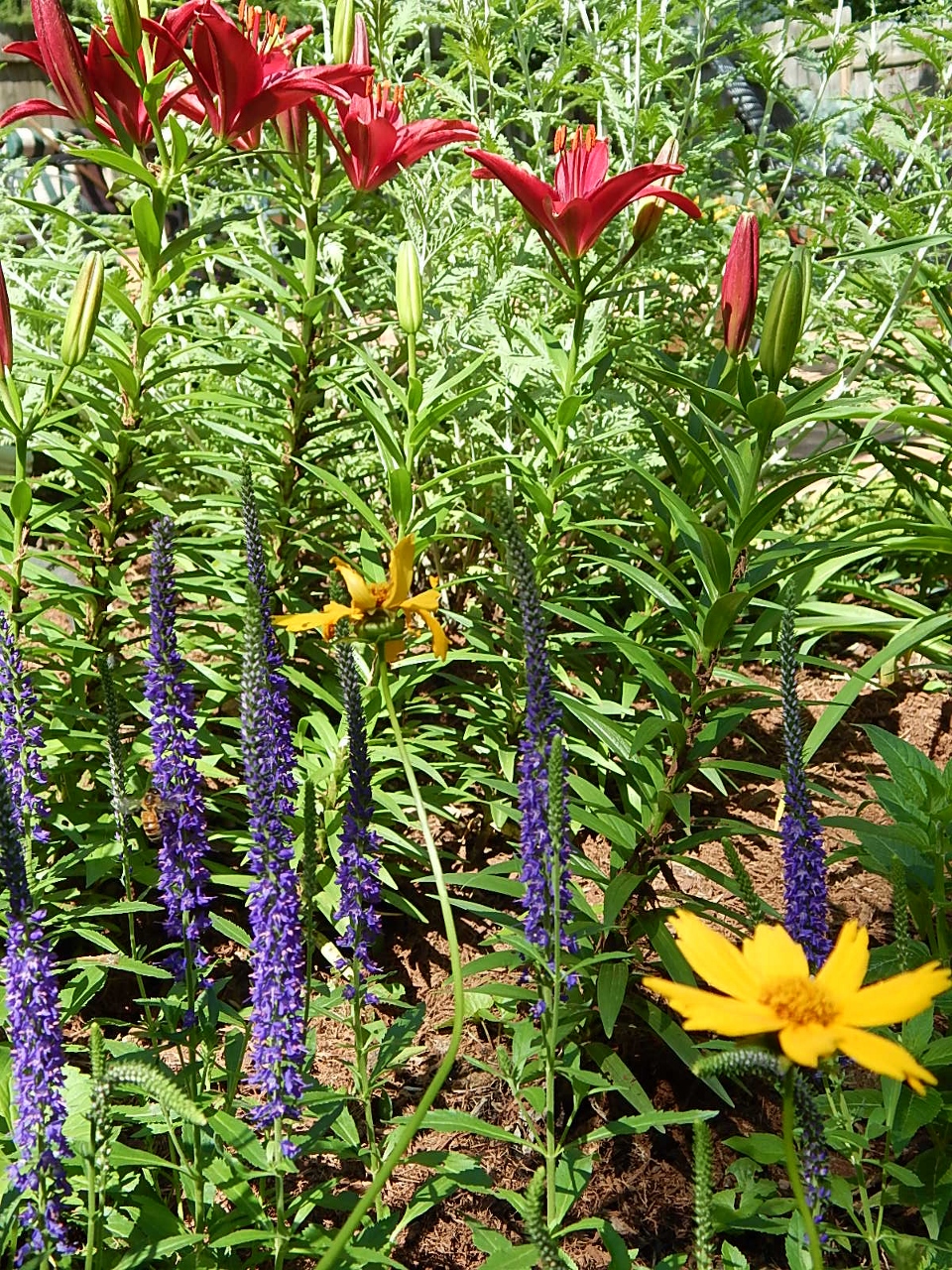
Purple and pink dominated the garden a few weeks ago, but now the sunny yellows are popping out and in doing so providing a more uplifting feel to the garden altogether. Yellow is a primary color and sits at the light end of the color spectrum. It’s loaded with energy, and placed in the garden can perk up a combination of plants or absolutely shimmer in the sun. It is clearly a color that says, “Notice me!” And in doing so, causes your eye to slow down, rest and take in its warmth. But too much of it can be irritating, too. Some say that’s due to its high energy value. Introducing other colors, such as green (perfect!) help calm yellow.

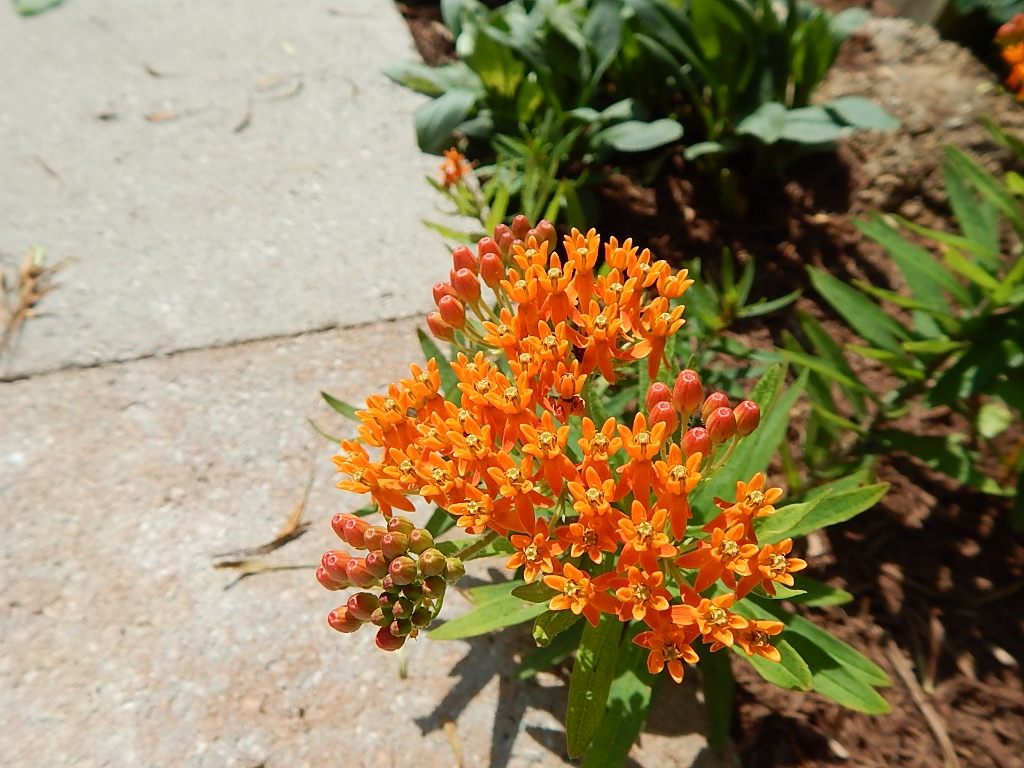
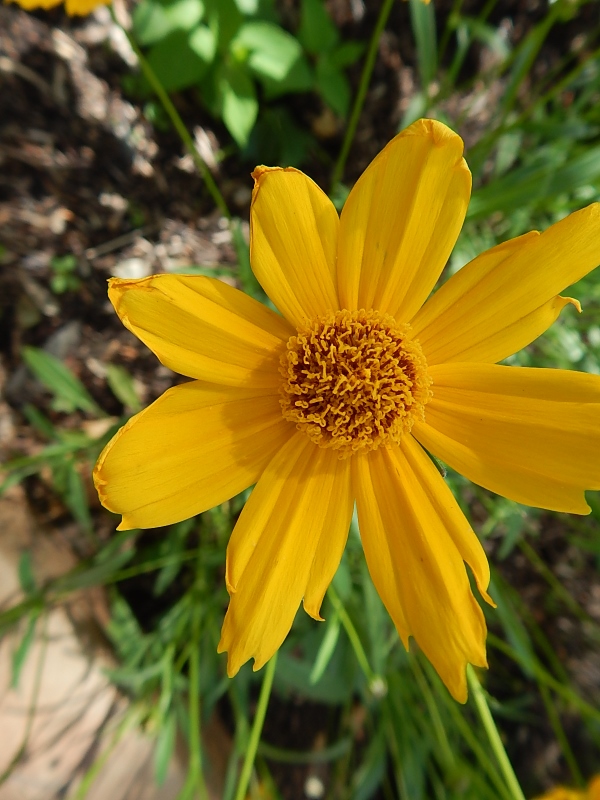
Sizzling in the sun, a nice color combination of yellow coreopsis and orange butterfly milkweed.

Shimmering in the sun, the yellow coreopsis and orange butterfly milkweed make a hot combination.

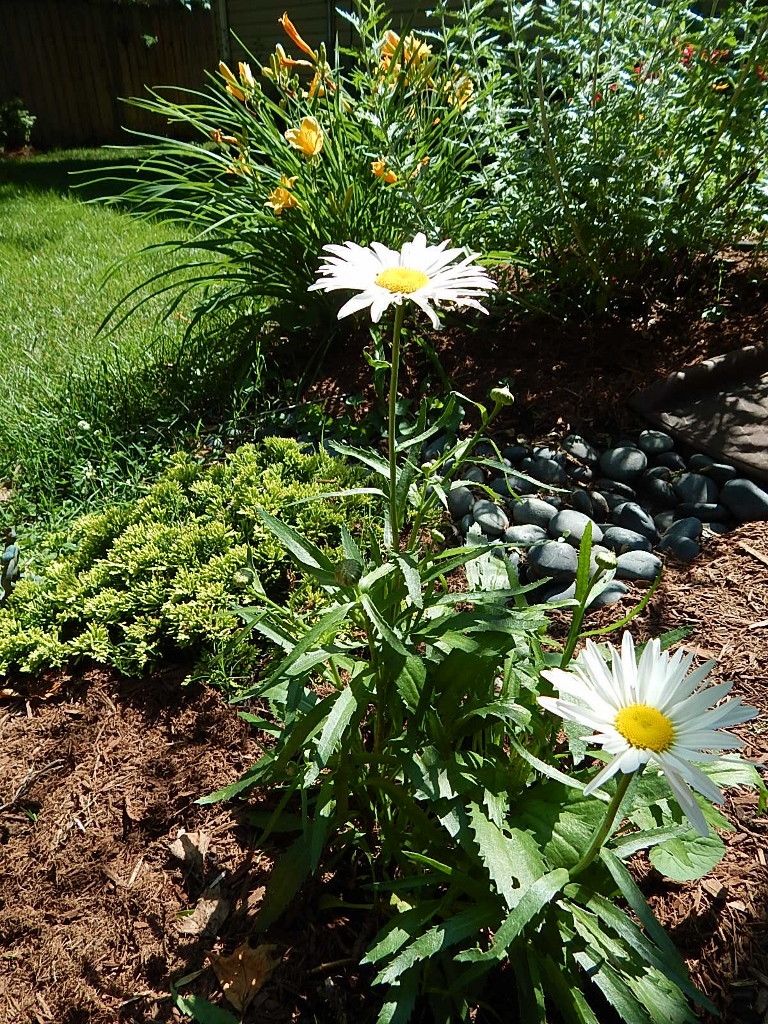
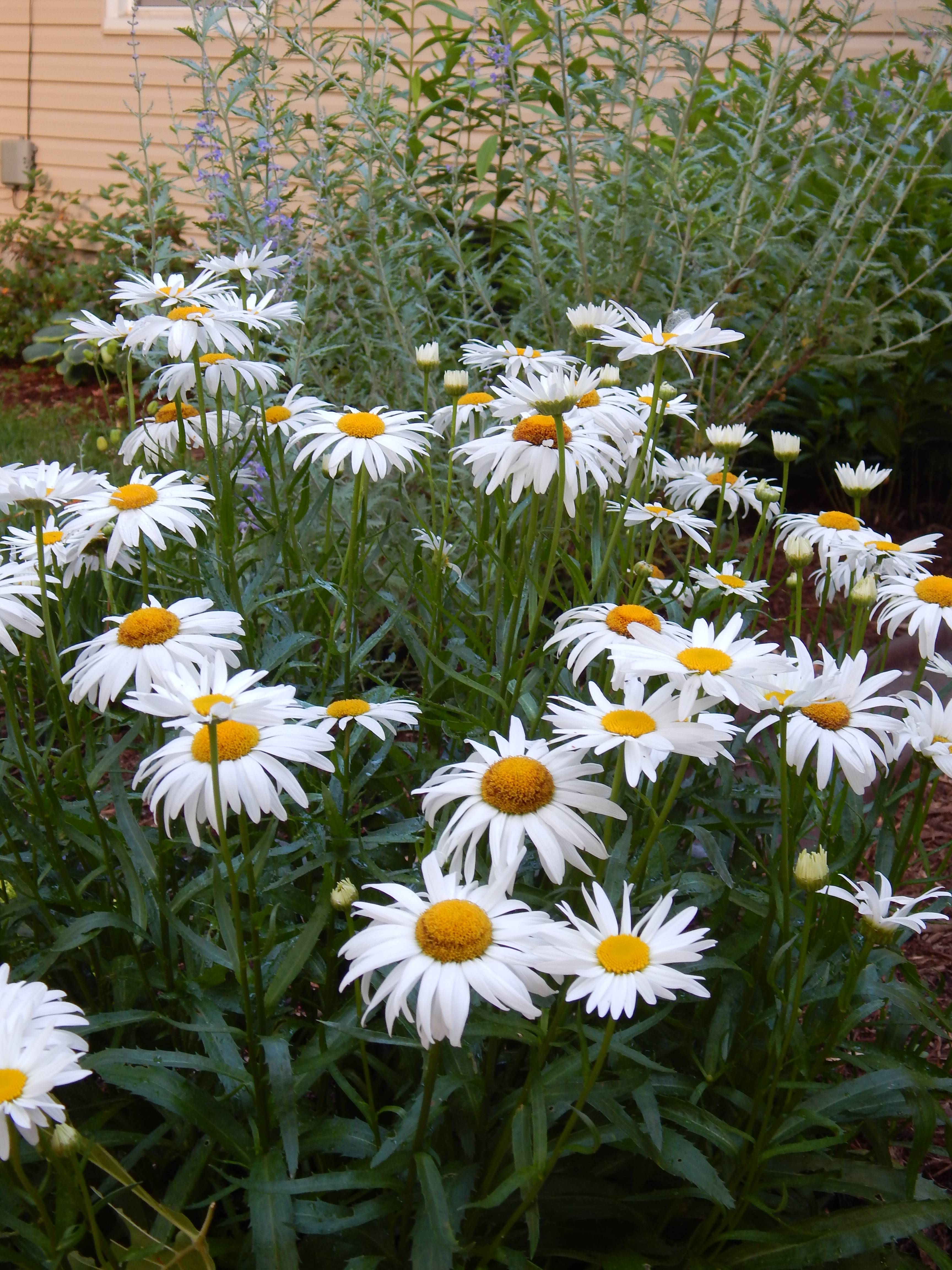
juniper (768x1024)This is a color that knows how to network, going beautifully with several shades of purple, pink, green, blue and and even gray. I have found it to be a wonderful transitional color that is at ease at moving between dark and light hues. I have shots of yellow throughout my gardens. For example, a small citron green juniper (Juniperus horizontalis) at the base of the garden bed that wraps around my family room provides a transition from one side of the bed to the other. Certainly placement is important here but so is its lemon-lime color mix. This shrub is small and a slow grower, but it is mighty in its impact. Standing tall next to it are white Shasta daisies (Leucanthemum superbum) with their sunny yellow eyes and Stella de Oro daylily on its other side. Things cool off, though, with a whispery stand of Russian sage (Perovskia).

The sunny yellow eyes of "Amelia" Shasta daisy mix well with the soft tones of Russian sage.

A pretty combination of sunny “Amelia” Shasta daisy, a rugged sun lover and Russian sage.

DSCN1880 (1280x960)

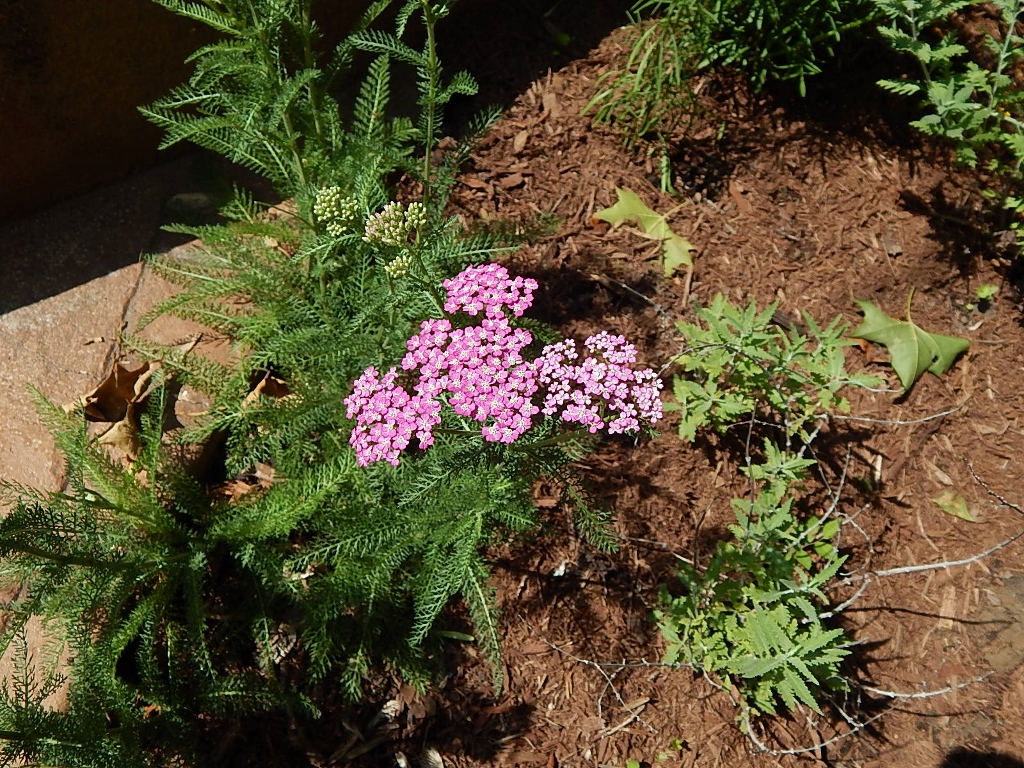
Yellow coreopsis perk up the blue dwarf blue spruce and deep tones of penstemon. It also complements the pink bloom on the yarrow in front.

DSCN1931 (1024x768)Yellow has a high reflectance value. It is the most visible color on the spectrum and that’s most likely why school buses are yellow, as often are school crossing lines on the pavement. It is the color of hazard signs as well. But too much of it can be irritating, too. Some say that’s due to its high energy value. Introducing other colors, such as green (perfect!) help calm yellow. If you’re into the meaning of color, yellow has lots going for it. It’s naturally associated with happiness, creativity, communication and energy. It’s also associate with analytical thinking, inquisitiveness and original thought. On the down side, deceitful, laziness, and cowardice are often used in the same sentence with yellow, as in “He’s nothin’ but a yellow-bellied, no-good, lazy coward!”

What do you think of the color yellow?