Today is so beautiful I swear it was color corrected!
Category Archives: Musings
It’s Looking More Like Spring
It seems like forever but it won’t take long now until we’re in full fledged Spring in St. Louis. Forsythia, Bradford pear, pink magnolia and star magnolia are in bloom. After reading the Steve Bender’s, aka the Grumpy Gardener, opinion of Bradford pear trees, I can no longer drive past one without laughing. According to Grumpy, having one in the front yard is akin bragging that you have a toilet in the house. So funny! He also says its spring flowers smell like fish. I wondered what that awful smell was! Of course, they line the streets and boulevards of St. Louis and are popular in neighboring front yards. And they look great.
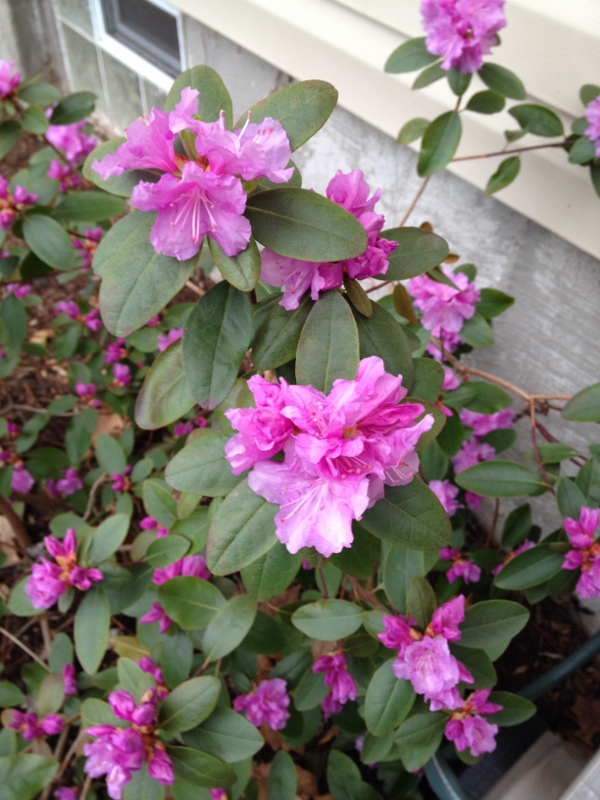
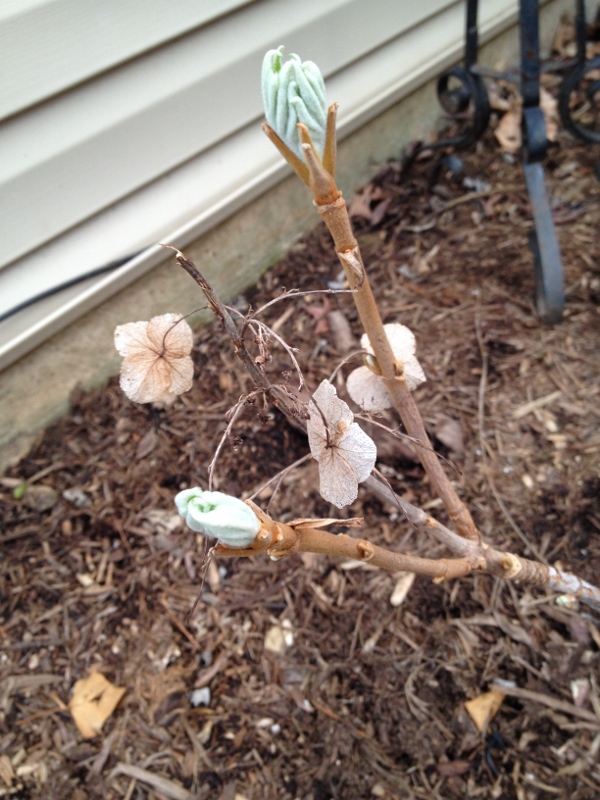
Tonight’s backyard tour highlight are the blooms on my PJM rhododendron. This is one of three rhodos growing in the yard and the one that was protected most from our severe winter. Oddly, though, it always blooms ahead of the other two. Go figure. Coming along nicely is the Oakleaf hydrangea I planted three years ago. This plant loves the spot it is in (north side of house and protected in winter) and was laden with blooms last year.
What’s blooming in your neck of the woods?
5 Plants I’m Obsessed With
Stealing a line from Bravo TV host and hometown son Andy Cohen, I am obsessed with these five plants for the garden:
Embed from Getty Images1. Tall garden phlox. The color range available and the lovely “eyes” of tall garden phlox make my heart skip a beat. These tall wonders are first on my list for an after-work garden stroll. They are fragrant and mingle delightfully among the Russian sage, bee balm and Stella de Oro daylily. While I enjoy them most in the garden, they hold up well in a cut arrangement gracing the dining table.

2. Hosta, “Dorothy Benedict”. This beauty seems to have it all. It looks like a painting with streaks of bright green-yellow, blue-green and green-green interspersed with white. Leaves are textured, edges are smooth. Pop it into the shade garden and gaze away. What’s not to love? Oh yeah, the price (I’ve seen Dorothy Benedict quoted at $200-$500).
3. Lady’s Mantle (Alchemilla mollis). Chartreuse-hued plants work well in a wide range of applications in the garden. Contrast this plant with cool blue-tinged foliage or the deep purples of “Mainacht” salvia. Or complement lady’s mantle with bursting colors such as bright pink Knockout roses. The old-fashioned girl will make its way into the garden this year.
4. Kobold Gayfeather (Liatris spicata). I like spikes, and this plant delivers. Commonly known as blazing star, it pushes forth a stalk that really is a bunch of rounded flower heads that are fun to watch unfold from the top down. It attracts butterflies and works well in clay soil. Kobold is a compact version of liatris, and I am told this plant does not need staking, another bonus.
Embed from Getty Images5. Foxglove (Digitalis). The tubular bells on this biennual are nothing short of amazing. The freckles on the inside if the bloom spill forward on these charming flower spikes will be the perfect addition to my cottage garden. I grew them years ago in my backyard garden in Palatine, IL. Why I haven’t introduced them to my St. Louis landscapes escapes me. But that’s about to change.
A Good Day in the Garden
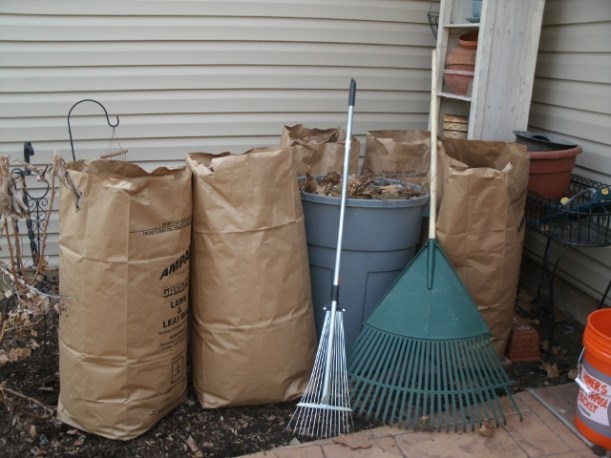 As winter finally gives way to spring, it was a perfect day in Arch City to finish the garden and yard clean up.
Landscape Fabric, A Gardening Do or Don’t?
Making a garden bed in St. Louis requires one to dig in hard, dense, clay soil. Not really my idea of a good time, if you know what I mean. (And if you have clay soil you know what I’m talking about.) In fact, the idea of digging up the lawn on a large space running the length of the patio, left me less than motivated. As I have shared, when I began my adventure in backyard gardening, I was not one to really enjoy getting dirt beneath my nails, much less the back pain associated with lots of digging. I wanted quick gratification so I could enjoy my chardonnay while basking at the delights of my hard work.
I know, I know, as the saying goes, no pain, no gain. I am learning.

Installing a Japanese maple.
But I did look for a shortcut … in the form of landscape fabric. I simply covered the space in the stuff, cut into the areas where I placed my foundation plants, amended the soil where plants were put in and covered the whole thing with lots of mulch.
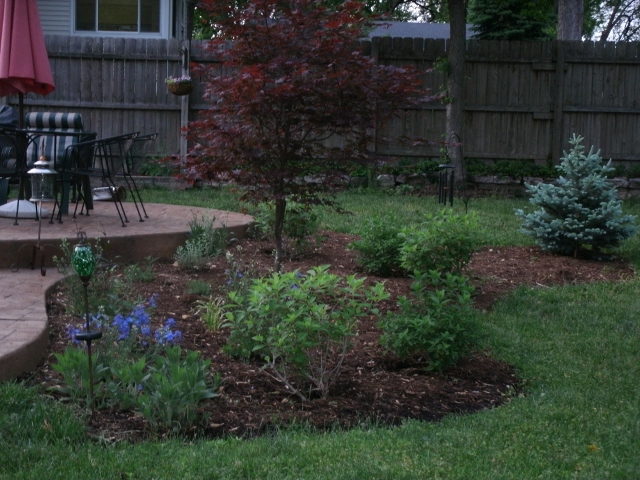
The bed is doing beautifully. This photo was taken last summer, the second season the garden was in place. I continue to add to it each year.
I am not sure I would take that shortcut again. Yes, the garden bed is doing beautifully, but I am weighing my options as I consider installing more gardens into the yard.
The pros: I have had very few weeds; it was easy to install; it saved my back the aches and pains of all that digging; I avoided using chemical application to kill the grass, which I was contemplating. And, the bed is doing beautifully. Each year I add to it with the vision of a cottage garden spilling forth with flowering plants and shrubs. I hand weed, mulch and this spring amended the soil with a bit of compost.
The cons: I don’t think I have done my soiI any great favors (should have probably put a hefty layer of compost down along the whole bed–rookie mistake peppered with a healthy dose of inpatience); every time I add to the bed, I am having to cut into the fabric and then dig into the hard, hard clay; my senses are awakening to the concept of “sustainability” and I am not sure these types of fabrics are a good idea. Also, I wonder if the fabric will inhibit growth of the plant. Does anyone have any knowledge of that?
I will be getting out the ibuprofen as I plan to start on a bed along one of the fence lines this spring and will avoid some of the shortcuts I took. What’s your take on landscape fabric? Any advice on starting a garden bed from scratch?
Temperatures in Arch City were above 70 yesterday, making it a delightful day to get out into the yard and garden and enjoy a sunny spring day. Because it is early, I spent most of my time raking the lawn and getting up the leaves and twigs. The last frost date in St. Louis is April 13 and the weather forecasters are predicting cold temperatures throughout the coming week. Given the miserable winter we had, I am not taking any chances and have kept a covering of leaves around the azaleas, rhododendrons, roses and tender perennials.
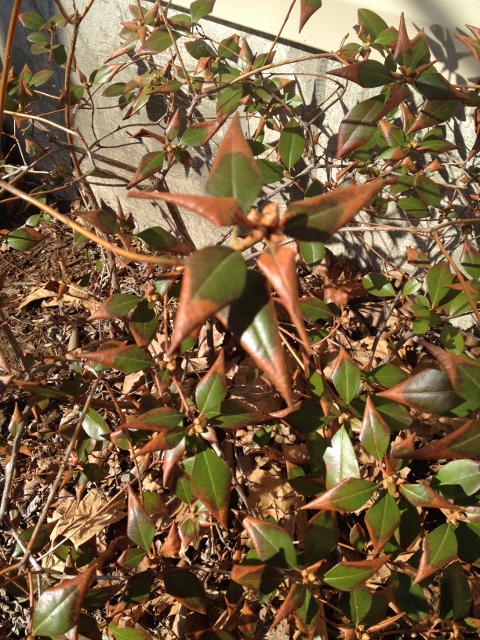
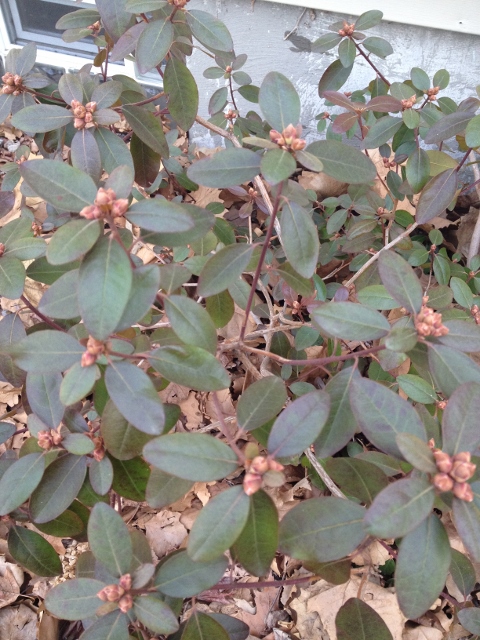
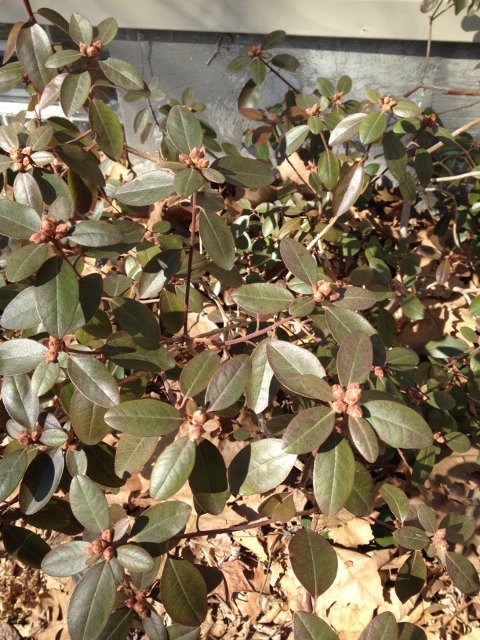 About a month ago or so ago, I read an item in the garden section of the St. Louis Post-Dispatch about leaf scorch on rhododendrons caused by frostbite or extreme winds. At the time, it did not appear that any of my rhodos were affected by that but we then had warming and bitter freezing. And yes, winter has left its mark on two of my P.J.M rhododendrons. On the photo on the left you can see the scorching on the leaves. This plant is the least protected from the elements, sitting on the edge of the eaves where it is more exposed to the winds, rain and ice. The plant on the far right is the most sheltered, by its neighboring shrubs and the eaves. It is fine.
I was so busy in the yard that I did not call my local gardening center. Scanning the Internet, about the only advice I have come across is to be patient and not cause any further stress on the plant, such as pruning. There are buds here as you can see but I wonder what the impact will be on the plant a year later.
Did you know rhodendrons have been around for 50 million years? Neither did I. These shrubs have been growing very nicely in their current location, so I have faith these two shrubs will be hardy enough to overcome this.
How did the winter affect your plants?
Surprise! When Impulse Purchases Reward
 Have one of your impulsive, surprise purchases given you more pleasure than you imagined? Who knew a four-inch potted Asiatic lily picked off of a clearance table for under $2 could provide such pleasure. This plant certainly lives up to its reputation as easy care. I did not plant it in the garden or even repot it; I just ignored it.
By late summer the pathetic looking lily was drooping and devoid of any bloom. We had suffered through a miserable summer with temperatures pushing beyond 100 degrees F for several days and several weeks of temperatures in the 90s. I was spending my time moving the soaker hoses around to make sure my newly planted Japanese maple, hyrdrangeas and roses would be adequately quenched. Cast off to the side, I was not faithful in watering the lily and had read nothing about how to care for this plant. Finally, early fall came and thinking the poor thing was pretty much a goner, I planted it my garden bed as a last act of salvation. And, of course, I forgot about it.
Last spring, lo and behold, this little wonder pushed up several stalks, their spikey leaves giving no doubt they not only survived the winter-over in the bed but multiplied! Who knew? I waited, anticipating its color, which the label did not include. (That’s one of the risks when you buy off the clearance rack). While, I would probably have not selected this maroonish color, that’s the chance I took. And given my mistreatment of it, I could not bring myself to rip it out of the garden bed. It complements the purple barberry in the corner and contrasts nicely with the yellow coreopsis nearby.
As I look forward to spring, I keep checking to see how lily is doing.
Ladies & Gentlemen, Start Your Engines: It’s Spring!

Early leaves of tall garden phlox push their way through.
Gardener’s grab your rakes, hoes and clippers. The vernal equinox has arrived and the calendar declares it’s officially Spring. Scanning the blogosphere, U.S. gardeners have been more than ready to put behind them a winter punctuated by either colder than normal temperatures or lots of snow and ice. Here in Arch City, we had both.
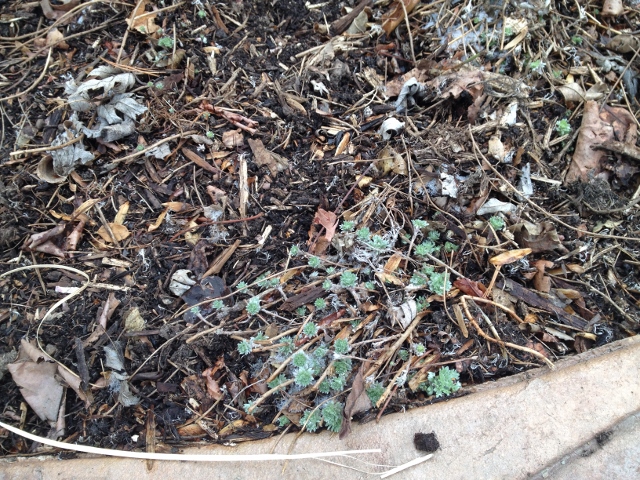
Artemisia begins to show its finely textured silvery foliage at the garden’s edge.
And it’s been a fight for more spring-like temperatures. In early March I started wandering into the backyard on warmer days, giving a peek under the layers of leaves protecting my shrubs and perennials from the harshness of winter. Around the neighborhood crocus and snowdrops are blooming, true signs spring does exist.
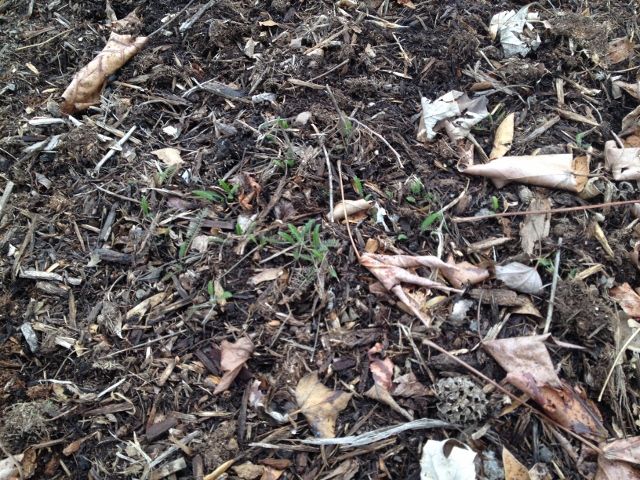
The “Oertel’s Rose” yarrow is starting to creep.
It’s clean up time. I’ve cut back the ornamental grasses, cut back the Russian sage, removed the dried blooms from the hydrangeas, pulled early weeds from the bed to stop their spread, and started visualizing my plans. The Knockout roses need a trim and the beds and the yard will soon get a good raking.
But it’s still early. April 13 marks our last frost date.
What are you doing in the garden now?
Wading In, The Final Chapter
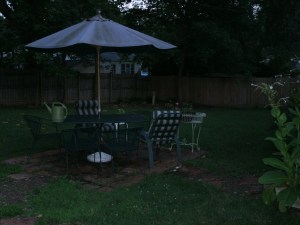
This small postage size of a patio served as inspiration to journey into backyard gardening
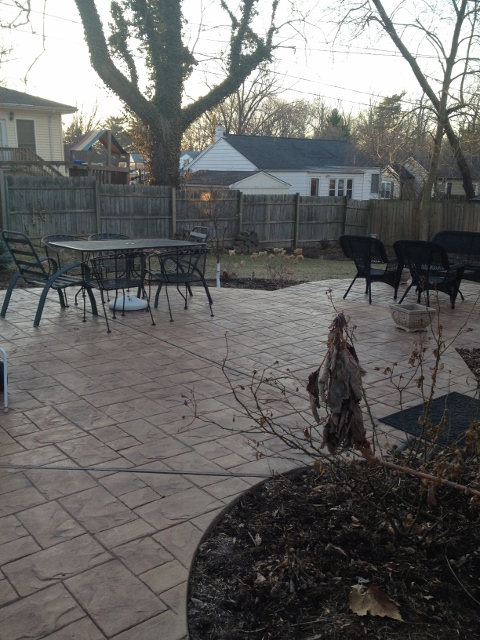
Today, a stamped concrete patio provides plenty of room for entertaining, relaxing and enjoying the garden
I am a novice when it comes to this gardening thing, but I know enough to realize I needed a plan. Like so many of you out there, though, I am a DYI’er. My vision was pretty simple: remove the 32 or so 12 x 12 paver blocks that posed as a patio and replace them with either a deck or a patio and to landscape around said patio. Turns out I like researching and reading about all things gardens. So I decided I should develop a 3 to 5 year plan.
Four years later, I am making good progress.
The stamped concrete patio is the centerpiece of my backyard and I have surrounded it with sun loving plants. But my work is far from done. The patio bed needs more plants. A raised bed garden along the fence begs to be renovated and has served as an experimental garden as I learn about which plants work well in my clay soil.
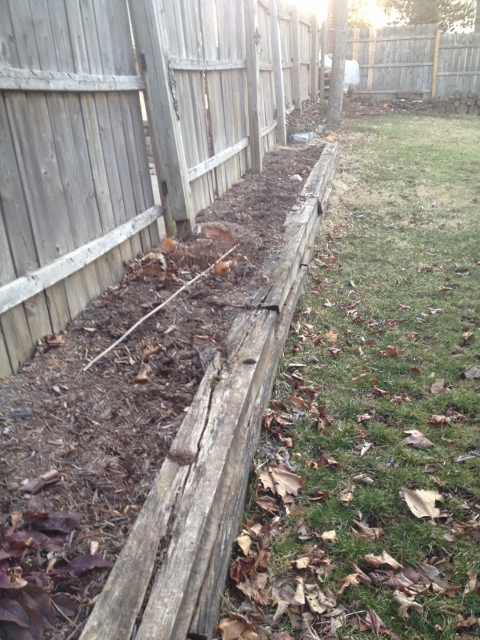 The railroad ties that form the raised bed along one fence wall are rotting and I am debating on which materials to use to replace it. Like the patio, I want a more permanent material such as those interlocking stones or maybe even using field stone to match what is already in the yard. Decisions, decisions. I overlay these considerations with the costs for such a project. I will hire this out and I know it will be expensive. (Did I mention, I am paying college tuition?)
And on the opposite side of the yard from the raised bed, a shade garden along the fence would be lovely to look at from the patio. It would also provide interest to the nondescript, 6 foot wooden fence. I will start on this bed this spring taking into consideration lessons I have learned from installing my first garden bed from scratch.
Thanks for reading. I look forward to sharing more of the journey and learning from you.
Wading In, Part II
It turns out the backyard of my mid-century suburban St. Louis ranch home (you get the idea) was a blank slate. I had a project and a hobby in the making: gardening. Here are a couple of things I’ll share first. I am not (was not) a gardener, nor would I describe myself as a hobbyist. That’s not to say I didn’t like gardens. In fact, I love them. Always have. Nothing gives me more serenity or energy than a stroll through the nearby Missouri Botanical Garden. I love a good house and garden tour, and the St. Louis metro, with its zones 6a-6b climate, abounds with gorgeous yards and gardens brimming with a wide array of plant diversity. But suffice it to say I am a busy mother whose three beautiful kids who are in various stages of the launch phase, who works full time, and has not spent a lot of time getting dirt beneath her manicured nails. But that’s changing. I bought the ranch because I was downsizing, following the demise of a long-term marriage. This place is the place I call my own, and I knew that day I was sitting on the postage-stamp of a patio, considering buying this house, that the backyard was going to be my first project. My so-called “vision” ago wasn’t much more than to get rid of the wobbly, unevenly installed pavers and put something in their place. Something solid, something that had a better scale to the house and yard, something inviting, and something surrounded by a garden that I could also enjoy from the family room, which features walls of windows looking out on the yard, or from the kitchen. I also wanted to have less lawn to take care of and the hardscape and landscape would help with that. In late March 2011 I moved in and believe it or not the PJMs were nearly finished blooming! Remember, we are in St. Louis. I spent the first spring and summer mowing the grass between the pavers that were masquerading as a patio. I wedged my patio table and six chairs on this platform and moved them every time I mowed the yard. I’d post a picture but they were lost when my cell phone fell into the Meramec River on a kayaking trip. (Note to self: take the photos off the phone.) If you watch Real Housewives of Beverly Hills, think Yolanda Foster’s property minus the pool, minus the ocean view, minus the palm trees. Evenly laid square blocks with grass growing between them. My big box backyard pavers were kind of like that. Sort of. Okay not at all. Mine were actually uneven and the grass between them was weedy and in some spaces rather bare. After spending a summer moving the table and chairs, which took up the entire patio, I knew the postage stamp needed to go. I spent the summer researching, discussing my options and pricing the project. After much deliberation (patio or deck?), I had a stamped concrete patio installed in the fall. I wanted something permanent and relatively maintenance free that would fit more than the umbrella table and chairs.
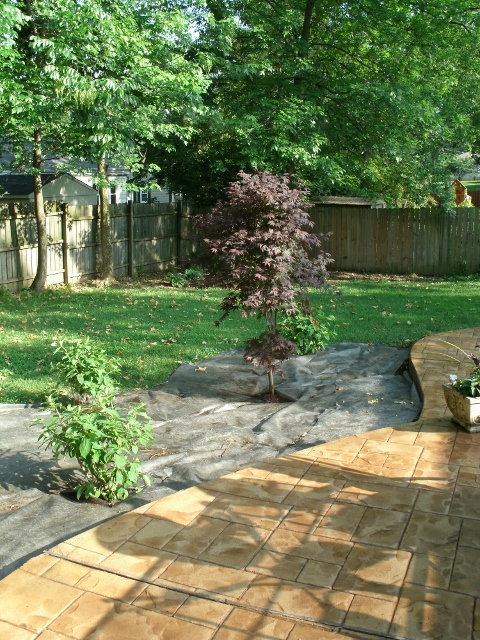
Good bye postage stamp. Building a garden bed that runs the length of the patio.
And I wanted to surround it with garden beds.
 The Arch City Gardener